Tag Archives: Education

Going back or moving forward?

2

Going back or moving forward? (English version)

by Ron Brenneman

After thirty-six years in Central America, I have decided it is time to move on and face the new challenge of going “back home”. Perhaps a more accurate portrayal would be to expand my area of activity to include the area where I once grew up.

I have no intention of completely abandoning El Salvador, but it is now time to step out of the day to day operational duties I had taken on in my adopted country. It is also time to introduce my children to their other country.

El Salvador has entered into a new phase. The new president calls it the end of the post-war, while some good friends, based on the Japanese experience after WWII, call it the beginning of the post-war era. Either way it is called, the recent Salvadoran presidential election marked a change and a drastic decline in the two major political parties.

Both ARENA and the FMLN were both created as instruments of war. A never-ending “cold war” between the two, a continuation of conflict set in rhetoric of the 80s, blocked out innovation and real progress as a nation for 27 years after the peace accords were signed. The voters, sick and tired of the situation, soundly booted both of them out and elected a fresh face.

Reflecting upon the election results and the underlying message, I was forced to revise my own thinking and participation in education, community development and business in El Salvador. I had made my home in northern Morazán, formerly one of the major theatres of the Salvadoran Civil War. I came to the realization that much of my vision and strategy for development is based on that same mindset of the conflict in the 80s.

While I do consider myself to be one of “the good guys”, I must accept that it is time to step aside. Outside intervention remains just that, regardless of good intentions. I recall a delightful conversation several years ago, in which an insightful friend analyzed my vision of community as the desire to install a Mennonite colony in Morazán. I did not agree, of course, nevertheless the need to be aware of baggage was a point well taken.

The era of change in El Salvador, of fresh vision and ideas, must have its own space to flourish and must be supported, but in such a manner that allows authentic local leadership and natural institutional building. Too long have outside models and standards been held up as ideal. I trust that to some degree, those outdated models took a beating in the election as well.

Before showering me with praise for such vision and foresight, I will confess that it took a jolting reminder of my own mortality, in the form of serious heart failure, to put me into a deeper reflective mode. This type of reminder quickly converts us into sages and wise philosophers.

Perkin Educational Opportunities Foundation (PEOF) and Amún Shéa Center for Integrated Development have grown into solid institutions over the past twelve years. Starting from that one-room schoolhouse in 2008, they have grown into a program with positive tangible impact on public education, especially in the province of Morazán.

Alliances and agreements with governmental and non-governmental organizations in strategic areas of interest to develop, such as Agro-ecology, Science and Technology and Forest Restoration broaden the bridge being built between development and relevant education.

The program has solid roots and I have full confidence in the capable team of executive directors who have taken on the responsibility, not just of maintaining but, of broadening the influence and impact of PEOF and Amún Shéa in El Salvador. While I will maintain a level of input with strategic planning and fundraising, the daily operations, administration and implementation will be managed by the Executive Director team.

To our loyal supporters and fundraisers, I would request you continue and redouble your valuable support to PEOF and Amún Shéa. With your support, I am confident the program will flourish and continue to bring positive change, and more so as an authentic homegrown solution to the problems facing a new El Salvador.

I recall conversations with several of you during the last several years regarding what would happen when I am no longer around. The ever-present question was of whether the program was just Ron´s project or if it would indeed take root on its own. A transition initiated in this manner truly has a much better chance of success than one of a sudden and dramatic departure.

As a family, we are currently working our way through the bureaucratic paperwork to get all of us up to the east coast, to the state of Delaware. Quite the challenge to just pick up and go. From what I´ve glimpsed so far, little is the same as when I left in 1983. While in many ways it seems like starting from scratch, family and friends form an important bridge over the gap of time and distance. Not entirely sure what we will do yet, but fishing, gardening, carpentry and pole lima beans are all in the picture.

Education for Self Determination

Education for Self Determination

Ron Brenneman

This reflection is by no means to be taken as a academic paper on the philosophy of education, too much has already been written on the subject for most of us to ever actually read. As to originality, who knows? A very wise man is quoted as saying “There is nothing new, under the sun” and that was over 3,000 years ago. Furthermore, I will delve headlong into the matter of the meaning of life which some may consider very unacademic. Also, this is not to be taken as an institutional policy or position, just me thinking out loud.

Independent of the geographical location and social economic circumstances we are born into, we can generally condense life itself into what we do, who we are and how we interact with those around us. Likewise, given the purported reason of preparing one for life, we can also divide education into three corresponding themes: labor skills, personal development and ones place in the world (commonly known as citizenship). Plato described this as “three stages of development of knowledge: knowledge of one’s own job, self-knowledge, and knowledge of the Idea of the Good.” ¹

Indeed, the journey through life is one of constant decision making within these three areas of self-development. The actions we take or do not take, coupled with our perception of our surroundings and circumstances, shape our awareness of reality, our understanding of ourselves and of the world. These decisions are an exercise of Free Will² which permits us  to control our own actions in the face of circumstances seemingly beyond our influence.

We could look at life as a sea complete with treacherous currents, tides and storms and where each of us find ourselves alone in a boat.³ We would have choices to make: hang on for dear life while the currents and wind batter us about, or learn to use the rudder, sails and compass, and then actually use the elements to navigate to our chosen destination. Once adept with sailing skills and having gained self-confidence and the courage to set a course, we are faced with another choice- that of taking the responsibility or not to assist those still floundering in the current.

The question of freedom is lodged firmly at the center of life itself. The offer of safe berth or of being towed behind a larger more experienced ship on the sea of life is always tempting and always carries a price. This is not to be taken as a judgement, rather as a suggestion to make clear headed decisions when trading freedom for safety. Free will is vulnerable to trickery and the slight of hand. Exercising free will does make us fully responsible for our decisions and nondecisions.

This quest for knowledge naturally leads us to ponder the meaning of life itself. We note that other manifestations of life around us, namely the mineral, plant and animal kingdoms do not question the meaning of life. On those levels the only meaning of life is life itself: natural cycles of birth, growth, reproduction and death. We as well, through our free will, may choose that route- a type of default life devoid of our active participation and lacking in any further profound meaning. On the other hand and with our limited skill and understanding, we may choose to work towards deepening our self-perception and self-understanding on the journey to become conscience of the meaning of our life.

We gaze at life through the smoky glass of our perception and make out vague images. As we deepen self-knowledge, those images will start to become clear.4

Our perception of reality itself undergoes constant change as new circumstances are created, either as a natural timeline or as a manner to keep things interesting. I am thankful to my parents for the support and upbringing they provided while I was young, but that world no longer exists. Had I limited my education to confront the challenges my parents faced, I would be wholly unprepared for the present. In that same sense, if we insist on preparing our children and students for the challenges of our current perceived reality, we become the primary obstacle for their full development of potential impact in their world and in their quest for self-knowledge.

Within this overall context, the challenge is to bring into perspective the concrete elements to be dealt with in designing education for self-determination. We will do so, within the structure of the three stages of knowledge as described by Plato and many others. I am compelled, as well, to note the correlation of these stages with the concepts of body, soul and spirit, as manifested in doing, being and consciousness.

Labor skills

In practical terms and in order to keep body and soul together, we must all occupy ourselves in some type of labor. Whether by choice, “accident” of birth or overwhelming external conditions, the options are endless and range from self-subsistence activity, unskilled and skilled labor to administrative, management and professional positions. Within these occupations, we find the further option of self-employment or entering into a contractual agreement as an employee.

Furthermore, we may deduce from history that many current occupations will disappear or be modified and that others yet unforeseen will open, even before our students are in the labor market. The question then is how to educate for labor skills given the wide range of options and types of employment and even more so, in light of the everchanging opportunities for employment.

We must accept that most educational programs are actually social conditioning, focused on creating good workers, consumers and citizens. This is not to be taken as an absolute criticism, rather as a candid observation. There are occupations that require very disciplined employees. As well, all production depends on consumption and we all benefit in an orderly society. We generally accept the “popular view common in East and West that businesses should indirectly control or even take over education to economically compete with other nations.”5 What is lacking however, is attention to models for self-employment and independence, along with the ability to naturally transit from one employment activity to another as options close and open.

I would contend that the current educational model of focusing on theory, through academic subjects, which are sometimes superficially applied (and more often not) through projects, leaves the student ill prepared for life and without the ability to abstract and further develop that knowledge. Indeed, many go through further training for particular jobs and the academics are completely forgotten in the process.

A simple change in direction and priorities would equip students with the ability to extrapolate from relatively simple projects out to any desired field of study and employment. With the project as a starting point, the academics become integrated as tools (no longer theory) to implement the project. As students develop the skills needed for the project, their interest will motivate an extrapolation in specific skills and the ability to adapt those skills to ever increasing complexity.

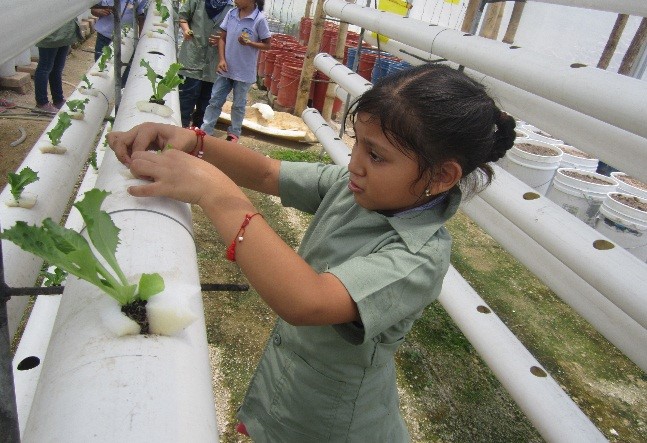
As a quick example, let’s take a greenhouse project and apply it to a school with students from kindergarten through high school. By involving students from the start and according to the capacity of each grade, we cover:

  • Engineering: Architectural design, energy and water systems, building costs, planning and scheduling, and construction.
  • Production: Agricultural production, investment return, programming of automated systems, investigation and lab work, pest and disease control, nutrition and organization.
  • Promotion: Graphic arts, audio-visual presentations, consumer education, advertising and public policy.
  • Marketing: Market studies and strategy, commercialization, financial management, administration and logistics.

Each of these activities can be extrapolated even further into specialized professional fields. The real challenge then becomes trying to keep up with the students.

It must be noted that this proposed change in education for labor skills has no ideological bend. It allows for the formation of good workers for the business sector, probably even much better qualified. At the same time, it provides training and support for independent labor and entrepreneurship, which has proven to be increasingly important for national economies.

Personal Development

“Knowing others is intelligence; knowing yourself is true wisdom. Mastering others is strength; Mastering yourself is true power.” -Lao Tzu6, Chinese Taoist Philosopher.

Who we are is much more important than what we do and yet little attention is given to this in education beyond games for leadership training and courses for problem-solving and creative thinking. The fact is that key elements in the makeup of who we are, namely character, temperament, intellect, will, emotions, responsibility, self-discipline and self-confidence must be developed internally and individually. They may be influenced or motivated to a degree from the exterior, but they cannot be taught.

Pre-urban societies managed to deal in part with this need for personal development through rites of passage as a condition to transit from childhood to full acceptance as an adult. A rite of passage tested courage, willpower, emotional maturity and survival skills, among others. We have done away with this ritual and replaced it with over-protection, lowered standards and have basically thrown ours hands in the air, “well, what can you do?” Forsaking this responsibility brings serious consequences, evident in our current society.

“Hard times create strong men. Strong men create good times. Good times create weak men. And, weak men create hard times.” A very thought provoking quote by G. Michael Hopf7, in his work “Those Who Remain”, one which could actually lead us to view living in hard times as advantageous with regard to forming character.

The challenge then, in an educational program, becomes how to assist and motivate students in their building of character, of self-awareness and self-mastery. And how to do so without forcing hardship on those students. Indeed, we must not dismiss personal hardships which many students already face which need avenues and mechanisms to process and resolve.

Moving from rhetoric to action in assisting personal development is complex. Little has been done beyond the experimental stage within educational programs. Nevertheless it needs to be made a priority. A good starting point would be to incorporate empathy8, resiliency9, life skills and challenges into our program.

  • Empathy: The age old adage “Know thyself”10 later emphasised by Socrates, “the unexamined life is not worth living”11 remains central to personal development. As it is also true that “The eye can’t see itself, except by reflection in other surfaces.”12 the examination of others may enlighten our own self-knowledge. This is call not call for judgement of others as part of school curriculum (we have much too much of that already), rather the incorporation of empathy as a means to discover our own motives, reactions and feelings through others.
  • Resilience training must form a central placement in educational programs, with the purpose of motivating individual internal processes in stress management, thought awareness, learning from mistakes, choosing response and maintaining perspective.
  • Life skills: Self-confidence stems from independence, the ability to survive and thrive without help. Establishing a list of activities with student participation would be a great start. Perhaps the Scout merit system could be used as a guide, although the list could include public speaking, singing and theatre, activities which make most of us cringe with fear.
  • Challenges: Students should be motivated to create their own challenges, establishing goals and making a commitment to complete- a type of do-it-yourself rite of passage. Tests of physical/mental endurance, including fasting, should be encouraged.

Self-knowledge is a continuous process and not a stage which will be completed. The next stage of “knowledge of the idea of the Good” will naturally feedback into and expand self-awareness. We may leave a profession at any point in time, but who we are is a continuous work in process.

Knowledge of the Good, or ones place in the world.

The True, the Beautiful, the Good – through all the ages of man’s conscious evolution these words have expressed three great ideals: ideals which have instinctively been recognized as representing the sublime nature and lofty goal of all human endeavour.”13

The endeavour to reach these lofty ideals inspires the pursuit of the higher human values of peace, respect, equality, responsibility, integrity, loyalty, justice, honesty and love. This is where the who we are interacts with others (and with our own reflection in others). These values originate through inspiration and imagination which cannot be taught as such, rather they are authentic manifestations of our ideals.

The practice of these values create our ethics or code of behaviour which guides our interaction with others. Often values and ethics are viewed as limiting of our freedom which may be true to the extent there are imposed as rules and regulations by an outside force. When arrived at through inspiration and imagination, values actually free us even more so by removing our lower ego from the discussion. As this occurs, we do not lie or steal from others because we understand that we are only affecting ourselves, in the sense that we lose much more than we gain with each negative act.

We are obviously living through a period in which this third stage of knowledge is not a priority and the lack of authentic values and ethics has opened the way for extravagant political correctness as a poor substitute. Furthermore, and perhaps indirectly, the commercial approach of promoting “good global citizenship” by establishing universal objectives as benchmarks for access to international “development” funding, among other perks, while good intentioned, drastically cheapens those same values ostentatiously touted. These approaches twist values into regulation. When we create communal regulation bypassing the authentic individual process of building a code of conduct, we are only creating an enforcement problem.

Recognizing our current societal mentality that everything spiritual has religious connotations and as such has no place in education, the route we have open to develop the knowledge of the Ideal of Good is philosophy. Selected literature, iconic historical events, art and music which mirror relevant current dilemmas may be a good starting point. Individual reflection and Socratic debate would be the applied methodology.

Wrapping it up

It is notable that as we progress from the tangible to the sublime, from labor skills to ideals, we find a drastic reduction in available resources and experiences. In all likelihood, this may be given the increasing internal nature and personal responsibility required with each stage, although we need to be realistic regarding other interests at play.

This brings us back to the matter of freedom. The three stages of knowledge as proposed by Plato, and fleshed out here, have the potential of freeing us from ungratifying labor occupations, freeing us from greed and envy which turns us into debt slaves, and freeing us from our lower nature which allows us to be managed as sheep by those who may not have our best interest in mind. Education for self-determination requires attention and balanced focus on all three stages of development of knowledge: knowledge of one’s own job, self-knowledge, and knowledge of the Idea of the Good.

“Our highest endeavor must be to develop free human beings who are able of themselves to impart purpose and direction to their lives. The need for imagination, a sense of truth, and a feeling of responsibility — these three forces are the very nerve of (true) education.” – Rudolf Steiner

Without deviation from the norm, progress is not possible.”—Frank Zappa14


  1. Myungioon Lee, Plato’s philosophy of education: Its implication for current education, https://epublications.marquette.edu/dissertations/AAI9517932/, 1
  2. Without trying to oversimplify the debate between Free Will and Determination, I will take the position that accepting determination (our actions being determined or pre-determined by forces beyond our control) is actually an exercise of free will.
  3. I cannot take credit for this analogy, but learned it so long ago that I cannot remember where it originated.
  4. My personal take on 1 Corinthians 13:12 “For now we see through a glass, darkly; but then face to face: now I know in part; but then shall I know even as also I am known.” KJV
  5. Myungioon Lee, Plato’s philosophy of education: Its implication for current education, https://epublications.marquette.edu/dissertations/AAI9517932/, 1
  6. A semi-legendary figure, Laozi (or Lao Tzu) was usually portrayed as a 6th-century BC contemporary of Confucius, but some modern historians consider him to have lived during the Warring States period of the 4th century BC, https://en.wikipedia.org/wiki/Laozi
  7. https://en.wikipedia.org/wiki/G._Michael_Hopf
  8. the capacity to understand or feel what another person is experiencing from within their frame of reference, i.e., the capacity to place oneself in another’s position, https://en.wikipedia.org/wiki/Empathy
  9. the capacity to recover quickly from difficulties; toughness.
  10. https://en.wikipedia.org/wiki/Know_thyself
  11. ibid
  12. http://nfs.sparknotes.com/juliuscaesar/page_12.html No Fear Shakespeare, Julius Caesar, Act 1, Scene 2, Page 3
  13. Truth Beauty and Goodness, A lecture by Rudolf Steiner, Dornach, January 19, 1923, https://wn.rsarchive.org/Lectures/19230119p01.html
  14. Frank Vincent Zappa (December 21, 1940 – December 4, 1993) was an American musician, composer, activist and filmmaker. https://en.wikipedia.org/wiki/Frank_Zappa
Relevant education

Planting

traslated from Educación pertinente

Relevant education. Exactly what do we mean by relevant education? Whenever a new phrase is used to describe some new process, there is a danger of falling into the assumption that we all handle the same interpretation, moreso when it becomes a fashionable term.

So that we are on the same page on the subject, we should define it. For us, the Perkin Educational Opportunities Foundation, relevant education is defined by the concepts of Adaptation, Transformation and Insertion.

Adaptation refers to situational awareness, of being conscience of our position in the economic, social and cultural processes of our environment and the relationship and connection or influence with the broader environment, including global trends. Then, once aware, to equip ourselves in the best manner to face and even thrive in those conditions.

Transformation involves starting with what we have at hand, what we know, with our experiences and practices, and then based on those, and with the needs and opportunities of our environment, to build new practices and processes to improve our surroundings. We can not confuse transformation with transplantation. The transplant of methodology and practices implies maintaining dependence on external forces. Transformation develops from strengthening our own roots.

Insertion into the labor market and full participation in the transformational processes are required in order for an educational program to qualify as relevant. Access to real employment and self-employment options and access to specialization training for this purpose are the only evidence of the relevance of an educational program.

Education is relevant to the extent that the student is equipped, not only with academic and technical skills, but with the skills of adaptation, the power of transformation and with full integration into the socio-economic and cultural development of their environment.

-Ron Brenneman

Building the Great Wall

There is certainly much ado regarding the construction of a wall on the border of the United States with Mexico. Known primarily as the Great Wall or Trump’s Wall, the objective is to stop undocumented movement through the southern border.

As with most politically motivated projects, this proposal has created tremendous emotional reactions, both pro and con. In an emotionally charged debate such as this, everyone on both sides of the issue is absolutely convinced they are right. The emotions of this debate are fostered by frustrated illusions on the one hand and fear of unpleasant changes of lifestyle on the other. There is little effort put forth by either side to inject a bit of objectivity into an analysis of the situation. It is within this continuing disorder that a parasitic industry of traffickers, lawyers, jailers, and unscrupulous employers rake in tremendous profits. Many special interests are involved, some representing very powerful financial pursuits and a very few working for a solution.

If the answer to the problem of controlling illegal migration is to be reduced to simply putting an obstacle in the way, that is to build a wall, it is doomed to failure from the start. Actually it would likely result in strengthening the same parasitic industry of human trafficking by provoking an increase in the fare paid for transportation as they become more creative in their methods.

If we are able to overcome the emotional part of the discussion, perhaps we can come to the same conclusion as the American poet Robert Frost, when he wrote, “Good fences make good neighbors.” That is to say we need some order in the backyard and a clear definition of the boundaries in order to avoid a constant dispute with the neighbor. Remember that a good fence serves in both directions. In looking at El Salvador and the USA, it is clear that a case may be made for mutual accusation of invasion and abuse in recent history. It is also very clear that neither party has been represented by its most favorable spokespersons in this exchange. Fear is not a good advisor to either party. In order to move forward, we must quiet emotions, identify appropriate counterparts and start dealing with this in an objective manner.

In most cases, the decision to set off on the journey to the USA is made with the perception that it is the only option to obtain a decent livelihood. It is not a decision taken lightly. Loved ones are left behind, knowing that some will never be seen again, and children are left with grandparents. The sale of land or debt incurred provides the veritable fortune demanded by the trafficking industry. This is reality for, and is the decision made daily by, dozens of men and women in villages and hamlets throughout El Salvador. We often ask how it is possible that they are willing to give up so much and to risk life itself under such adverse conditions when it is compared to the option of investing a modest amount in their own country. The answer is very simple. The confidence factor. There is little confidence that conditions in the country can actually provide a secure enough opportunity to motivate such an investment.

Following the illusion of the “American Dream” requires a high level of courage and sacrifice. It also demands resignation! This combination forges a determination that will not be interrupted by concrete walls or razor wire. To put this in perspective, most are already paying 20 times the cost of an air ticket, and in addition, are willing to risk their very essence and being on a route fraught with inconceivable dangers. Can any wall actually contain this level of determination?

The only wall feasible for containing the migratory flow from El Salvador to the United States is one that makes it more attractive to stay here than to leave. It must replace the “American Dream” with the “Salvadoran Sueño”. It must be a wall that displaces the perception of migration as the only real economic option. That is a wall built of opportunity, in El Salvador.

The foundation of this wall must be an integrated educational program that prepares the young with a proactive attitude and sense of responsibility, real life skills and opportunities for achievement. This implies a true technical-professional preparation and scientific focus in the development of a new enterprises and technologies. The wall itself must incorporate innovation, investment and open access to all technical information and productive processes. The top of this barrier must be a public policy that motivates initiative and protects local and individual economic activity from outside intervention.

So, let’s come together and build this Great Wall. Let’s create the Salvadoran Sueño that keeps our talent here through a solid program of training and opportunity and keeps your opportunists on your side of the fence.

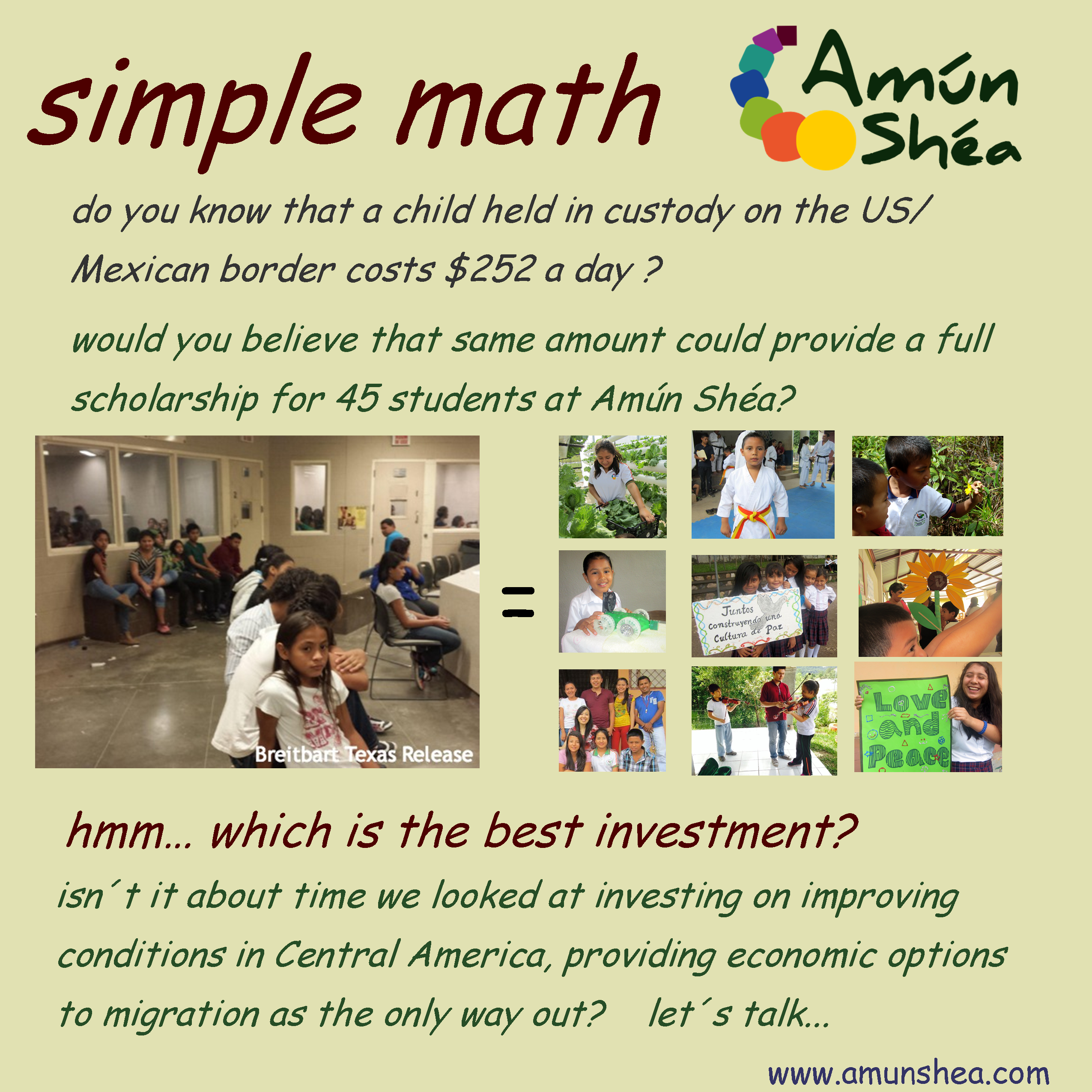
The practical issue that comes to mind of course, is the cost. Who is going to pay for all of this? A very good question and one which deserves serious discussion. A good question to start with is, who is paying now for the disorder? The information on security and protection costs is readily available for review and is staggeringly high. As an example, in 2015 the daily cost for holding a minor in custody for illegal border entry into the USA was $252. That amount would pay a full scholarship for 45 students at Amún Shéa, a private innovative problem-based learning program in Morazan, El Salvador, which is an area of extremely high migration. Does a 45 to one ratio sound like a good investment?

Mr. Trump, you are a businessman and fully understand the difference between an investment and wasted expenditure. Let’s make a deal and work together on building a wall of education and opportunity that works for both of us. If we accept that good fences (walls) make good neighbors, then great gates may be built as well, wide open and welcoming, making us even better neighbors!

Changing Attitudes, a major challenge for Development and Education

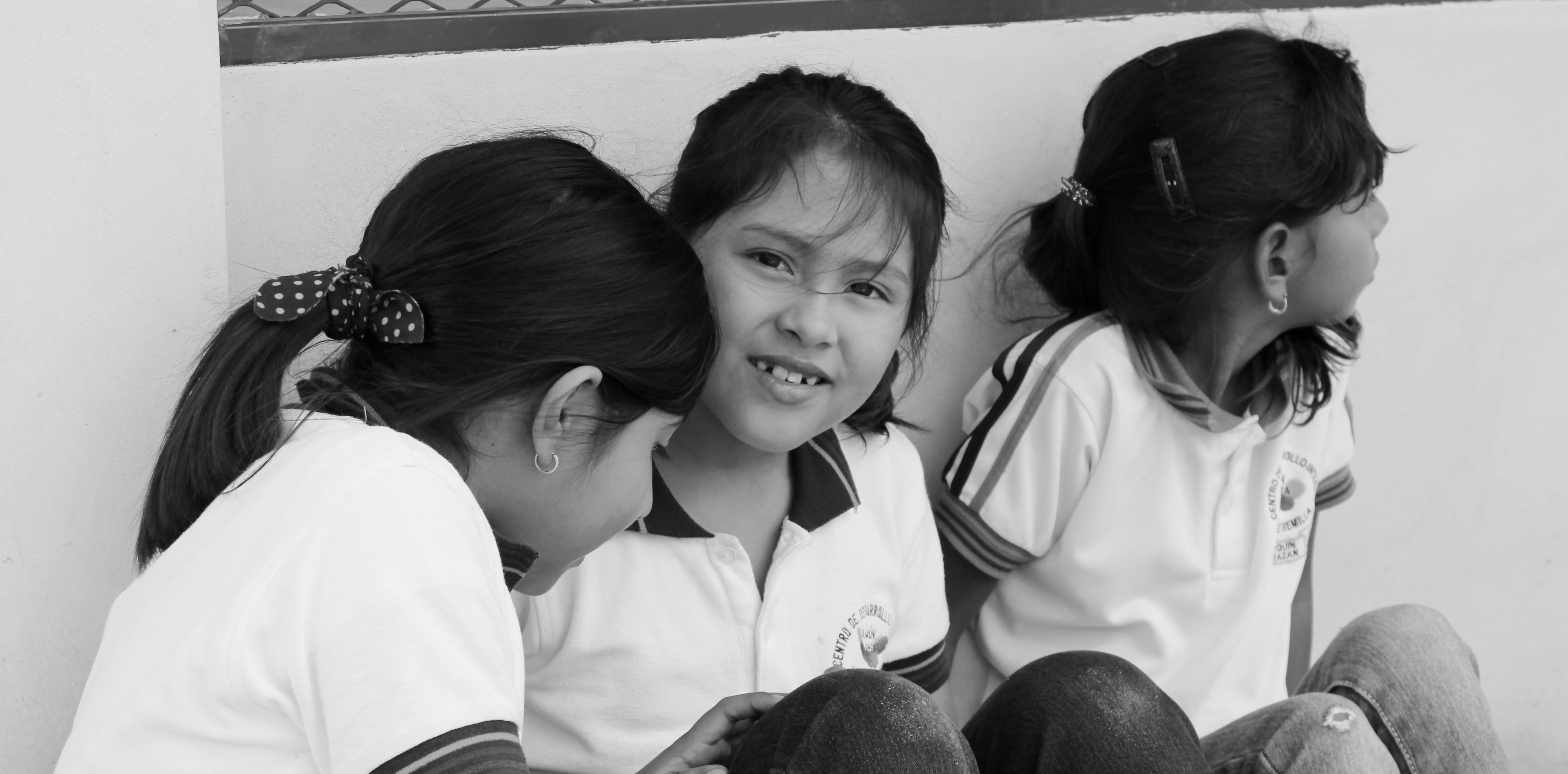
BW Attitude

At Amún Shéa, we are enjoying a substantial degree of success using critical thinking, analysis and debate on relevant issues as tools to foster positive can-do attitudes. Our current challenge in this component is to instill a sense of social responsibility, intrinsic motivation and self-discipline in each student. This is easily the least understood aspect of the program within the educational community and requires considerable tact in its presentation. Empowerment of students sounds enlightening, but the shift in control that occurs when it is actually carried out (and not just spoken of) triggers an incredible resistance.

We have a formal educational community organization consisting of representation from the student council, the teachers’ commission, the parents’ organization, school administration and the Foundation. It is fascinating to observe the chemistry between these groups as we work towards shared decision making. Discipline is the “elephant in the room” theme brought up each time an adult feels pressured by this process. The discipline conversation always directs our attention to an idealistic and more ordered past where social structure seemingly had greater definition, and appearance revealed worth.

Perhaps the uncertainty of the world today causes one to yearn for a simpler, less complicated period. The vision of impeccably uniformed students with greased-back hair, toes pinched in freshly polished shoes and creases you could cut cheese on, mothers pretending they love getting up at four in the morning to produce such a fine specimen and fathers over in the shade nodding their approval, brings to mind a safe haven in the past. Perhaps a reluctance to accept the inevitable changes that children push for, a reluctance to abandon status quo, creates this yearning for “The way it used to be.”

This “safe haven” period generally refers to the industrial age educational system. The world moves on however, and humanity evolves. We have entered into a new age, not yet fully defined perhaps, but marked by what can only be defined as dimensional or evolutionary changes. Either by design, choice or by chance, the past is relevant only as a lesson and a reference point as we move forward. New definitions as well as fresh norms of social conduct are necessary in order to navigate ever-changing currents, hurdles and opportunities in our increasingly complex world.

Strict obedience to authority is absolutely necessary in many minds, and there within lies a major problem in changing attitudes. Our position is that the final product of strict obedience is dependence, which is fine if your objective is to create soldiers and employees for the industrial age, but which does nothing to jump-start new socioeconomic growth. Genuine progress demands out-of-the-box thinkers, independent and skeptical of external approval, willing to take risks and with a high degree of both ability and self-confidence. We must understand that the phrase, “Because I am in charge,” is a direct affront to this process.

Observation leads me to contemplate the extent to which our thinking processes are evolving. Not all of the differences of opinion and position may be attributed to adolescence and generational “growing pains.” Without overstepping my area of experience, I believe we need to take a good look at decision making processes and the impact that honor codes have on that process. I would hazard a guess that those who yearn for the “safe haven” past maintain a strict code of honor which firmly establishes right and wrong within their understanding. An evolutionary process manifesting itself in many younger people seems to be that of developing a decision making process of comprehensive assessment unique to each situation; flexibility.

Care must be taken that our attempt to promote acceptable social behavior among our youth, through codes of honor, does not actually condition them to accept superficial codes. Codes which are imposed and not naturally assimilated are easily exchanged for another. While strict ethical codes are pictured as noble, there are many sectors of society which operate with authoritarian codes that accept no questioning; criminal organizations, youth gangs and cults, to name a few. We would be much further ahead by accepting that both evolution and our youth are moving in the right direction and support them in this transition.

Caught in transition between the industrial/information age and the incoming yet-to-be-named eon, we need to structure our programs with flexibility that bridges rather than breaks down community during this period. A level of tension, both generational and from a difference in vision will be prevalent, even volatile at times. We must learn how to responsibly manage those differences and understand the processes provoking those them.

It is clear that changing attitudes is a long-term endeavor, in all probability involving several generations. The length of the process should not be seen as a problem, insomuch as we have a comprehensive strategy and are moving daily in the right direction.

Integrating Education and Development

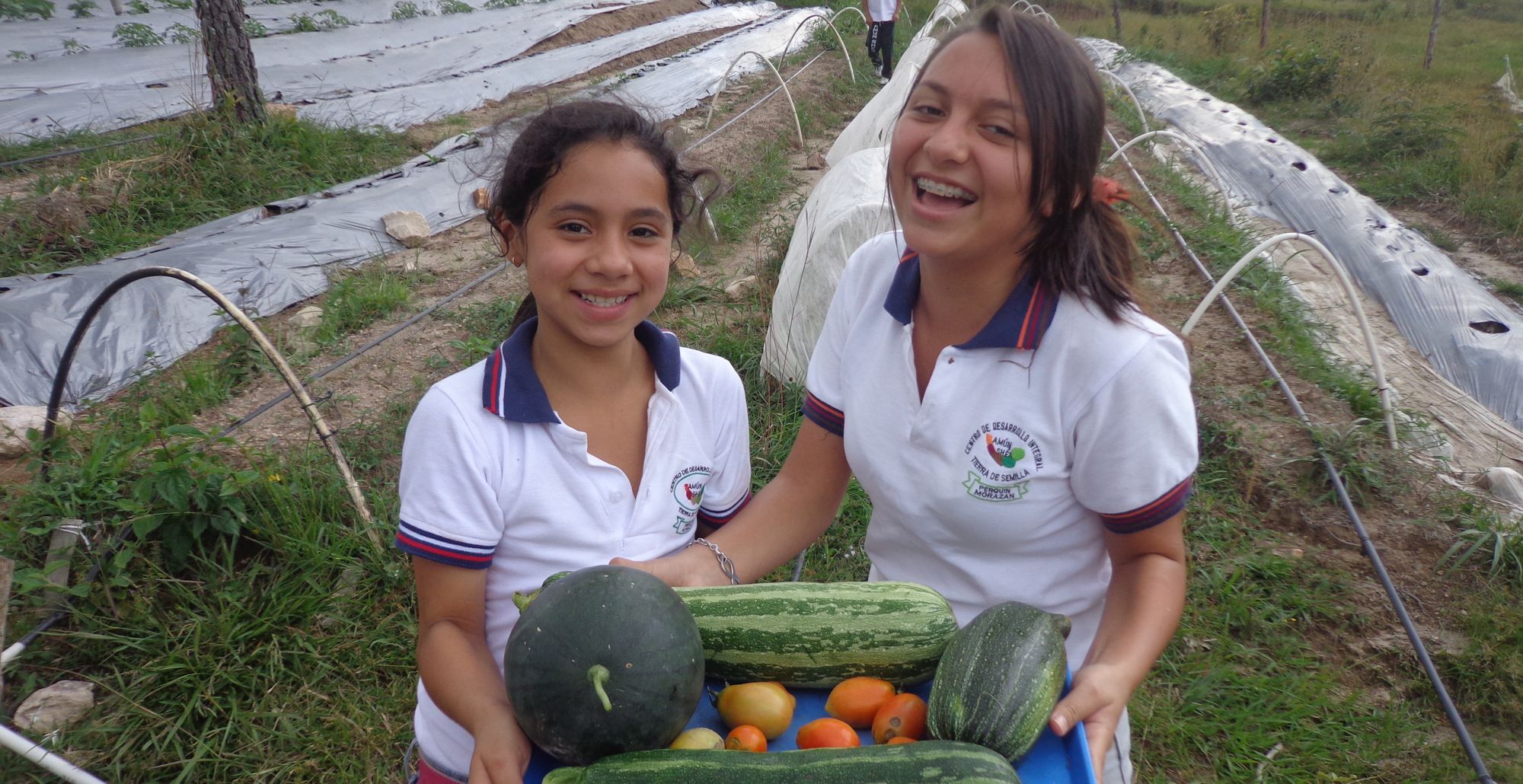
Garden Results

Northern Morazán is a remote border region in El Salvador. It is an area where the dimensional divide between education and development is very clearly demonstrated. Hundreds of local young people graduate from “vocational school” each year and enter “the real world” without the basic skills needed to face daily obstacles and to seize the occasional opportunities when presented.

High school in El Salvador has both a two-year general program as the route to university studies and a three year vocational option. Most rural students opt for vocational studies, as they lack the financial resources involved not only for tuition but for travel, lodging and living expenses to go to university. The problem is that most rural high schools have only one, and at the most two, vocational options. The high school in Perquín, Morazán provides Accounting and Secretary as the two vocational options, from which over one hundred students graduate each year. The obvious contradiction is that northern Morazán, statically the poorest area in El Salvador has little to no openings for these positions. The other difficulty is that the educational curriculum for these specialties is outdated, requiring the graduate who does find employment to relearn their skills once again.

Actually, a vanguard educational system should be the most significant means available to lead development and fight poverty in remote areas of developing countries. However, the traditional separation of formal education from socioeconomic developmental programs results with both falling far short of essential expectations and having little impact on real living conditions. It is indeed a sad truth that expectations regarding both program areas have plummeted, as the status quo of helplessness reigns supreme.

Attempts to effect change are often viewed as unrealistic and discarded as impractical theories. Programs too often are funded only because tradition and political correctness mandates tolerating this social burden, even though the probability of failure can easily be assumed.

Both, may we say, industries, have become institutionalized and increasingly specialized, conceivably to their own detriment. There is an obvious flaw in educational programs that are focused on forming excellent employees but work within a reality of very few job opportunities. Equally, developmental programs often mistakenly assume that the beneficiary population has sufficient knowledge or has the capacity to assimilate new techniques and productive innovations, creating frustration and inefficiency during program implementation and operation.

Very often these educational and developmental programs operate side by side without ever coming into contact with each other. Ostensibly they are all inclusive and mutually exclusive. Unfortunately, neither has managed to solve the social or economic woes in rural areas of developing countries. Both focus on content, knowledge, tools, resources and projected outcome. It is striking that neither consider attitude, self-motivation and self-realization to be basic components in their strategic planning and methodology.

A credible study of the long history of charity programs, reconstruction projects and readily available technical training courses will reveal a high degree of passivity and dependence on outside intervention as a direct result of their implementation. Development projects actually become a means of subsistence in and of themselves without hope of actually originating self-perpetuating productiveness and sustainability. The projects themselves become the employer and the organizations are often converted into a type of family business. Within this setting, traditional education has no clear purpose and therefore offers very little beyond simply keeping the children occupied while parents are working. It could essentially be said that these areas are primary components (purposely or not) of the Poverty Industry, in that “Education” provides the beneficiaries for continuous “Development” which maintains the demand for perpetual assistance and expert intervention.

Constructive socioeconomic change requires integrating the technical capacity focus of development with motivation or positive change in attitudes which are developed through appropriate educational methodology. This implies bringing the two programs together in a way that will enhance both. It requires providing education with a purpose for its existence. It means channeling development through those with interest, willingness and the capacity to assimilate innovative programs. It will provide a support structure to development and coverts education into a relevant, meaningful activity.

Amún Shéa, Center for Integrated Development in Perquín, Morazán is an example of the needed integration, with a curriculum that strives to bridge the dimensional split between academics and development. This is done with hands-on participation by the students in building solutions to local developmental hurdles. Beginning in 2008 with kindergarten through third grade, the program has expanded one grade per year, reaching ninth grade this year (2014.) Accreditation for High School next year is in process with the Salvadoran Educational Ministry.

Amún Shéa stands out from the Salvadoran norm in several concrete ways. The Amún Shéa program runs from 7:30 am to 3:00 pm, practically doubling the half-day public education system. Whereas the methodology in the public system is limited to the teacher copying material from a textbook to the chalkboard (whiteboard now, in some cases) and the student copying that same information into their notebook, our problem-based methodology integrates current and developmental concerns into the subject matter.

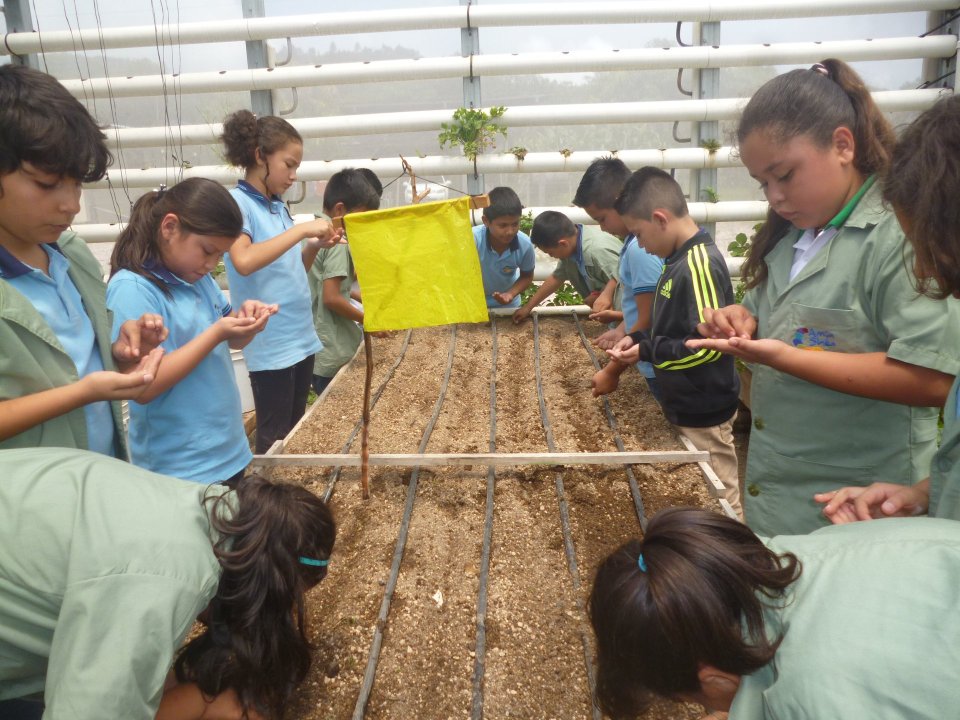
As the school runs a full day and nutritional-related health deficiencies within the area are alarming, Amún Shéa incorporates a complete nutrition program which provides nourishing meals, nutrition training, cooking lessons, vegetable farming, fishing farming and hygiene training. Coordinated with the USA-based organization GlobeMed, the objective of the program is to go beyond providing the daily snack and lunch to each student to actually modifying eating habits and diet within the community, beginning with the families of the students. As well, this activity opens the opportunity for families to learn from the program and implement vegetable gardening and fish farming as a business enterprise, which helps broaden the local production base from subsistence basic grains.

Amún Shéa students take on real-world problems for their scientific investigation projects. In one case, the sixth grade investigated the local municipal water supply after experiencing firsthand in their homes the indication of contamination within the distribution system. They traveled to the water source of the system, high in the neighboring Honduran mountains, interviewed the inhabitants living around the source and inspected the source. They then inspected the filtration plant, tanks and distribution system. They uncovered lapses and gaps of responsibility between the municipality and local health authorities. In the end, their investigation forced improvements in the water system for over 3,000 people.

Creation of business plans is another exercise for the integration of real-world situations into the subject material. Several small enterprises have germinated from this process, as parents are convinced of the viability by their child´s work.

Cultural research and investigation as a means of building community and personal identity is an elemental part of the program. Collecting testimony from senior citizens regarding past events, practices and local history, researching local legends and lore, and searching out traces of indigenous roots all assist in personal orientation. In this aspect, not only the past is covered, but current tendencies as well, including immigration, economic activities and opinion polls.

Each student is equipped with a Personal Learning Environment, basically the digital tool-kit and portfolio they will use and further develop throughout their lives. This emphasis on digital tools and resources actually levels the playing field for our students, giving them access to the same information and processes as students in more favorable conditions. It also compensates for the lack of locally available information in needed areas of technical study.

Integration of education and development is the key to initiating positive socioeconomic changes. Its success will depend on the extent that real-world application is implemented throughout the process.

The Mandate of Education in Development

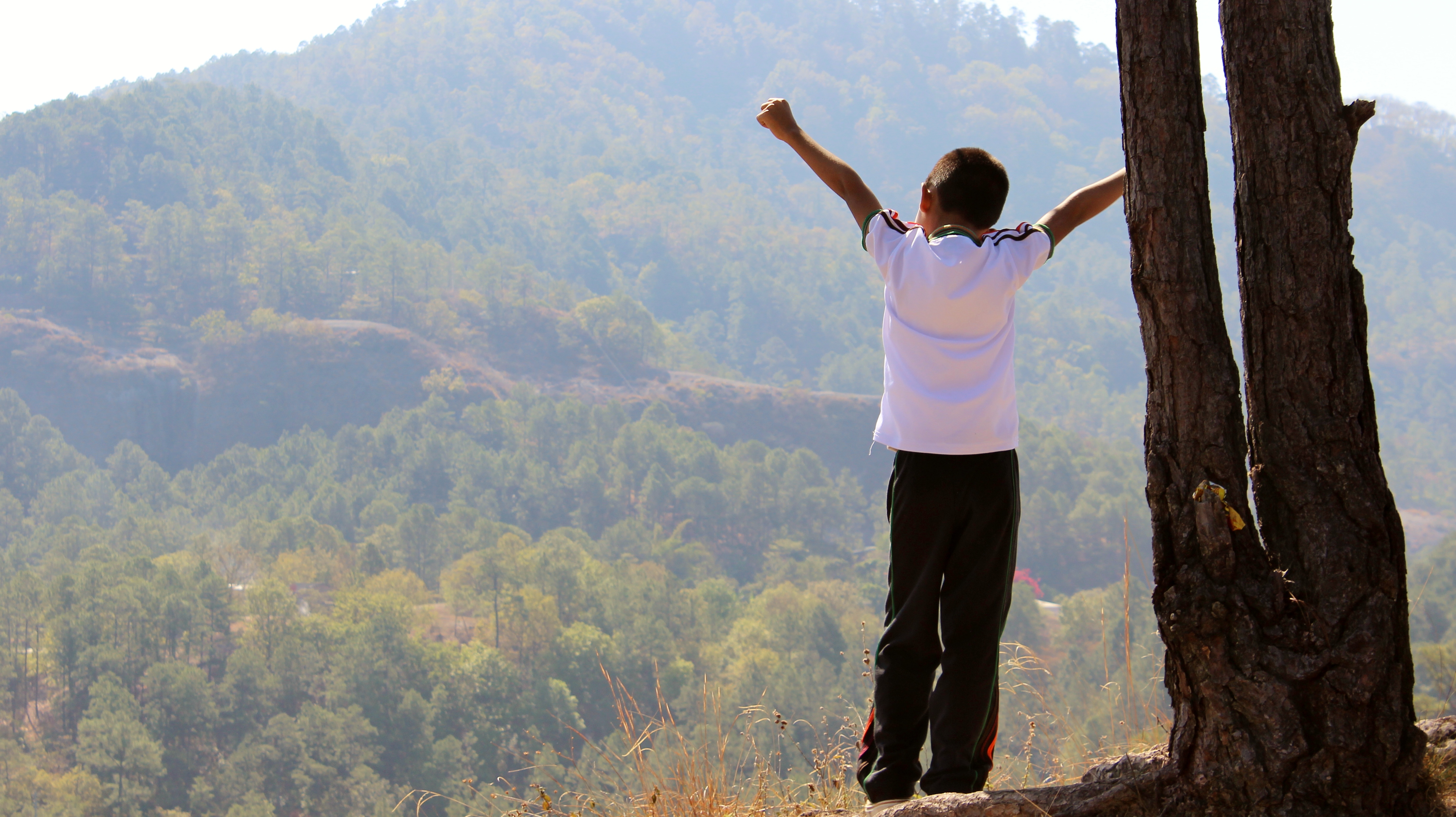
Niño brazos en alto

Education has a mandate in socioeconomic development! Especially in economically unstable regions, the implementation of new productive endeavors or innovative methods requires a time consuming learning process. In underdeveloped regions of the world, much of the effort of outside experts is consumed in teaching basic concepts and simple mathematic operations instead of implementing the necessary modernization.

Typically, these development projects are implemented in close proximity to a local school. These schools, as part of the “formal educational system” use standardized lessons which are often completely divorced from community needs and employment opportunities. This void easily reaches a point where the focus on the hypothetical leaves students unprepared for real-world situations. This situation actually disempowers people and generates passivity in the face of personal and shared challenges.

The mandate is to bridge this gap between education given and the knowledge needed, if we are to see positive change in socioeconomic statistics. A first step is to merge the activities of education and development so that obstacles to growth become areas of study in the school. Next, outside technical assistance must be made available through the school, which amplifies coverage, lessens time spent on basic concepts and takes advantage of potent youthful energy. This merging of activities enhances the quality of each by providing purpose and motivation for each.

Unfortunately, the intent of creating equal opportunity through the standardization process, while claiming different degrees of success in different places, in general failed completely throughout economically stagnant regions of the world. The wholesale training of an employee class, and then sending them out into a jobless situation, is counterproductive. Opportunity lies in entrepreneurship and the application of creativity to specific local circumstances.

Amún Shéa, a school in the Morazán province of El Salvador, has accepted this mandate and has taken on the challenge of merging education and development. It is a unique but proven educational project, designed to combat the self-perpetuating underdevelopment that is endemic to the region. It is working to stop this repetitive cycle through human development which focuses on changing attitudes, building real-world skills and creating opportunity for realization of hopes, dreams and goals.

It is gratifying and provides hope to see endeavors similar to Amún Shéa developing quietly throughout the world. It makes the future brighter. Be a part of it!

Education, Poverty and Status Quo

IMG_0201

Gaining distinction as the poorest area in the country, both in economic terms and academic achievement, is not an easy task. It takes years, even decades and many progressive steps to achieve it, and even more work to maintain it. It is manifested in attitudes, in conformity and a paradoxical combination of resentment and resignation. It is expressed in the status quo and far from motivating the search for alternatives out of poverty; it actually induces a strong resistance to change. In an uncertain, fearful world knowing your place and your role provides a sense of security, even when that place is last place. This is the current situation in northern Morazán, in north-east El Salvador.

The division of roles and full acceptance of them among all players is the determining factor in maintaining status quo. The automation of social processes results in the acceptance of always being the “beneficiary population” for entities of the Poverty Industry and a tacit understanding with regard to the distribution of the provided resources.

The intromission of elements, institutions or concepts foreign to the “understanding” is cause for great concern. Worse yet are those that focus on developing structural changes which could modify the perception or image of the “poor and dignified victims.”

In 2008 we started Amún Shéa, Center for Integrated Development, as an alternative educational system designed to address the socioeconomic needs of the area. As expected, the program immediately drew attention to itself, both from parents seeing it as a viable option for bettering their children’s future and by those who looked at it warily, fearing that it would disrupt the status quo. As one local council member expressed, “the fundraising capacity of this project, will absorb a disproportionate share of international cooperation designated for the area.”

New methodology which does not contain “the basics” of traditional education is automatically rejected, although it is generally accepted that the current educational system in Morazán is a failure. Even parents supportive of the program have difficulty measuring their child´s progress by traditional standards, until they learn new systems of evaluation. Experience shows that our program works, is effective and has tangible positive results. Assimilation within the community, nevertheless, is a process delayed by status quo.

The point is, for an educational program or any other program to be successful in creating real change; it must first overcome the inertia of status quo which permeates social strati, including those seemingly supportive of change and poverty eradication.

De la Realidad hacía lo Ideal

Boy with Pipe banner 44Es muy fácil clavarnos en un debate sin fin sobre la educación, si no nos ubicamos primero referente al ángulo o punto de vista representado. La brecha entre la realidad, más bien entre las variadas realidades según circunstancias y ubicación, y lo ideal se duplica muchas veces en la discusión.

Como me dijo un amigo, Menno, hace ya unos veinticinco años atrás, “todo plan es perfecto sobre papel; el problema es que depende del hombre para implementarlo.” Coincido totalmente con Menno, en que todos los proyectos y reformas educativos son perfectos, hasta son ideales, pero hasta el momento de su aplicación. He aquí la razón del enfoque e importancia que da el PNUD y otras instancias sobre el desarrollo humano, ya que es el elemento que determina el éxito o fracaso operativo de todo plan.

Si aceptamos la realidad de una brecha entre el programa educativo nacional y su aplicación, y si evaluamos que, lejos de mejorar, tiene una tendencia marcada de espiral descendente, entonces el debate debería centrar en las medidas a tomar para revertir el proceso hacia lo positivo.

Tenemos que aceptar además que todo programa nacional es centro-céntrico, valga la redundancia, y que las condiciones del centro difieren mucho del periférico. Así “las medidas a tomar” en toda probabilidad son reflejo de cada realidad actual, aunque tengamos un ideal o norte en común para guiarnos.

La ley de desarrollo desigual nos indica que entre más atrasada, más posibilidad de un salto de calidad, ya que difícilmente se abandona inversión de infraestructura y procesos que están todavía funcionando aún a medias. Donde tal inversión no existe y no hay necesidad de deshacer para construir, la acción de cambio tiene mayor libertad y menos ataduras.

Propongo que el norte de Morazán se encuentra en una posición de ventaja para poder realizar cambios radicales y tomar las medidas de corrección necesarias en materia educativa, ya que se encuentra firmemente en el último lugar de rendimiento académico y el primer lugar en la pobreza de la nación. Continuidad solo garantiza continuidad.

La opción de esperar que las reformas nuevas y los directrices operacionales filtran del centro hacía la periferia no es viable. Así como está la situación, cada región o realidad tendrá que proponerse a realizar los cambios necesarios para sacudir al fondo la inercia de un sistema estancado.

Mas sin embargo, estando en el piso sin más salida que para arriba, fácilmente se puede caer en un nivel de activismo o maquearismo que aparenta mejora en el corto plazo pero que carece de bases fundamentales sobre lo cual se puede continuar construyendo. Eso es el gran reto actual; hacer los cambios necesarios, radicales incluso, sin despegar de los cimientos fundamentales de la educación. Pues, es fácil hacer olas en un charco pacho.

Previo al debate de fondo sobre la educación viene el estire y coge de quien o que instancia es la que puede determinar cuáles son los fundamentos intocables académicos. ¿Quién es el dueño del circo? …..y ¿por qué?

Algunas preguntas para la discusión:

1. ¿Es un docente con escalafón la mejor opción para las responsabilidades de director, o estos se resuelvan mejor otro profesional?

2. ¿Con un profesional no-docente como director, podría haber otro nivel de aplicación de las reformas educativas?

3. ¿Se obtiene conocimiento con teoría o es necesario aplicación? ¿y si es posible enseñar un conocimiento no aplicado?

4. ¿Es el docente la única vía y realmente insustituible en la obtención de la educación?

5. ¿Podríamos diversificar el “programa” educativo, creando opciones de vías de aprendizaje en concordancia con los intereses, capacidades y expectativas de los “clientes?” ¿No llevan todos los caminos a Roma?

6. ¿Cómo se organice un programa “nacional” que no es marcado por centro y periférica?

7. ¿Cuál es el producto que buscamos con la educación, el tigre o el perico?