A long running Russian experiment, beginning in 1959, documents the domestication of the Silver Fox, establishing the process of actual physiological changes and modification of natural traits that convert a wary independent wild beast into a floppy-eared, tail-wagging attention seeker, eager to please, in as little as six generations.
This domestication syndrome applies to many mammals, within which we must include humans. Self domestication of human beings within society is deemed by many to be an important element in the continuing evolution or civilization process. Aggression and “unfit behavior” is punished, while passivity, success and fitting-in is lauded and rewarded.
All private, public and ecclesiastical institutions are built around this mission of the domestication of the human being and those of us working in the training of young minds must be perfectly clear of the central role education plays in this process. While understanding the value in “civilizing” aggressive traits as a social benefit, we must also recognize the trade-off of lessening innate skills and instincts, before blindly continuing the rewards-based obedience training that education has morphed into.
Independence, in thought, in speech and in action not only should not be lost, but must be consciously regained. Specialization has become equated with conformity and dependence, not because specialization requires conformity, but because obedience has become the underpinning of the domestication/educational process. This particular aspect is fundamental and urgent to be dealt with in a timely fashion.
Modification to the prefrontal cortex of the brain effecting gene expression and hormone levels, among other changes not fully understood to date, has been detected in the Silver Fox experiment. In our own experience, we see that many of our domesticated dogs have become so dependent on our care, that their very survival on their own, in the wild, would be extremely doubtful.
Is it possible that part of the concern regarding current intellectual, emotional and survival capacities of the human race stems from the result of over-domestication? No evidence yet of floppy ears but it could be argued that the tail-wagging definitely has set in. How many humans would survive if current systems were to fail? How long would our “good behavior” survive? More importantly, is the descent into blind obedience the best way forward for humanity?
The Silver Fox experiment is a jarring eye-opener, one which should jolt us into rethinking education and into designing a re-wilding of independence and self-reliance back into the human being.
While tilling my vegetable garden, I am interrupted at times, by the scandalous alarm of cawing crows as they repeatedly dive bomb and mob an escaping hawk caught in its intent to snatch a newborn chick from the crows nest. Ironic to watch one built for speed and kill, a predator rarely challenged as it soars above all so majestically, now desperately fleeing a couple lowly crows.
You would never place odds on a crow in a match-up with a hawk, but from that apparent hopelessness, courage is sparked and burns bright. Faced with overwhelming odds, reasoning is shrugged aside for the instinct of survival, more often than not, the survival of family or tribe over that of the individual or of the few embodying courage.
In this case, of course, the powerful hawk is out for quick and easy pickings, while the crows are protecting their family, their flock, their very existence. While the hawk displays ability, skill and hubris, it will never experience or embody courage; that attribute is reserved for the underdog, willing to sacrifice all.
An easy metaphor mirroring our human condition, as the powerful, seemingly at will, prey upon the weak and powerless. And yet, without regard for life and limb, appear those with the conviction and courage to resist and push back. Countless examples through history, throughout the world and even within our own experience. Friends and comrades, some fallen along the way, others standing, still somehow, none unscarred.
Were the story to end here, our metaphor of good versus evil fits our narrative of right and wrong very well. Before we can get comfortable, however, our hero the crow muddles up the image dramatically.
Almost invariably during their return, perhaps exhilarated by the feat of running off the hawk, the crows raid the mockingbird nests found in the shrubs along the fence-row, looking for eggs and young chicks. The victims converting into oppressors, how so embarrassing. This is where the humble mockingbird gives its lesson in courage, with frenetic energy, singlehandedly chasing off the horde of crows. Once again, survival instinct winning over brute power.
The drama comes to an end and I go back to pulling weeds, pondering the quandary of the crow. Both victim and oppressor in one, and why has this caught my attention? Given the principal that the exterior world only reflects our interior consciousnesses, I am prodded into asking myself in what circumstances have I played the role of the crow.
I would rather it be a rhetorical question, but I fear it may not be so. I am drawn toward my shadow-side, dark corners yet to be cleaned, where I come face to face with a trait that reeks of self-righteousness. I wonder if the preference to “my chosen people” lead me to turning a blind eye and dismissing others, equally vulnerable yet not as deserving according to my judgment? Did I use and discard others along the way, because of the cause? Did I put the “greater good” over friends and family? The justifications once abundant dissipate over time and distance…
The questions come as observations and lessons, not as regret: understanding rather than rejection. On this tortuous path towards self-knowledge, they remain open, yet unresolved, questions…
“According to ancient science, one or two forces are insufficient to produce a phenomenon. A third force must be present, without which the first two can never produce anything at all… The first force may be called “active” or “positive”; the second, “passive” or “negative”; the third, “neutralizing.” (Gurdjieff, In Search of Being, Shambhala Publications, 2019, p61)
Observing difficult circumstances in our lives and conflict in our society, it becomes obvious that opposing forces eventually reach an equilibrium resulting in a ying/yang variety of stalemate. Two sides of the same coin; strengthening one side leads to the opposing side gaining force. Only when a neutralizing third force is able to produce a metamorphosis or a paradigm-changing substrate may a real and sustainable solution be constructed.
A delightful conversation in a noisy coffee shop with Maria Foscarinis, author of And Housing for All, The Fight to End Homelessness in America (Prometheus Books, 2025), led to my being thoroughly educated, (probably an overstatement: more like abruptly enlightened) on the history, politics and extent of homelessness in the USA.
This took place while I was in the midst of digesting Gurdjieff’s In Search of Being, hence the irresistible urge to fuse the two mind-bending lessons into one and attempt to apply the “Law of Three Forces” to the issue of Homelessness.
In this case, the “active” force may be distilled or condensed to that of “Affordable Housing Demand” and the “passive” resisting force to “Lack of Affordable Housing”. This results in Homelessness as the issue or as the proverbial coin with two (active and passive) faces. The construction of a neutralizing force to this dilemma requires a dispassionate look into what can only be described as societal failure.
It is very easy, practically automatic, to view this phenomenon as another partisan political talking point. As such, it is very easy to fall into the emotional “poster child” exchange dynamic which only increases the volume of the blame game, distracting from any fundamental solution building. It is behind this smoke screen where special interests hide and thrive.
The Affordable Housing Demand is created by three categories generally accepted by all parties: • People who have made questionable life decisions and those with mental illness, • People who are physically disabled and have need of assistance, and • People and families facing financial difficulty. • I would also add Starter Families within this grouping, although they have not traditionally been part of the discussion.
A shocking revelation which puts the entire situation in perspective is the fact that current vacant housing just sitting ready for occupancy far outweighs the demand for housing.
The Lack of Affordable Housing seems to be created by: • Housing as a Commodity Investment by corporations, equity funds and investment firms restricting supply of ready-to -occupy vacant housing as a strategy to maintain high rental and purchase costs, while simultaneously increasing the value of their holdings. • “Pay per Play” Governmental Predisposition or “Wink and Nod” through approving programs but not allocating resources, allowing non-compliance of law and favoritism towards lobbies over citizens. • Gentrification of traditional neighborhoods and the advent of Business Improvement Districts (BIDs) displacing lifelong residents. • Zoning, regulations and Home Owners Associations (HOAs), all focused on maintaining property values.
Not all of the little funding made available for assisting the homeless is efficiently applied, which adds to the problem and fuels the opposition to “public assistance”. Homelessness has become an Industry by service providers, a “cottage industry” and non-governmental organizations. Just as any growth industry will prioritize growth of their client base and economic leverage over resolving the problem and then fading away. High overhead and corruption need to be transparently addressed and dealt with. We do seem to maintain the practice that is best encapsulated in the statement, attributed to various historical figures, regarding USA support to then Nicaraguan dictator, Anastasio Somoza Garcia, “He’s a son of a bitch, but he’s our son of a bitch”. The ranks close firmly while at war and all signs of impropriety must be ignored.
Independent of the criticism leveled, and rightfully so, at specific cases of abuse of the system and corruption in the execution of programs, what stands out clearly is the fact that the Demand is created by people- flesh and blood people, and the Lack is created by systems and structures built for specific economic interests by individuals and groups, but without any human qualities of their own.
Life, Liberty and the Pursuit of Happiness are held high as inalienable rights of citizens. While a corporation or equity fund does not have the attributes necessary to embody these lofty concepts, a series of historical Supreme Court ruling have supported certain “citizen rights” to corporations, which has opened the doors to very questionable application of the law, including even the right to representation within our organization of government.
“Am I a Citizen?” is a powerful reproof presented as a question, in chapter nine of Foscarinis’ book, as homeless citizens are treated as outcasts, even alien, given that identification itself is firmly linked to holding a physical address. When an equity fund can prove citizenship rights easier than a human born within the country, it’s time rethink our social contract.
You tuber Offended Outcast takes us into the world of retirees who have no where to go. “Survival looks like trespassing” and “Unprofitable people are dangerous” are just a few of the incisive themes in Offended Outcast’s forceful and informative videos.
President Franklin Delano Roosevelt in 1944, proposed a Second Bill of Rights which included the right of every family to a decent home. “We cannot be content, no matter how high that general standard of living may be, if some fraction of our people—whether it be one-third or one-fifth or one-tenth—is ill-fed, ill-clothed, ill housed, and insecure.” (State of the Union Message to Congress. January 11, 1944).
It is well worth reading the entire text of FDR’s speech to Congress, before irrupting into the “Obligation of Government” versus the “Bootstrap Upward Mobility” argument. The rights proposed clearly start off with “useful and remunerative jobs”, the right to earn, sell and trade “in an atmosphere of freedom from unfair competition and domination by monopolies…”
The automatic rejection over economic costs of acknowledging (not granting, but acknowledging) these rights does not have a firm foundation. Furthermore, the “problem” does not go away because it is denied. Studies show, and certainly more studies should be done objectively, that the economic cost of criminalizing homelessness and dealing with the ensuing social disaster is higher than addressing the issue in a dignified manner. The emotional and developmental damage done to homeless children, tragic in itself, only contributes to a chronic and repetitive cycle of despair generation after generation. Even setting aside social concerns, an objective economic review would project that every homeless person out there is a potential productive worker and a guaranteed consumer. It’s an investment.
Successful working models exist and should be examined without the automatic partisan political filter. True opposition to solving homelessness does not come from that smoke screen, but rather from faceless non-human entities created to harvest economic wealth regardless of infringing basic rights of our fellow citizens.
The experience of Houston’s “Housing First” program, through groups like “The Way Home” is worth studying for replication for the difficult emergency, mental health and chronic disability cases. The Community Land Trust (CLT) is a promising option as solution for economic hardship cases. For this option, the Trust purchases land and develops low-income housing for sale. While the house is owned by the buyer, the trust retains ownership of the land, with a long-term lease to the homeowner. If the owner wishes to move on and enter a less restrictive housing solution, they can sell under conditions of affordability to a new buyer. Practical solutions do exist, and importantly are working, albeit on a small scale.
The “neutralizing third force” that must be brought to bear for the homelessness dilemma is the acknowledgment of unalienable human rights, as proposed by FDR in 1944, and a clear definition of exactly what is meant by “We the People.” Have we foregone the representative democracy experiment for a caste structure with participation of and enforced by faceless systems? Blaming the “system” is the epitome of weakness and lack of responsibility.
The second Hermetic principal of “As above, so below” or in this case as “As without, so within” reminds me to peer into the mirror of the homelessness phenomenon in order to identify why this particular theme resonates with my being.
A recurring nagging thought, obviously unresolved, arises in my consciousness regarding the nature of “human being” versus “human doing” within the context of self-worth and personal values. Productive activity and “doing responsibly” boosts my self-image and allows “fitting in” with the crowd, while “being lazy” brings guilt and shame. Even attempting to remedy this imbalance by leaving a steady job to “putter around” in the shop, does not eliminate the hamster-wheel mentality carried deep inside. I catch myself focusing even more on productivity. The “active” need for balance or desire to turn energy inward faces off against the “passive” ingrained work ethic which places economic security over the development of basic human qualities. In doing so, I treat myself as a “human resource”, converting into my own self-imposed “equity fund”, denying attention and development to my “unproductive” side- the homeless unembraced human qualities. Reconciliation of this will require a redefinition of self and a restructuring of priorities in which the “doing” is a result of a free and independent “being”.
The mirrored reflection, practically a holographic overlay between the inner and outer worlds, hinted at by many sources, is a challenging realization. On both levels, “doing” is in essence a non-wavering focus on competition, while “being” depends upon and creates cooperation. Our genuine identity as an individual, as well as a nation, must embody humanity and being over the temporal activity of doing.
Tell me who did what and I’ll tell you if they’re a hero or a traitor. Don’t muddy the waters with details, they only get in the way.
Polarity rules, over all. I need to know which side you are on, as Our intentions are divine; their results are demonic.
In this struggle, Our warriors are the honorable ones in this righteous war; devious actions by a few are the exception and do not represent our cause. We are beyond reproach.
In this struggle, Any sadistic behavior by an enemy defines their official position. The exception is the rule and they are far beyond redemption.
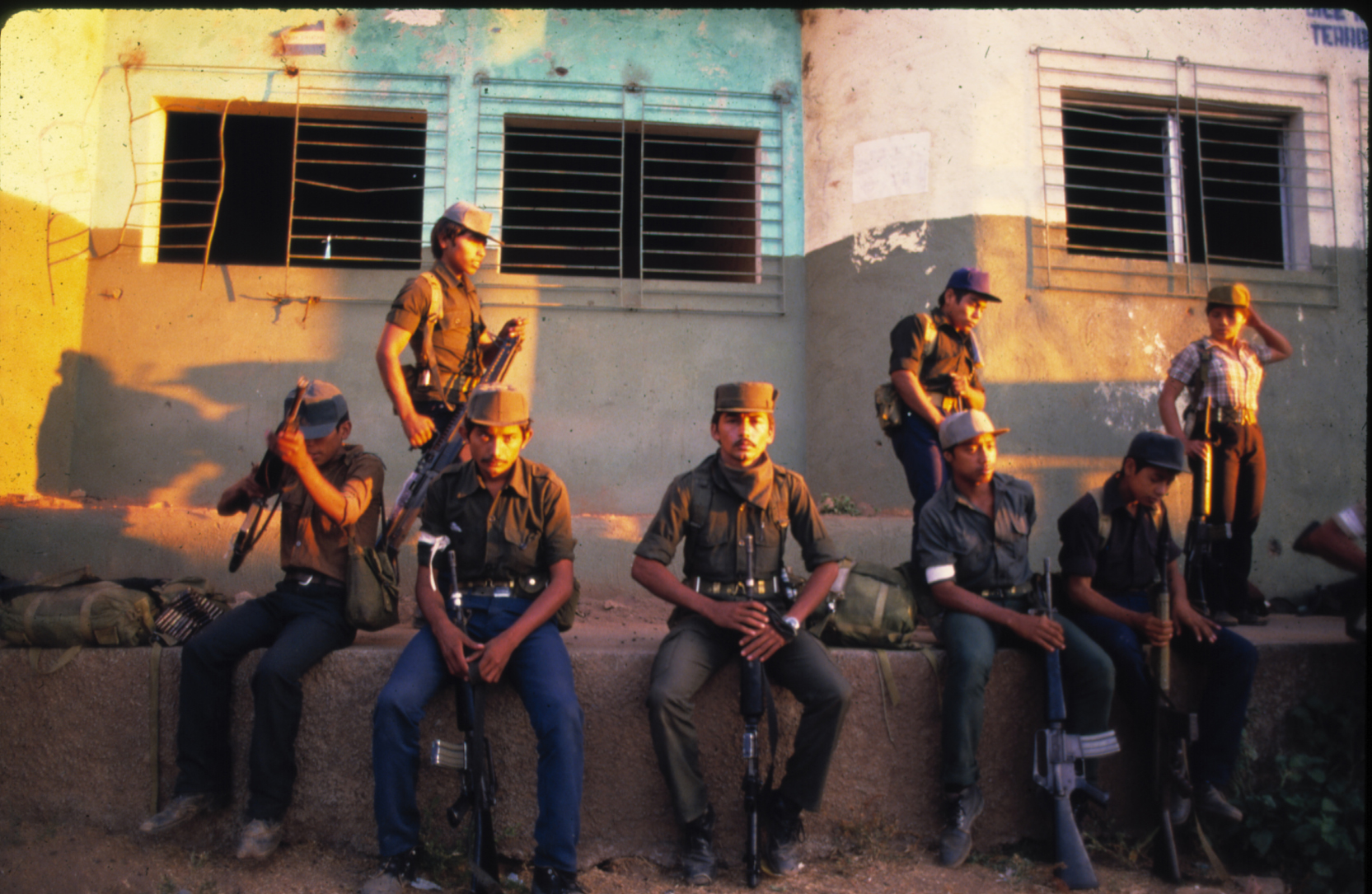
So, please remind me which flag you are waving, because I need to condemn or condone that glee on your blood splattered face and blood-lust in your eyes as you dispatched that traitorous, … young frightened boy.
I want to believe the sincerity in your shy smile and schoolmarm demeanor. I really do.
Long forgotten, unmarked graves that will never be uncovered nor remembered. Examples have to be made, after all it is war…
And polarity rules, over all. Do we continue this madness? Or do we begin to transcend and reconcile polarity?
“Everything is Dual; everything has poles; everything has its pair of opposites; like and unlike are the same; opposites are identical in nature, but different in degree; extremes meet; all truths are but half-truths; all paradoxes may be reconciled.” – The Kybalion
I do a little woodwork out in the shop. It has a two fold purpose. One: the enjoyment I have creating with my hands what existed only as an idea beforehand, and two: as a necessary income supplement. Man does not live by venison and sweet potatoes alone.
An old radio provides the background music while I work. Normally, I have “contemporary adult” of rock and roll from the 70s and 80s on, and sometime a little country. It is a digital radio and the dust from the shop has filtered in, making it difficult for the controls to operate as normal. None of the buttons do what they are supposed to do making it difficult to find my music. One easy find is the local PBS classical music, which I had never really listened to before; my Rock and Roll is much harder to find.
Over time, I’ve noticed a rather odd phenomenon. It began rather unconsciously, without any thought on my part. Now it’s become part of my ordinary routine.
When working on a new creative project, I leave the radio off; it seems to be too much distraction. Once a new project is created, classical music is the key for a calm detailed production process.
But for pure production, turning out bulk, ten to twenty items at a time, without much thought, there’s nothing like Bachman Turner Overdrive. It’s well worth the extra time it takes to tune in that station.
We hear alot about how we’ve been programmed since birth to make us useful and obedient to the Powers that Were (formally known as the Powers that Be). I fully agree with that assessment and now believe that much of that was done through the music we grew up listening to. Who knows what all was piggy-backed onto those tunes, but we’ve all felt that emotional jolt when an oldie we grew up with comes on the radio, taking us straight back to those days.
I am searching for ways to deprogram myself and liberate my mind from automatic responses to external prompts. Silence looks to be a key to breaking out, perhaps along with new and untried experiences. But meanwhile I’m using it to get a little production out of myself when needed.
heavy while down and weightless while up, breeze running through the hair.
The pendulum swinging side to side, when pulled in one direction always reaches it’s polar opposite.
The Law of Duality is inescapable in this our current state of being. Two sides of the coin. Yin and Yang; polarity of Life.
And were the sun and the moon to begin a dispute on which should rule, and call on us to join one and shun the other? If one were to overthrow the other? Our corn and our beans would cease to grow. Their dance together through the heavens harmonizes life, indeed creating the most beauty when sharing the sky at dusk and dawn.
The spectrum of political ideology runs from the extremes of Idealism without Practical use to Pragmatism without Ideals. And when the pendulum swings, does it ever swing!
We all had that one swing set in our childhood that you could leverage the swing so high that the chain slackened and you lost control, falling back toward the ground. Yea, you tempered your swinging after that, right?
January 21 of this year marked five hundred years of Anabaptism, the movement that spawned the Amish, Mennonite, Hudderite and Brethren religious communities, so congratulations are in order.
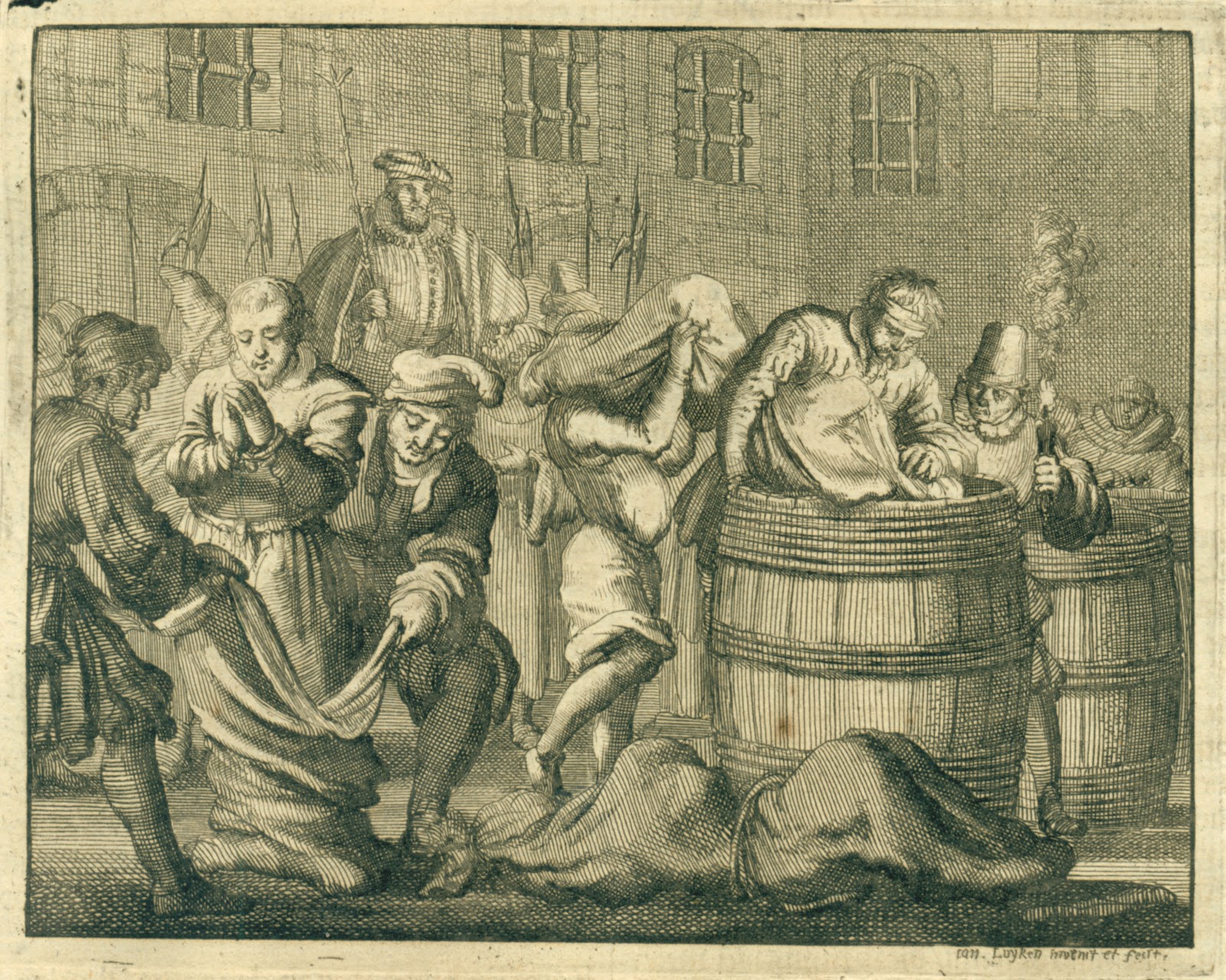
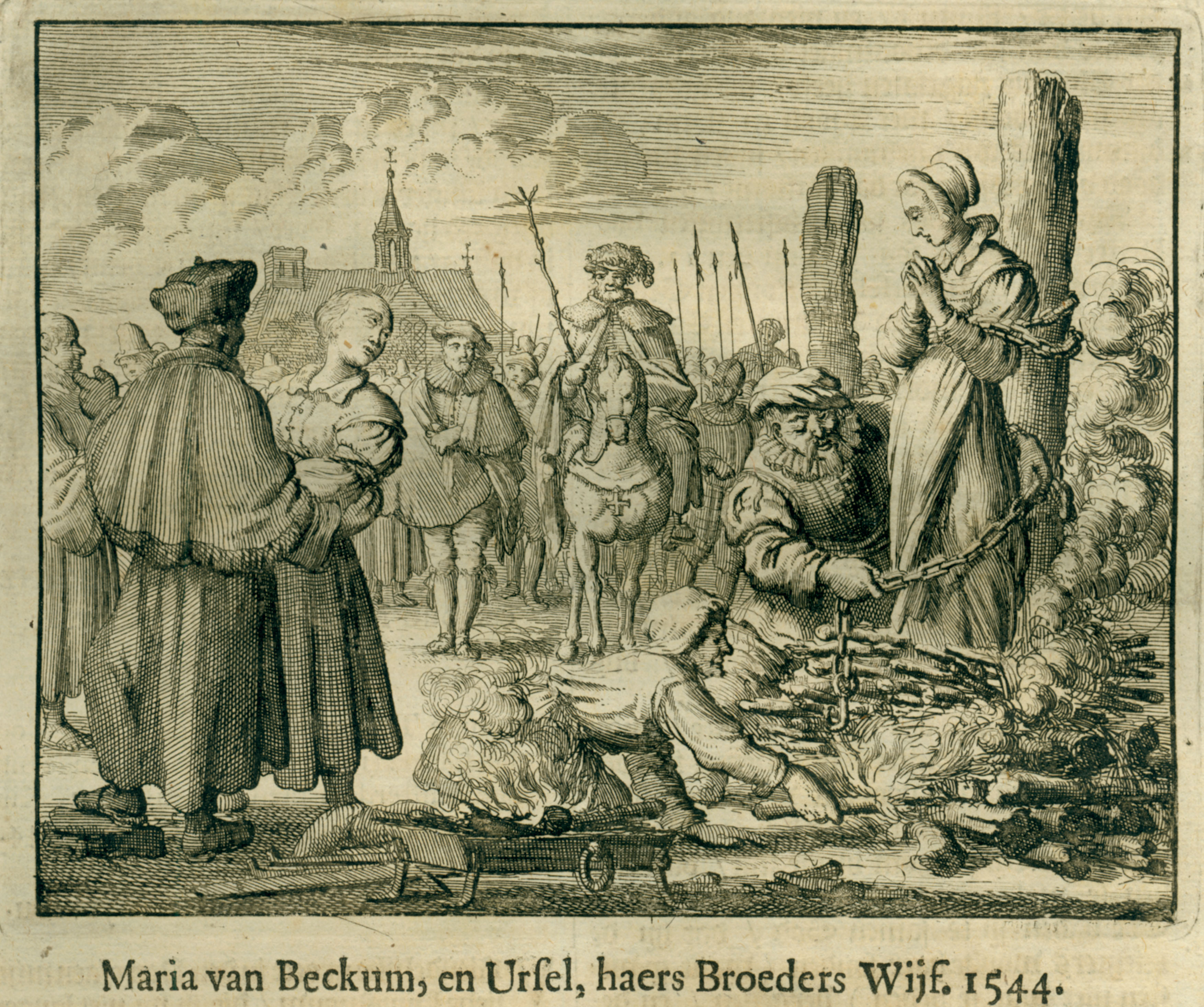
In a nutshell, Anabaptists rejected Roman Catholic infant baptism as invalid, insisting that this sacrament could only be taken by one conscious of it’s deep spiritual meaning. While this is the stance that led to the name “Anabaptist”, their new doctrine also rejected the Pope’s authority and called for a layman’s understanding and interpretation of the bible. This was countered by religious persecution and death for many followers by drowning, being burnt at the stake or broken on the rack, among other barbaric methods of Inquisitional torture. In the period from 1527 until 1711, an estimated four to five thousand Anabaptists were executed for their faith. Many are documented in the “Martyrs Mirror” or “The Bloody Theater”, first published in Holland in 1660 in Dutch by Thieleman J. van Braght.
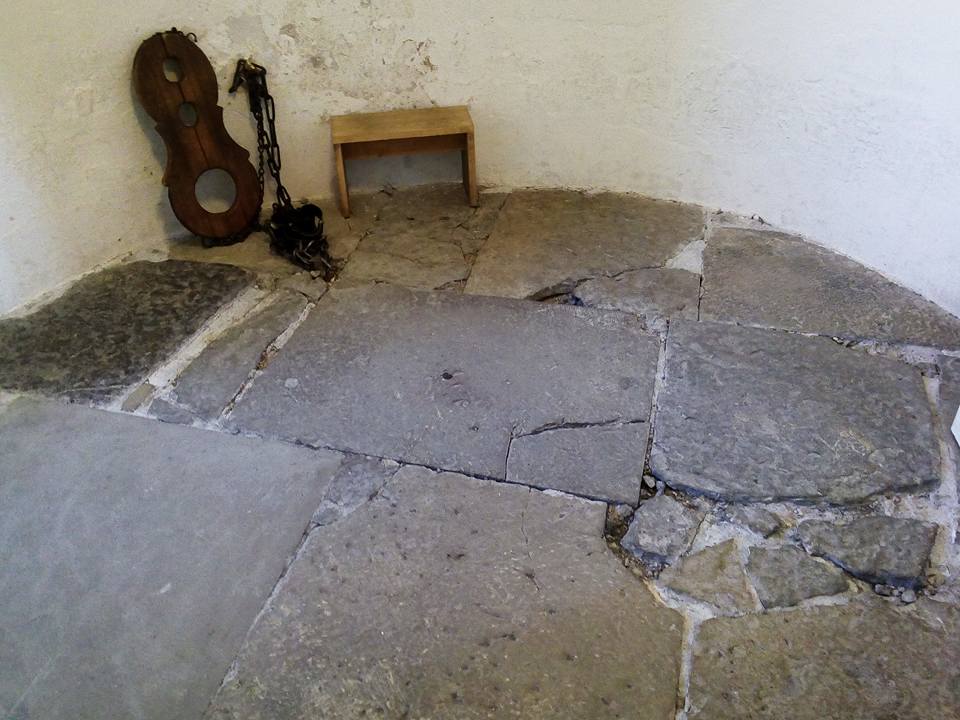
My sixth great-grandfather, Melchior Bronimann II “the exile”, born around 1631 in Oberdiessbach, Bern, Switzerland, a weaver, became part of this Anabaptist movement, specifically in the Mennonite sect. In 1659, at the age of 28, he was jailed for a year in the Castle of Thun, before being exiled, along with his wife and seven children to the Swiss Anabaptist refugee camp in Griesheim, Germany. Two cells in the tower in the Castle of Thun are open to tourists now; several years ago I was able to visit the area, sit in one of the cells for awhile and ponder if I could have made the same decision, at that young age and with a wife and a growing family. A sense of self-esteem in my family heritage is natural of course, even a pinch of sanctimonious pride. “We” stood up to an evil church-state alliance and remained true to “our faith”.
Thun CastleTower cell in Thun Castle
But then, the five hundred year refrain strikes a note. Where have I heard that before? Could it be that “we” were not the only thing going on? What else was happening five hundred years ago? Well, it turns out that quite a bit of change was taking place throughout the world which needs to be looked at in order to put the Anabaptist chapter in context. A related question is that of cause and effect; how individual movements impact or are impacted by world changing events. We all want to be the butterfly in the Butterfly Effect, right?
Overall, the time period of our interest, from around 1500 into the 1711’s, marked the end of the middle ages (also known as the dark ages) ushering in the enlightenment of the Renaissance period. Leonardo da Vince, Michelangelo, William Shakespeare, Descartes, Galileo and Copernicus among others molded our modern concepts of art, architecture and science during this time frame; basically forming all of current western cultural identity.
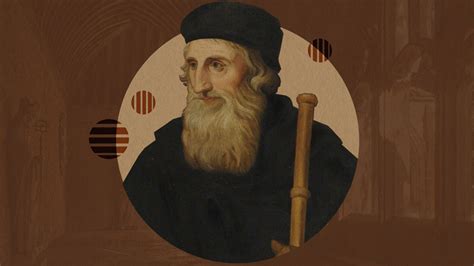
Long before Martin Luther nailed his 95 Thesis to the church door, an English theologian and early dissident in the Roman Catholic Church, John Wycliffe (1328-1384) had coined the phrase, “Priesthood of all believers” which would later become the basis of all Anabaptist theology. The bible translated for the common man, the equal footing of all believers and the right (and obligation) of each one to interpret the bible for themselves is central to this concept. I remember during my teenage years, a discussion at church regarding if the pulpit for the pastor should be on a raised platform or not. Raising the pulpit above floor level may give the impression of superiority, while keeping it at floor level meant he was no better than the rest of us, although it was more difficult to see and hear the sermon. The practical argument won out and the pulpit was raised, much to the chagrin of the traditionalists.
Wycliffe’s writings regarding the reformation of the church heavily influenced all reformers following in his footsteps. While he was able to stay out of the churches grasp and die a natural death in 1384, the Council of Constance in 1415 called for his bones to be dug up and burned for heresy.
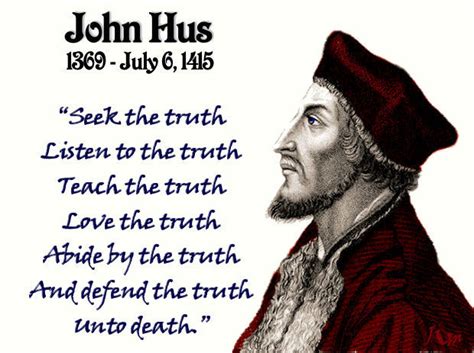
One of those who studied Wycliffe’s teachings was Jan Hus, hailing from what is now the Czech Republic. Born in 1369, Hus soon echoed his predecessor’s stance against indulgences, rejecting the power of the papacy and promoting the priesthood of all believers. His most recognized work titled “The Church” claimed that Christ was the founder of the church, not Peter. In 1414, he was given safe passage to a reforming council to be held in the city of Constance, Switzerland, purportedly in order to resolve his differences with the church. It was a trap; on arrival, his safe passage was withdrawn, he was tried and burned at the stake on July 6, 1415.
John Wycliffe
It is within the context of this 200 year discussion and coinciding with the enlightenment of the renaissance, that on October 31, 1517 Martin Luther nailed his 95 Thesis to the door of the Castle Church in Wittenberg, Germany. Initially there was an attempt to keep the discussion within the church, but to no avail. In 1521, he was excommunicated and the protestant reformation began in earnest, with a proliferation of proposed reforms and new doctrines and communities of faith. Among the most radical were the Anabaptists, and among them, the Mennonites.
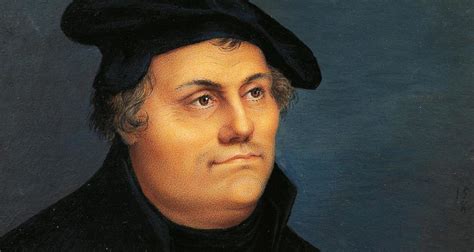
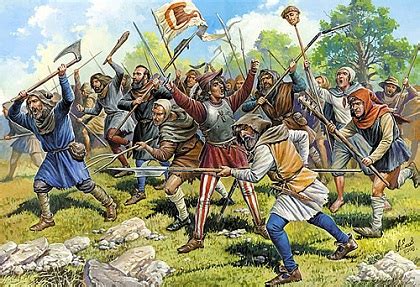
The debate over church doctrine went public and spread into the secular political arena. The German Peasants’ War (1524–1525) was a widespread popular revolt in the Holy Roman Empire that saw thousands of peasants, townsfolk, and lower-class individuals rise up against feudal authorities. Their demands were encompassed in “The Twelve Articles” which called for the abolition of certain feudal taxes, fair rents, access to common lands, and the right to choose their own pastors. The reaction to this movement by the theological reformers was by no means harmonious, exemplified by the clash between contemporaries Thomas Müntzer, a Protestant minister who fully supported the demands of the peasantry, and Martin Luther, who argued that the duty of the peasants was farm labor and the duty of the ruling classes was upholding the peace. Initially, Luther had expressed sympathy for the grievances of the peasants, as they were inspired by his work, writing an “Admonition to Peace Concerning the Twelve Articles of the Peasants”. However, once the rebellion turned violent and threatened the social order, he turned on them, writing a pamphlet “Against the Murderous, Thieving Hordes of Peasants” with rather violent rhetoric, “Therefore, let everyone who can, smite, slay, and stab, secretly or openly, remembering that nothing can be more poisonous, hurtful, or devilish than a rebel. It is just as when one must kill a mad dog; if you do not strike him, he will strike you, and a whole land with you”. Of the 300,000 participants in the uprising over 100,000 died, with the remainder punished and fined. Many fled to neighboring countries, spreading their ideology and promoting similar actions.
Thomas MüntzerMartin Luther
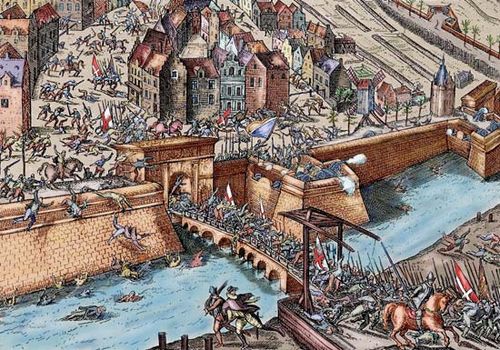
The ideological religious and political divide grew over decades within the Catholic and Protestant states that formed the Holy Roman Empire. It broke into open warfare once again around 1618 with what is known as The Thirty Years’ War. One of the longest and most brutal wars in human history, it saw more than 8 million casualties resulting from military battles as well as from the famine and disease provoked by the conflict. The other result was the destruction of the Roman Empire and the establishment of modern sovereign European nations, although many with their own manifestations of religious intolerance.
Simultaneous to the brutal European conflict, colonial expansionism to the “New World” began, both as pillaging treasure to pay for the war effort for the countries aligned with the Holy Roman Empire and as a steam valve for the resettlement of radical religious dissidents.
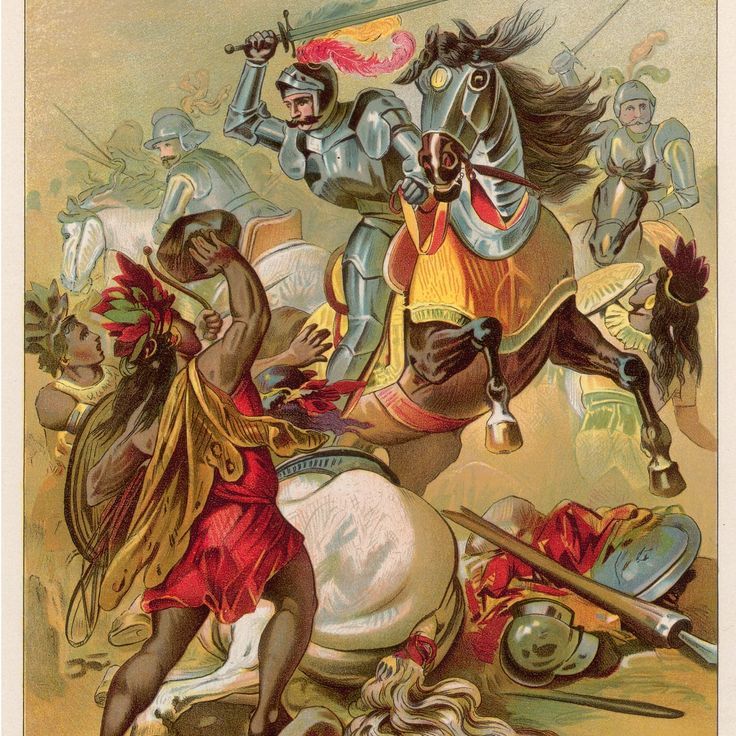
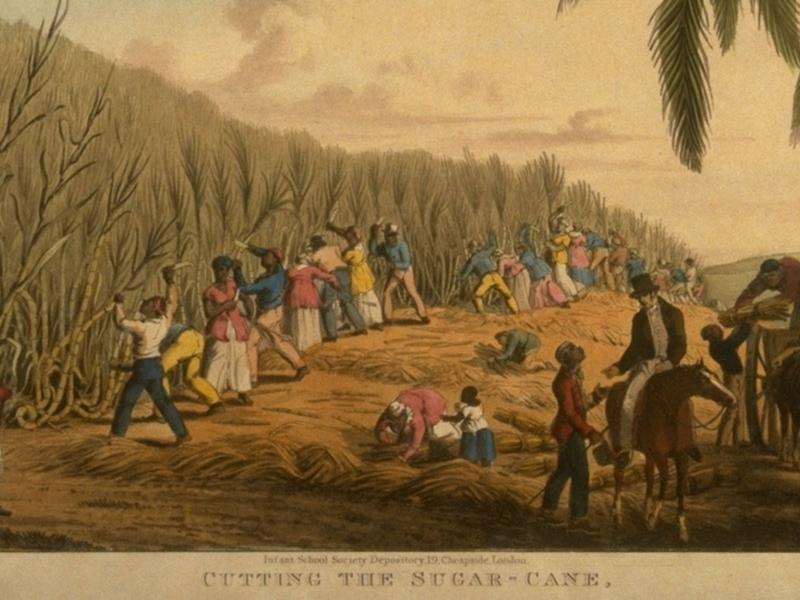
Pope Alexander VI issued the 1493 bull Inter Caetera, which divided the lands of the New World between Spain and Portugal, the same year Columbus made his second voyage to the Americas setting up shop in the Caribbean to extract gold, slaves and initiate sugar cane production. Pedro Álvares planted the Portuguese flag in Brazil in 1500. Portugal would also go on to establish colonies along the African coast, India and the Far East. Hernán Cortés led the Spanish conquest of the Aztec Empire in Mexico, in 1519, followed by Francisco Pizarro arriving to Peru in 1532 to conquer the Incas.
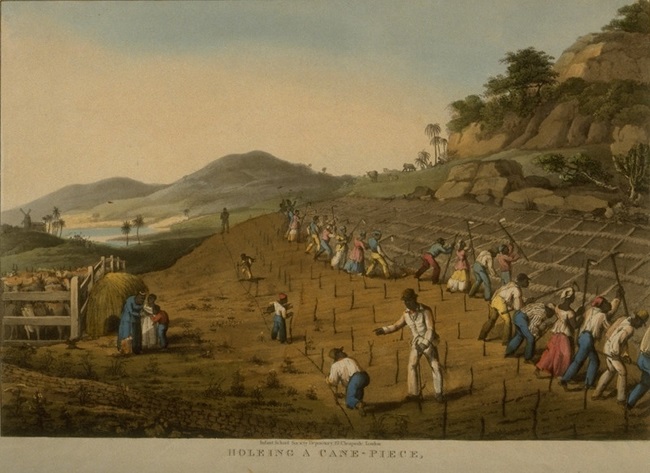
Forced labor, the slave trade and European diseases decimated the native population in the Americas and by 1517 the first groups of African slaves were brought to the Caribbean to replace the labor force. The native population in Mesoamerica, estimated to around 50 million persons was reduced to between 2 to 5 million over the time period in discussion. Reportedly, ninety percent of the overall African slave trade to the New World was to the Caribbean and South America, with close to five million just for sugar cane production in Brazil.
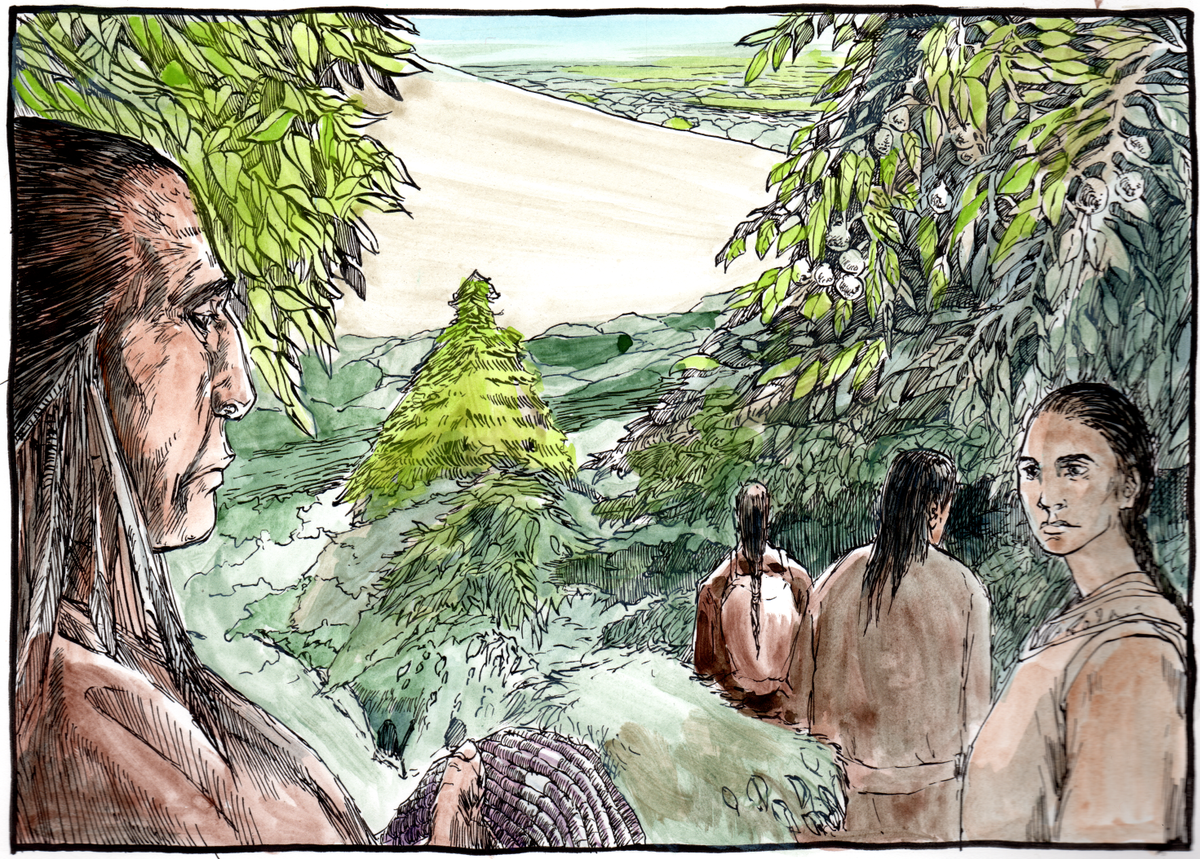
North America was also colonized during this period. In 1532, Jacques Cartier claimed parts of Canadian territory for France and the mid to late 1600’s saw the beginning of the original 13 colonies that would eventually form the USA. William Penn visited the Griesheim Swiss Anabaptist refugee settlement in September 1677 as he promoted his Pennsylvania religious tolerant colony in the New World. Four sons of Melchior Bronimann II “the exile” left for the New World with him, among them Melchior “The Pioneer” Brenneman, Sr., my fifth great grandfather. He settled in what was then the western frontier, now known as Conestoga Township in west central Lancaster County, Pennsylvania. The Brennemans co-existed with the local Conestoga Tribe for many years, as reported in an eyewitness account in the local newspaper at that time, Hazard’s Register, of the Mennonite immigrant’s children “playing in the most sportive and innocent manner with the little red faces, and I never know or heard of one little white face receiving any injury from their red brethren; that is, no intentional injury.” In December of 1763, the 20 Conestoga natives living as neighbors to the Brennemans were barbarously slaughtered by “The Paxton Boys”, a mob of Scots-Irish immigrants living in the area around Lancaster. Good intentions did not withstand the onslaught of expansion. And willingly or not, those fleeing mistreatment and persecution in the Old World became part and parcel of the perpetrators mistreating and displacing the native population in the New World.
The two hundred year period from 1500 through 1700 was a major paradigm shift. What I find interesting is the fact that each group or community impacted by this tumultuous change insists on telling their part as an independent story, unlinked to other similar stories and without context to the global upheaval which set the stage and contributed to everyone’s particular narrative. We all talk of the same 500 years, and as if we were the only true protagonist.
500 years of Anabaptism is a heritage to be proud of, but it needs to be humbly put in the perspective of playing just one small role in a world changing transformation which caused the untimely death of up to 60 million people, the displacement of many more and spawned countless similar accounts of courage and heroism.
Do we actually determine our our fate? Or are we just caught up in the events surrounding us, merely doing our best to keep our heads above water? Could the reformation had happened without the context leading up to it and the accompanying political turmoil?
Perhaps the real question is if the Reformation had not been carried out by our forebears 500 years ago, and given our sense of pride in that heritage, would we actually have the courage to carry it out today? Is there an equivalent to the reformation in our lifetime, and what would that be?
How will our descendants recall our deeds today five hundred years from now?
rab 3/6/25
Note: While writing this blog, I was overwhelmed by the sheer volume of world events from 1500 to 1700 and in no way am able to include all historical happenings in this condensed and humble attempt to bring some perspective to the Anabaptist beginnings.
How is it that revolutions invariably sputter to a halt and become merely a perverted caricature of the ideals that inspired so many to give so much and die much too early. And leave the survivors with a sour taste in their mouths and heartbroken; even jealous of the heroes who sacrificed all in the belief that the revolution would triumph and change the world.
Time after time after time: a plot written, a stage set, a foregone conclusion it would seem.
To what purpose? To become bitter? Or deny reality and wave the faded flag forever?
Or find the lesson in the script…
The lens once used to view without, separating light from dark and righteousness from evil, has grown cloudy, only reflecting dimly back on me.
Discovery the world around me is but a projection of myself my fears and joys, and beauty and shadow, darkest shadow
Just as the moon is a reflection of the earthly realm, revealing
Revolution is a personal journey
as that which inspires to action is but a clue to that needed to be rooted out deep inside
to grow or fall short and die inside
as Causes are but the two sides of the same coin with both sides feeding off and strengthening the other until victory and defeat are indistinguishable, leaving only lessons.
The cross to take up is my own, the evil to defeat is my own, the freedom to be won, mine as well
because
Liberation is a state of mind, on the path to Redemption.
¿Cómo es que las revoluciones siempre terminan perdiendo el pulso y se convierten en una caricatura barata de los ideales que inspiraron a tantos a darlo todo y morir tan jóvenes? Y dejan a los que quedan con un sabor amargo en la boca y el corazón hecho pedazos; hasta con envidia de los héroes que sacrificaron todo creyendo que la revolución iba a triunfar y cambiar el mundo.
Una y otra vez: un libreto escrito, un escenario montado, un final cantado, parece.
¿Para qué? ¿Para amargarse? ¿O negar la realidad y ondear la bandera desteñida para siempre?
¿O sacar alguna lección del guion…?
La lente que solía servir para observar afuera, separando la luz de la oscuridad y la justicia de la maldad, ha ido opacándose, ahora solo reflejando una borrosa imagen de mí mismo.
Descubrimiento el mundo que me rodea no es más que una proyección de mí propio ser, mis miedos y alegrías, y belleza y sombra, sombra más oscura
Así como la luna es un reflejo del reino terrenal, revelando que la
Revolución es un desafío personal
ya que lo que inspira a la acción no es más que una pista de lo que necesita ser erradicado profundamente adentro
para crecer o quedarse corto y morir adentro,
pues las Causas son las dos caras de la misma moneda con ambos lados alimentándose y fortaleciendo al otro hasta que la victoria y la derrota son indistinguibles, dejando solo lecciones.
La cruz que debo cargar es la mía, el mal a vencer es el mío, la libertad a obtener, también es mía porque
La Liberación es un estado mental, en el camino hacía la Redención.
For the purpose of contributing to a sustained discussion regarding the state of education in El Salvador, I would like to make a concrete proposal. My proposal is based on seven years of experience with the Amún Shéa Center for Integrated Development, in northern Morazán.
Amún Shéa is a proven educational option existing in El Salvador, Central America and is one of many that exist around the globe.
In a world with such diversity it becomes necessary to question whether the uniformity sought by a national education program is valid today. My premise is that the pace of learning, as well as interest and motivation, has a highly individualistic component, and is very unlikely to be fully developed through curricular and methodological standardization.
My proposal is aimed toward “liberation of education.” To do this academic standards are raised and pathways to learning are expanded, clearly establishing the goal of education and assessment requirements, but leaving freedom of choice for the individual regarding the route to reaching that goal.
It would also require establishing a committee or group of experts detached from the educational institutions themselves. Following the criterion of a separation between judge and jury, this commission would independently define standardized criteria of excellence, setting clear goals for each specialty and establishing mechanisms to evaluate those aspiring to graduate.
Currently schools and universities bestow titles and diplomas on their own students, with a variety of criterion and often with dubious results. With this new procedure, the effectiveness or validity of a center or education program would be determined only by the quality of graduate it produces, leaving behind the superfluous discussion on approaches, practices or the role of teachers.
In addition to technical and academic skills, educational goals would respond with a beneficial individual molding of citizens capable of bringing El Salvador out of its backwardness and current state of violence. I do not propose replacing the public system, but to enrich it with agile and independent alternatives, more adaptable to local needs and opportunities.
Educational liberation, as I see it, is the easing of curricular and methodological uniformity and bureaucratic obstacles that do not directly contribute to the learning process. In this scenario, government would focus on encouraging and supporting alternative programs that respond to the diversity of interests and passions of the student population, as well as meeting the genuine demand for local skilled labor and technical and professional skills.
Far from being an idealistic approach, this proposal responds to the reality of an unequal distribution of resources and opportunities based on geography and the social background of students. By contrast, the traditional education system is “idealistic” in that it assumes equality throughout the country that, despite being small in territory, is highly diverse. If we can free ourselves from rigid strategies we could level the playing field for all players. We have found that in the absence of resources, creative solutions to problems tend to blossom and thrive.
Those of us from the Pink Floyd generation remember that their classic “Another Brick in the Wall” invited us to change the world. The challenge was not limited to changing the color of the bricks or replacing them with a different material, but to deliver us once and for all from the enslaving uniformity that dominates the current notion of education.
————————
This blog appeared first as a article in spanish in the Jan. 20 edition of the Prensa Grafica in El Salvador. Go here to see the original article.