Tag Archives: Critical thinking

Changing Attitudes, a major challenge for Development and Education

BW Attitude

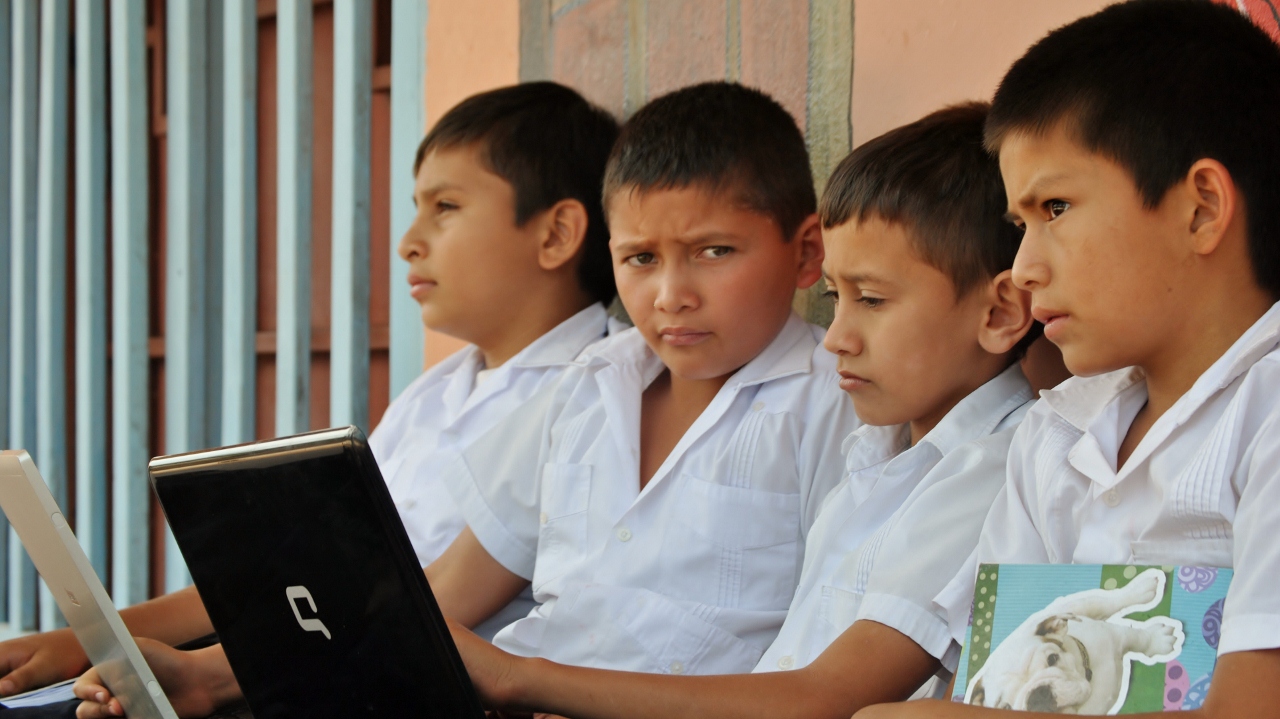
At Amún Shéa, we are enjoying a substantial degree of success using critical thinking, analysis and debate on relevant issues as tools to foster positive can-do attitudes. Our current challenge in this component is to instill a sense of social responsibility, intrinsic motivation and self-discipline in each student. This is easily the least understood aspect of the program within the educational community and requires considerable tact in its presentation. Empowerment of students sounds enlightening, but the shift in control that occurs when it is actually carried out (and not just spoken of) triggers an incredible resistance.

We have a formal educational community organization consisting of representation from the student council, the teachers’ commission, the parents’ organization, school administration and the Foundation. It is fascinating to observe the chemistry between these groups as we work towards shared decision making. Discipline is the “elephant in the room” theme brought up each time an adult feels pressured by this process. The discipline conversation always directs our attention to an idealistic and more ordered past where social structure seemingly had greater definition, and appearance revealed worth.

Perhaps the uncertainty of the world today causes one to yearn for a simpler, less complicated period. The vision of impeccably uniformed students with greased-back hair, toes pinched in freshly polished shoes and creases you could cut cheese on, mothers pretending they love getting up at four in the morning to produce such a fine specimen and fathers over in the shade nodding their approval, brings to mind a safe haven in the past. Perhaps a reluctance to accept the inevitable changes that children push for, a reluctance to abandon status quo, creates this yearning for “The way it used to be.”

This “safe haven” period generally refers to the industrial age educational system. The world moves on however, and humanity evolves. We have entered into a new age, not yet fully defined perhaps, but marked by what can only be defined as dimensional or evolutionary changes. Either by design, choice or by chance, the past is relevant only as a lesson and a reference point as we move forward. New definitions as well as fresh norms of social conduct are necessary in order to navigate ever-changing currents, hurdles and opportunities in our increasingly complex world.

Strict obedience to authority is absolutely necessary in many minds, and there within lies a major problem in changing attitudes. Our position is that the final product of strict obedience is dependence, which is fine if your objective is to create soldiers and employees for the industrial age, but which does nothing to jump-start new socioeconomic growth. Genuine progress demands out-of-the-box thinkers, independent and skeptical of external approval, willing to take risks and with a high degree of both ability and self-confidence. We must understand that the phrase, “Because I am in charge,” is a direct affront to this process.

Observation leads me to contemplate the extent to which our thinking processes are evolving. Not all of the differences of opinion and position may be attributed to adolescence and generational “growing pains.” Without overstepping my area of experience, I believe we need to take a good look at decision making processes and the impact that honor codes have on that process. I would hazard a guess that those who yearn for the “safe haven” past maintain a strict code of honor which firmly establishes right and wrong within their understanding. An evolutionary process manifesting itself in many younger people seems to be that of developing a decision making process of comprehensive assessment unique to each situation; flexibility.

Care must be taken that our attempt to promote acceptable social behavior among our youth, through codes of honor, does not actually condition them to accept superficial codes. Codes which are imposed and not naturally assimilated are easily exchanged for another. While strict ethical codes are pictured as noble, there are many sectors of society which operate with authoritarian codes that accept no questioning; criminal organizations, youth gangs and cults, to name a few. We would be much further ahead by accepting that both evolution and our youth are moving in the right direction and support them in this transition.

Caught in transition between the industrial/information age and the incoming yet-to-be-named eon, we need to structure our programs with flexibility that bridges rather than breaks down community during this period. A level of tension, both generational and from a difference in vision will be prevalent, even volatile at times. We must learn how to responsibly manage those differences and understand the processes provoking those them.

It is clear that changing attitudes is a long-term endeavor, in all probability involving several generations. The length of the process should not be seen as a problem, insomuch as we have a comprehensive strategy and are moving daily in the right direction.
Integrating Education and Development

Garden Results

Northern Morazán is a remote border region in El Salvador. It is an area where the dimensional divide between education and development is very clearly demonstrated. Hundreds of local young people graduate from “vocational school” each year and enter “the real world” without the basic skills needed to face daily obstacles and to seize the occasional opportunities when presented.

High school in El Salvador has both a two-year general program as the route to university studies and a three year vocational option. Most rural students opt for vocational studies, as they lack the financial resources involved not only for tuition but for travel, lodging and living expenses to go to university. The problem is that most rural high schools have only one, and at the most two, vocational options. The high school in Perquín, Morazán provides Accounting and Secretary as the two vocational options, from which over one hundred students graduate each year. The obvious contradiction is that northern Morazán, statically the poorest area in El Salvador has little to no openings for these positions. The other difficulty is that the educational curriculum for these specialties is outdated, requiring the graduate who does find employment to relearn their skills once again.

Actually, a vanguard educational system should be the most significant means available to lead development and fight poverty in remote areas of developing countries. However, the traditional separation of formal education from socioeconomic developmental programs results with both falling far short of essential expectations and having little impact on real living conditions. It is indeed a sad truth that expectations regarding both program areas have plummeted, as the status quo of helplessness reigns supreme.

Attempts to effect change are often viewed as unrealistic and discarded as impractical theories. Programs too often are funded only because tradition and political correctness mandates tolerating this social burden, even though the probability of failure can easily be assumed.

Both, may we say, industries, have become institutionalized and increasingly specialized, conceivably to their own detriment. There is an obvious flaw in educational programs that are focused on forming excellent employees but work within a reality of very few job opportunities. Equally, developmental programs often mistakenly assume that the beneficiary population has sufficient knowledge or has the capacity to assimilate new techniques and productive innovations, creating frustration and inefficiency during program implementation and operation.

Very often these educational and developmental programs operate side by side without ever coming into contact with each other. Ostensibly they are all inclusive and mutually exclusive. Unfortunately, neither has managed to solve the social or economic woes in rural areas of developing countries. Both focus on content, knowledge, tools, resources and projected outcome. It is striking that neither consider attitude, self-motivation and self-realization to be basic components in their strategic planning and methodology.

A credible study of the long history of charity programs, reconstruction projects and readily available technical training courses will reveal a high degree of passivity and dependence on outside intervention as a direct result of their implementation. Development projects actually become a means of subsistence in and of themselves without hope of actually originating self-perpetuating productiveness and sustainability. The projects themselves become the employer and the organizations are often converted into a type of family business. Within this setting, traditional education has no clear purpose and therefore offers very little beyond simply keeping the children occupied while parents are working. It could essentially be said that these areas are primary components (purposely or not) of the Poverty Industry, in that “Education” provides the beneficiaries for continuous “Development” which maintains the demand for perpetual assistance and expert intervention.

Constructive socioeconomic change requires integrating the technical capacity focus of development with motivation or positive change in attitudes which are developed through appropriate educational methodology. This implies bringing the two programs together in a way that will enhance both. It requires providing education with a purpose for its existence. It means channeling development through those with interest, willingness and the capacity to assimilate innovative programs. It will provide a support structure to development and coverts education into a relevant, meaningful activity.

Amún Shéa, Center for Integrated Development in Perquín, Morazán is an example of the needed integration, with a curriculum that strives to bridge the dimensional split between academics and development. This is done with hands-on participation by the students in building solutions to local developmental hurdles. Beginning in 2008 with kindergarten through third grade, the program has expanded one grade per year, reaching ninth grade this year (2014.) Accreditation for High School next year is in process with the Salvadoran Educational Ministry.

Amún Shéa stands out from the Salvadoran norm in several concrete ways. The Amún Shéa program runs from 7:30 am to 3:00 pm, practically doubling the half-day public education system. Whereas the methodology in the public system is limited to the teacher copying material from a textbook to the chalkboard (whiteboard now, in some cases) and the student copying that same information into their notebook, our problem-based methodology integrates current and developmental concerns into the subject matter.

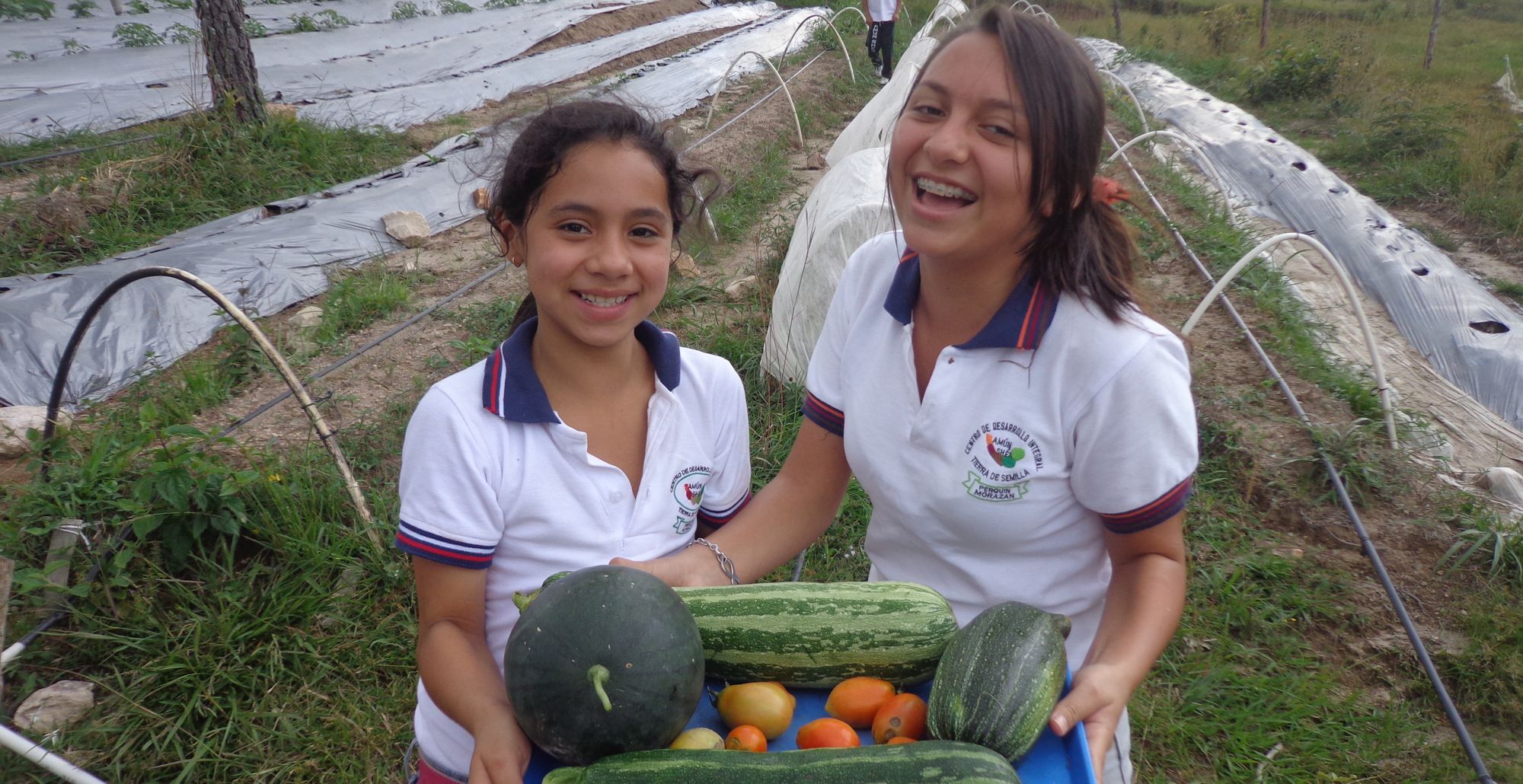
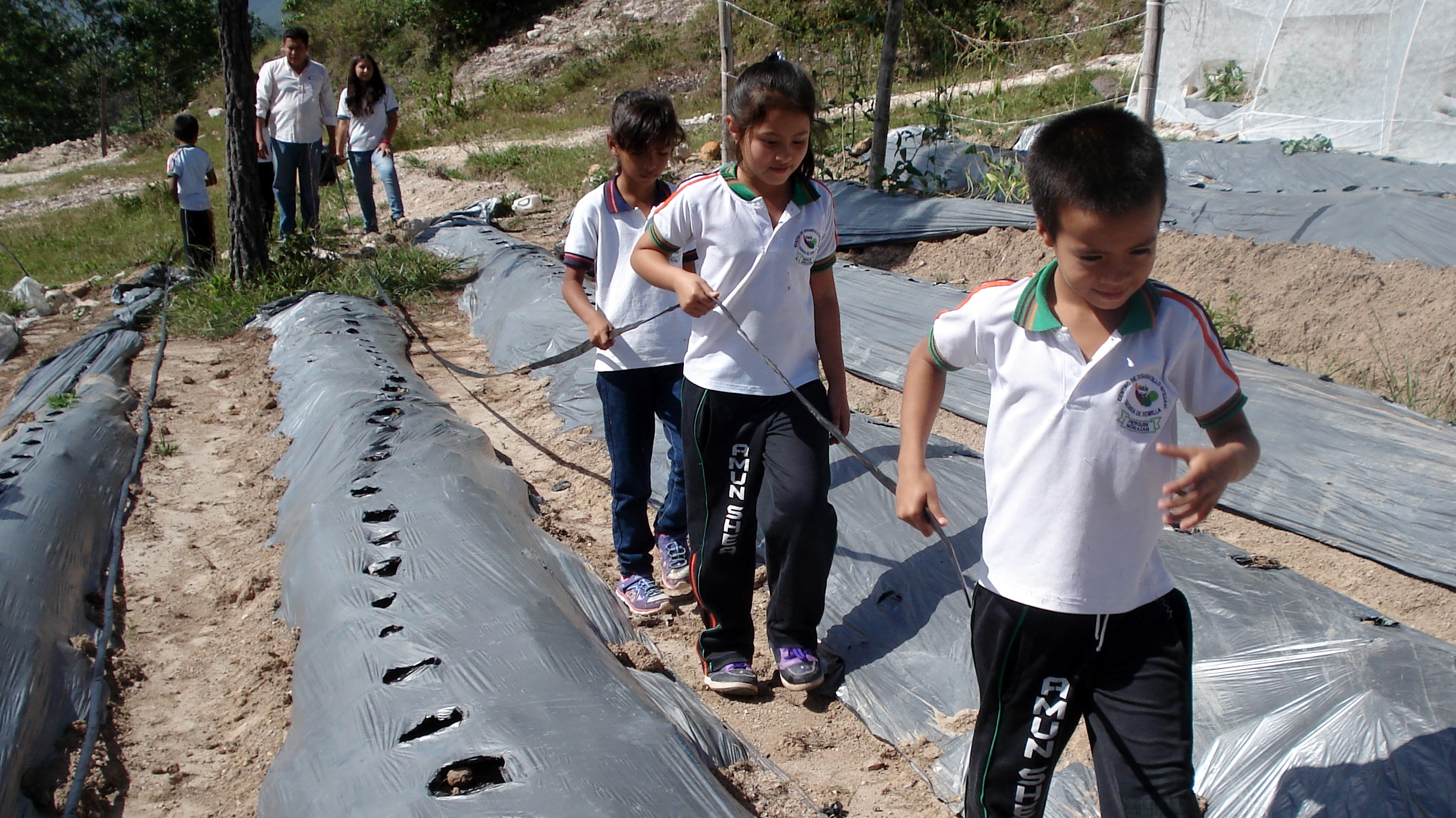
As the school runs a full day and nutritional-related health deficiencies within the area are alarming, Amún Shéa incorporates a complete nutrition program which provides nourishing meals, nutrition training, cooking lessons, vegetable farming, fishing farming and hygiene training. Coordinated with the USA-based organization GlobeMed, the objective of the program is to go beyond providing the daily snack and lunch to each student to actually modifying eating habits and diet within the community, beginning with the families of the students. As well, this activity opens the opportunity for families to learn from the program and implement vegetable gardening and fish farming as a business enterprise, which helps broaden the local production base from subsistence basic grains.

Amún Shéa students take on real-world problems for their scientific investigation projects. In one case, the sixth grade investigated the local municipal water supply after experiencing firsthand in their homes the indication of contamination within the distribution system. They traveled to the water source of the system, high in the neighboring Honduran mountains, interviewed the inhabitants living around the source and inspected the source. They then inspected the filtration plant, tanks and distribution system. They uncovered lapses and gaps of responsibility between the municipality and local health authorities. In the end, their investigation forced improvements in the water system for over 3,000 people.

Creation of business plans is another exercise for the integration of real-world situations into the subject material. Several small enterprises have germinated from this process, as parents are convinced of the viability by their child´s work.

Cultural research and investigation as a means of building community and personal identity is an elemental part of the program. Collecting testimony from senior citizens regarding past events, practices and local history, researching local legends and lore, and searching out traces of indigenous roots all assist in personal orientation. In this aspect, not only the past is covered, but current tendencies as well, including immigration, economic activities and opinion polls.

Each student is equipped with a Personal Learning Environment, basically the digital tool-kit and portfolio they will use and further develop throughout their lives. This emphasis on digital tools and resources actually levels the playing field for our students, giving them access to the same information and processes as students in more favorable conditions. It also compensates for the lack of locally available information in needed areas of technical study.

Integration of education and development is the key to initiating positive socioeconomic changes. Its success will depend on the extent that real-world application is implemented throughout the process.

Training our Children for Unemployment

Irrigation

Fundamental changes are currently taking place in this brief and eternal moment we share as reality. The idea that we can actually take some type of action and “get things back to normal” brings to mind that oft repeated adage “There are none so blind as those who will not see.” There is no “going back!” We can only move forward.

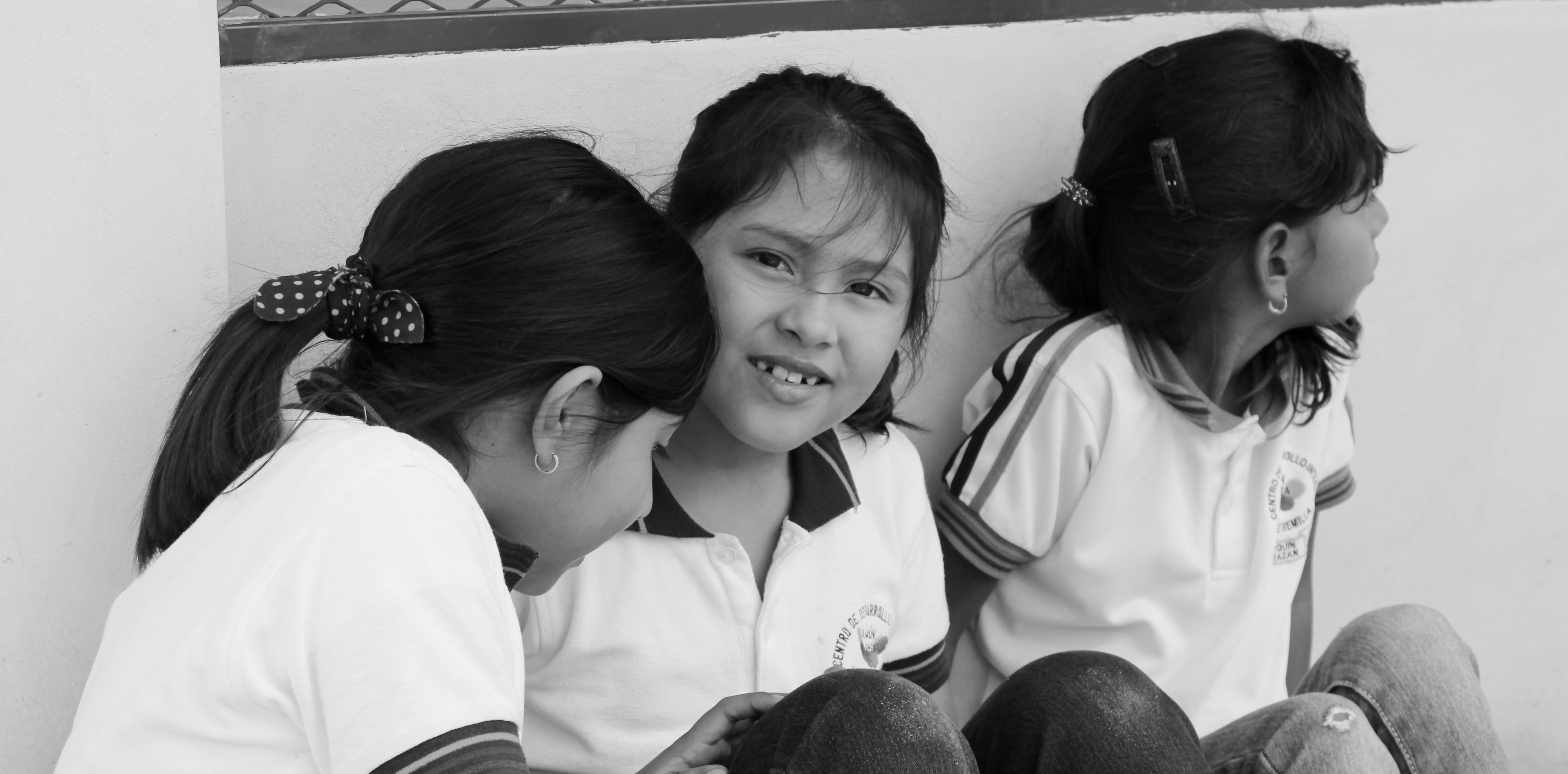
Although we glowingly refer to our children as the future, we have largely surrendered their training for life to an outdated archaic educational system which does little more than remove them from our presence during part of the day. Indeed, that day often provides little in the way of substantive education. The little formation that does take place does not prepare them for the real world. An argument could actually be made that we are training them for unemployment. Yes, there are exceptions to this, but unfortunately they are exactly that; exceptions!

Globalization is a very interesting phenomenon, and one which has brought about a most profound change to humanity. Initiated primarily to leverage corporate advantage, it has morphed into the social field as well. Perhaps it is this corporate global takeover that has so homogenized our social and economic woes throughout the world? However an obvious advantage of globalization is that we are also now equipped to share experiences and build common solutions.

Our globally shared obstacles, to the happy and prosperous existence some once considered an inherent right, include:

  1. An ever deepening chasm between the populace and government as national laws respond to faceless “international agreements” and corporate interests, as opposed to the “will of the people”.
  2. A diminishing of “stable job markets,” resulting from outsourcing, hiring practices designed to reduce the burden of long-term financial commitment, a general reduction in available positions and unfunded government mandates.
  3. An unstable and abused natural environment, becoming much less friendly and bountiful in providing our basic needs, including air, water and food production.

Any political stance on these points is pointless and only distracts from the task at hand of forming our children for the new normal. The new normal calls for greater self-reliance, initiative and adaptability. It calls for greater cooperation at grassroots level and less dependency on bureaucratic systems. It calls for the construction of local alternatives and solutions. It calls for an educational system with a purpose, willing and able to adapt to local needs and, above all, willing to teach and learn new things.

We must start training our children to be productive and successful in a world where traditional employment becomes increasingly scarce. Their substance and happiness must be of their own making, as a result of cooperation and must not depend on external sources. Our task is to strive to understand the nature of current changes and to build pro-active strategies and responding flexibility into the programs and systems that prepare our children for their own changes.

Politically Competent

Were political posturing and other hidden interests put aside, I wager the current immigration crisis would to a great extent just fade away. A transparent objective look at the subject also requires losing the emotional baggage instigated by the flood of Central American children to the US border.

The plight of the children is serious and cause of great concern. However, we far too often see children pushed into the spotlight as adults lose the capacity for dialogue. Indeed, throughout the world, we are increasingly resorting to using victims as a substitute for debate. Should this tendency reach the point of actually provoking victimization in order to make a point, we will have arrived at a new depth of inhumanity. Some would affirm we are already there. Aspects of the current US border crisis do suggest we have reached a threshold in that respect.

I was told by a friend a few days ago that parts of his family immigrated back during the Second World War. Apparently the shortage of industrial labor force in US factories actually provoked the need to recruit workers from south of the border.

No expert on immigration, I am not clear of how the situation evolved over the years. What is perfectly clear is that, in spite of current legality issues and physical obstacles, everyone who gets through gets a job. One can only assume the existence of a real job market.

As to the reason behind not recognizing that demand or need, we would need to enter into the shadowland of interests, greed and political maneuvering. The “illegality status” creates an underworld of parallel, unregulated and highly profitable financial and commercial structures.

It also creates family rupture as parents cannot freely travel back home and periodically see their children. This is one of the main contributing factors to the current child immigration situation, in my opinion. I know people in this situation. They went to the USA for the employment opportunity and as the means of providing for their families. They had no intention of staying on, but the economy got tough so it is taking longer than originally planned. They are worried about their children, with all the bad news coming out and they are being forced to make the decision to stay or leave. Staying means bringing in the family.

Canada takes a different approach. Employment opportunities, complete with strict requirements, are published by the embassy. Recruitment, selection and work visas are coordinated through diplomatic channels. Employees travel by air, just like the rest of us. They enjoy vacation periods and are able to visit home periodically. Quite the contrast…

So, why is it that we cannot publically acknowledge what we actually are doing; what we actually need? Cannot we understand that the “out of sight, out of mind” attitude comes with a pricetag; we only favor dark interests when we refuse to see reality. It also opens us up to be manipulated and that generally is brought to bear on our emotions. The “plight of the children” is in fact very real. But have we had a part in creating the crisis because we refuse to respond to any other stimulus?

How much control have we given away, in exchange for not being bothered? Have we noticed how Politically Correct gets twisted into Politically Convenient? Perhaps we need to ask ourselves whether we are actually Politically Competent. Perhaps all of us, on both sides of the border, need to take back some control and responsibility… and leave the kids alone.

Dangerous Education

DSC_0074 (1280x719)

For some people all changes in our educational systems bring the inherent danger of loss of control. We love it when an alternative program results showcasing talent, or what we recognize as talent, in our children. We are willing to invest time, energy and resources into extracurricular activities and even the odd “unconventional” digression some teachers are permitted to employ.

But what happens when our children begin to think for themselves? Not the cute parroting of preconceived opinions, but creating their own world view. What happens when our children suddenly become more knowledgeable in some areas than we, those charged with their upbringing? At what point do we feel threatened by our children´s achievements, views and positions? “Nonsense,” you may say, “I would never feel that way about my child.”

But when superiority in a child starts to become apparent in emotional maturity, in life vision and belief systems, watch out. That is the real test of commitment to building an educational model that frees the human spirit rather than clipping wings. Now that is a dangerous education.

This is just one of the real-world challenges in building an educational model designed to change the status quo in Morazán. The area has been traditionally marginalized, suffered complete destruction of infrastructure and displacement of the civil population during the Civil War (1981-1992) and currently holds the dubious honor of maintaining both the highest poverty levels and the lowest academic achievement in all of El Salvador.

The socioeconomic conditions in Morazán create a fertile setting for implementing alternative solutions, as it is very clear to all that current programs are not making a dent in poverty indicators or academic standards. At the same time, this does establish a fairly low threshold in expectations and skills required to maintain status quo.

At Amún Shéa, we are seeing a process, starting about the fifth grade where our students begin to surpass teachers and parents in analysis, synthesis and establishing goals. By the eighth grade, the maturing process has entered the emotional turf, making for some very interesting and dramatic situations.

As we expand by one grade per year, we are looking forward to ninth through twelfth grades as a tremendous challenge and a fantastic opportunity to deal with this issue, not just in theory but in real life.

Amún Shéa, Center for Integrated Development is a project of Perkin Educational Opportunities Foundation, located in the northeast corner of El Salvador, in Central America.

Reality Check

javier bannerWe founded Amún Shéa, Center for Integrated Development as a correction to a programmed failure. The problem-based learning curriculum focuses on real-world and local developmental issues. And we started young, with a K through third grade program in 2008, expanding one grade per year. Our students do not study subjects; they study problems and create solutions. Math, Science and other subjects are used as tools in the application of solutions, consulted as needed to get the job done.

I assume a large dose of denial is present when a school system carries on as normal during a decade long civil war. Cumbersome bureaucracy and tradition perhaps explain carrying on with no real adjustment in direction while achievement bottoms out and competence only exists in test scores. The current teacher body was largely educated during the civil war, which obviously has an influence of importance.

The local public high school in Perquín turns out over 100 ill trained accountants and secretaries each year. In an area with practically no openings for these vocations, this only motivates migration out of the area in search of opportunity. At the same time, if one needs an electrician, a plumber, an agricultural engineer or technicians of any stripe or specialty, there are none to be found except in the larger cities.

Obstacles abound but progress is undeniable; we´re building a new model. Come along with us at Amún Shéa.