Tell me who did what and I’ll tell you if they’re a hero or a traitor. Don’t muddy the waters with details, they only get in the way.
Polarity rules, over all. I need to know which side you are on, as Our intentions are divine; their results are demonic.
In this struggle, Our warriors are the honorable ones in this righteous war; devious actions by a few are the exception and do not represent our cause. We are beyond reproach.
In this struggle, Any sadistic behavior by an enemy defines their official position. The exception is the rule and they are far beyond redemption.
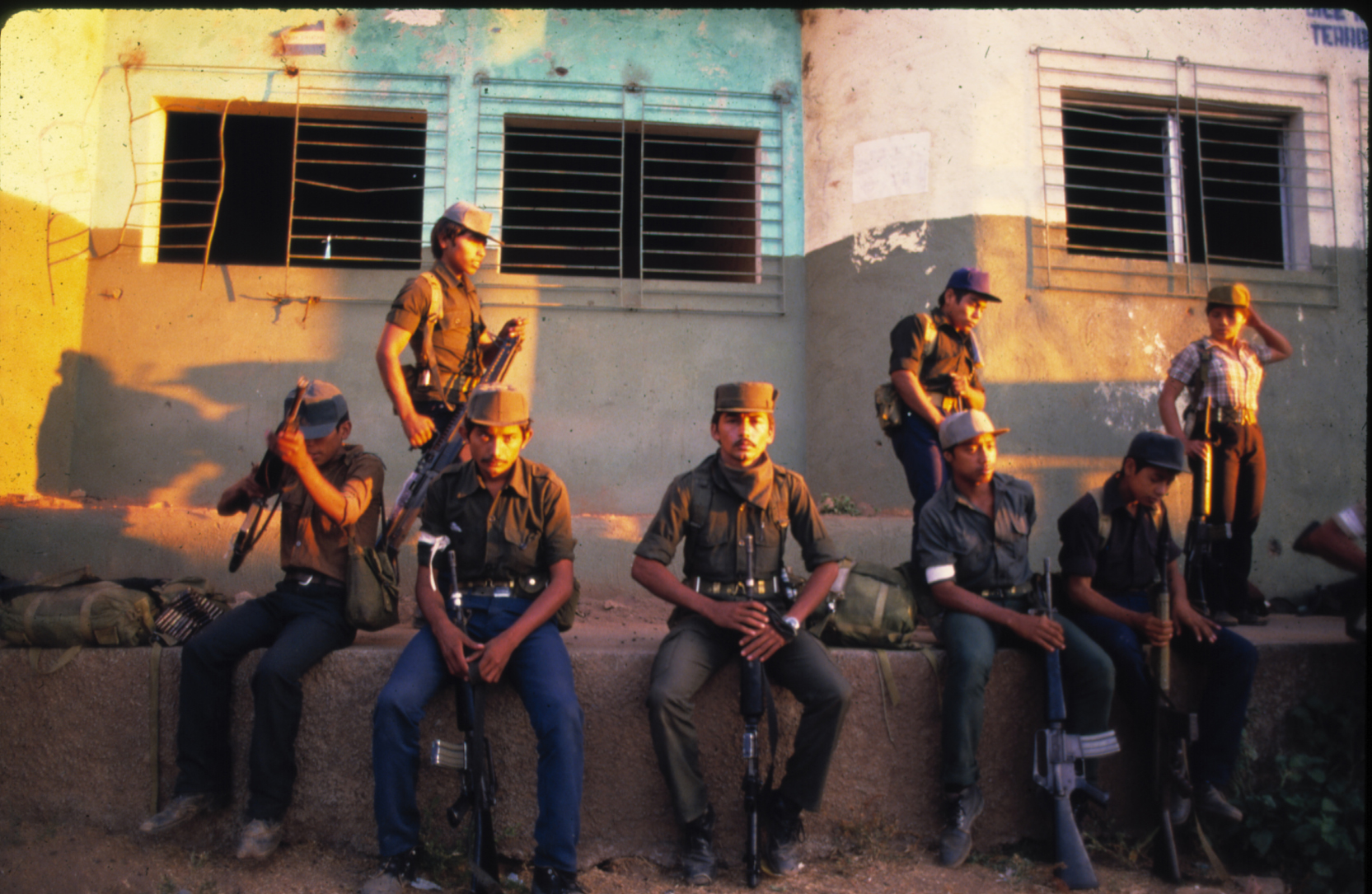
So, please remind me which flag you are waving, because I need to condemn or condone that glee on your blood splattered face and blood-lust in your eyes as you dispatched that traitorous, … young frightened boy.
I want to believe the sincerity in your shy smile and schoolmarm demeanor. I really do.
Long forgotten, unmarked graves that will never be uncovered nor remembered. Examples have to be made, after all it is war…
And polarity rules, over all. Do we continue this madness? Or do we begin to transcend and reconcile polarity?
“Everything is Dual; everything has poles; everything has its pair of opposites; like and unlike are the same; opposites are identical in nature, but different in degree; extremes meet; all truths are but half-truths; all paradoxes may be reconciled.” – The Kybalion
I do a little woodwork out in the shop. It has a two fold purpose. One: the enjoyment I have creating with my hands what existed only as an idea beforehand, and two: as a necessary income supplement. Man does not live by venison and sweet potatoes alone.
An old radio provides the background music while I work. Normally, I have “contemporary adult” of rock and roll from the 70s and 80s on, and sometime a little country. It is a digital radio and the dust from the shop has filtered in, making it difficult for the controls to operate as normal. None of the buttons do what they are supposed to do making it difficult to find my music. One easy find is the local PBS classical music, which I had never really listened to before; my Rock and Roll is much harder to find.
Over time, I’ve noticed a rather odd phenomenon. It began rather unconsciously, without any thought on my part. Now it’s become part of my ordinary routine.
When working on a new creative project, I leave the radio off; it seems to be too much distraction. Once a new project is created, classical music is the key for a calm detailed production process.
But for pure production, turning out bulk, ten to twenty items at a time, without much thought, there’s nothing like Bachman Turner Overdrive. It’s well worth the extra time it takes to tune in that station.
We hear alot about how we’ve been programmed since birth to make us useful and obedient to the Powers that Were (formally known as the Powers that Be). I fully agree with that assessment and now believe that much of that was done through the music we grew up listening to. Who knows what all was piggy-backed onto those tunes, but we’ve all felt that emotional jolt when an oldie we grew up with comes on the radio, taking us straight back to those days.
I am searching for ways to deprogram myself and liberate my mind from automatic responses to external prompts. Silence looks to be a key to breaking out, perhaps along with new and untried experiences. But meanwhile I’m using it to get a little production out of myself when needed.
heavy while down and weightless while up, breeze running through the hair.
The pendulum swinging side to side, when pulled in one direction always reaches it’s polar opposite.
The Law of Duality is inescapable in this our current state of being. Two sides of the coin. Yin and Yang; polarity of Life.
And were the sun and the moon to begin a dispute on which should rule, and call on us to join one and shun the other? If one were to overthrow the other? Our corn and our beans would cease to grow. Their dance together through the heavens harmonizes life, indeed creating the most beauty when sharing the sky at dusk and dawn.
The spectrum of political ideology runs from the extremes of Idealism without Practical use to Pragmatism without Ideals. And when the pendulum swings, does it ever swing!
We all had that one swing set in our childhood that you could leverage the swing so high that the chain slackened and you lost control, falling back toward the ground. Yea, you tempered your swinging after that, right?
January 21 of this year marked five hundred years of Anabaptism, the movement that spawned the Amish, Mennonite, Hudderite and Brethren religious communities, so congratulations are in order.
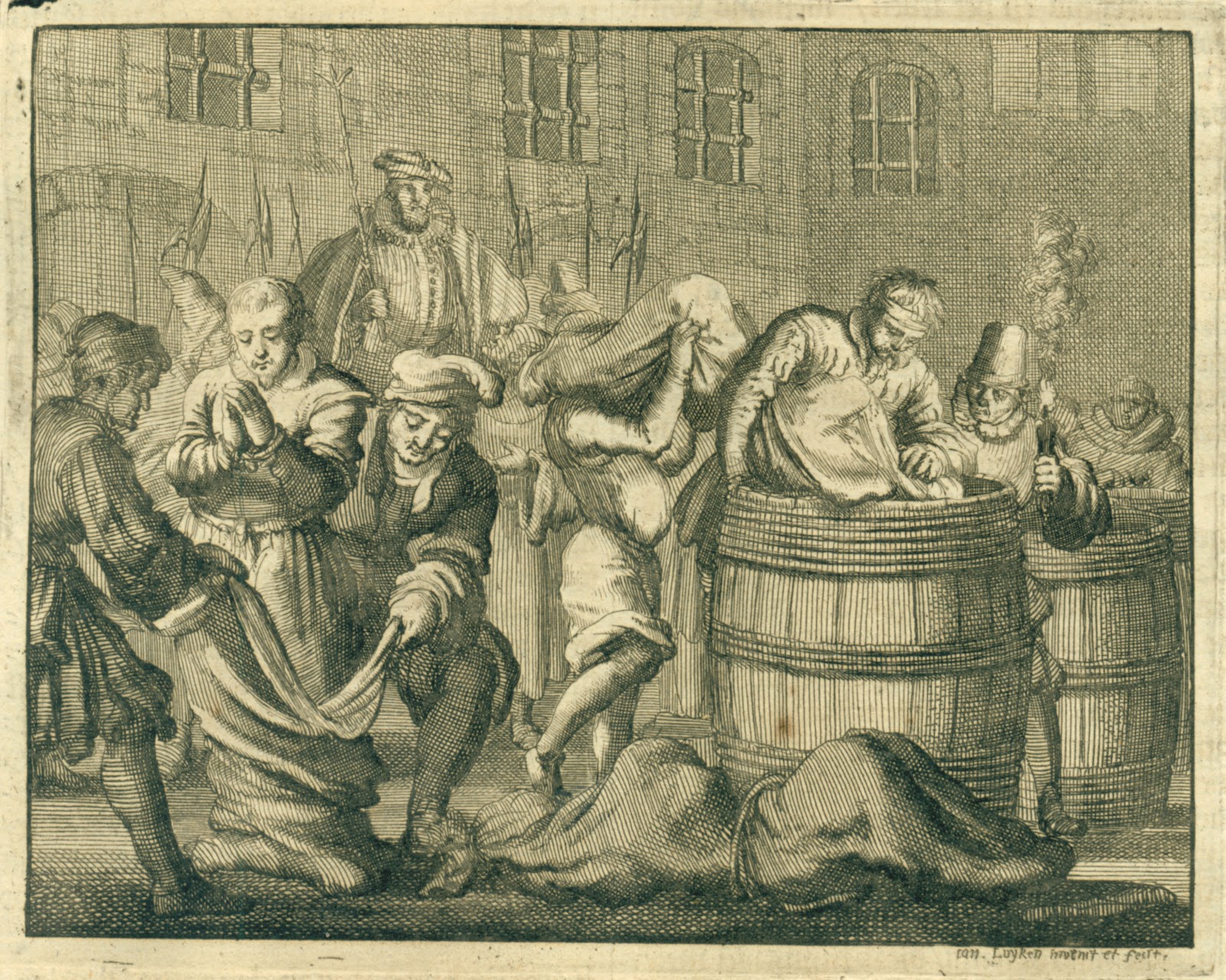
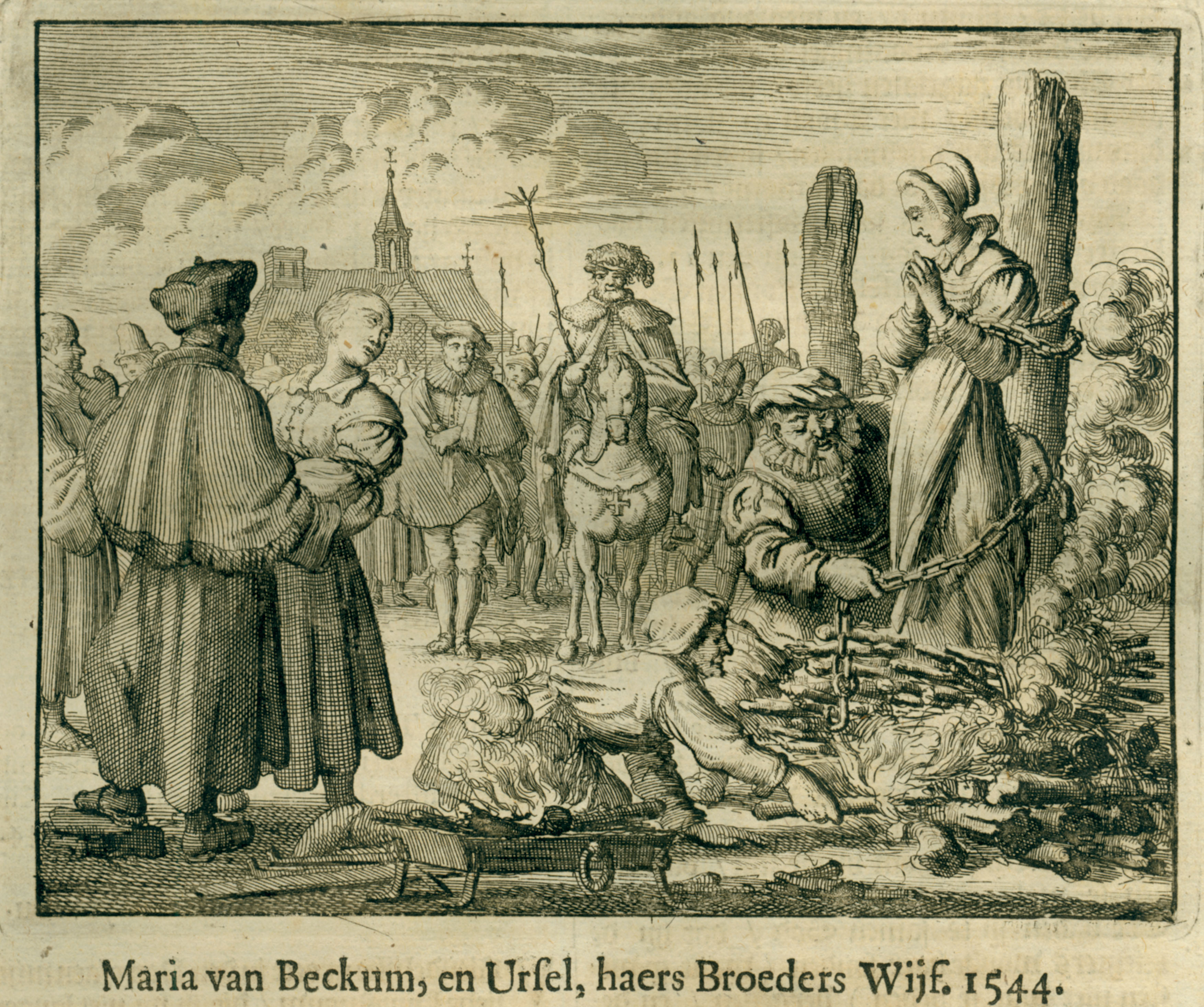
In a nutshell, Anabaptists rejected Roman Catholic infant baptism as invalid, insisting that this sacrament could only be taken by one conscious of it’s deep spiritual meaning. While this is the stance that led to the name “Anabaptist”, their new doctrine also rejected the Pope’s authority and called for a layman’s understanding and interpretation of the bible. This was countered by religious persecution and death for many followers by drowning, being burnt at the stake or broken on the rack, among other barbaric methods of Inquisitional torture. In the period from 1527 until 1711, an estimated four to five thousand Anabaptists were executed for their faith. Many are documented in the “Martyrs Mirror” or “The Bloody Theater”, first published in Holland in 1660 in Dutch by Thieleman J. van Braght.
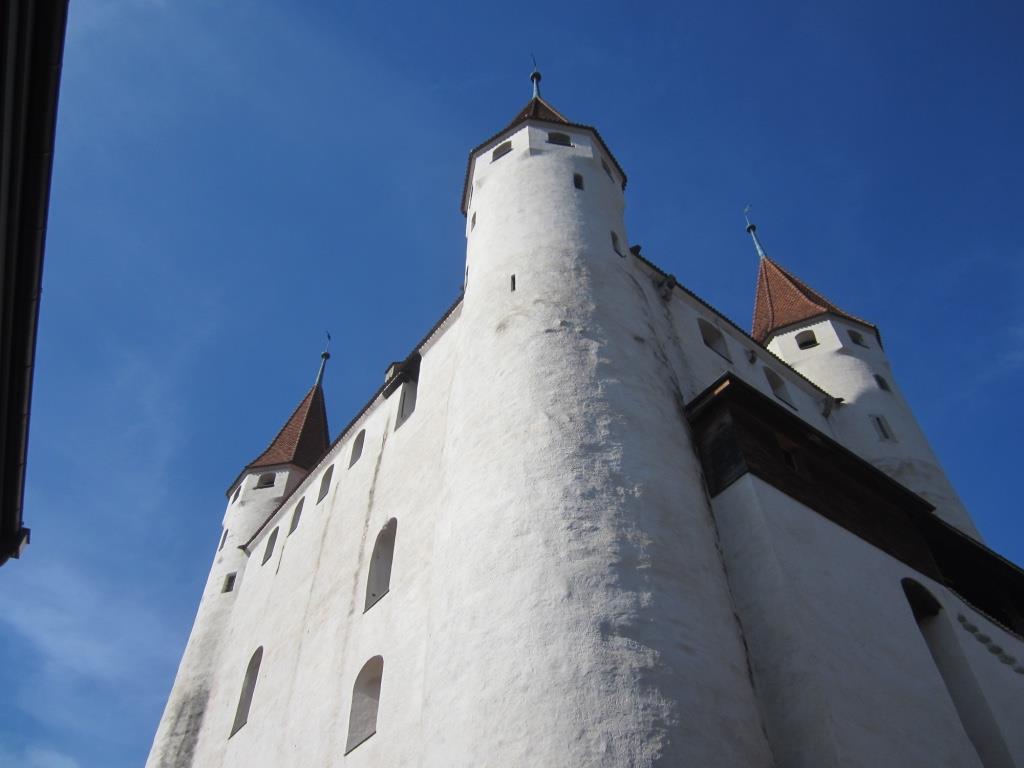
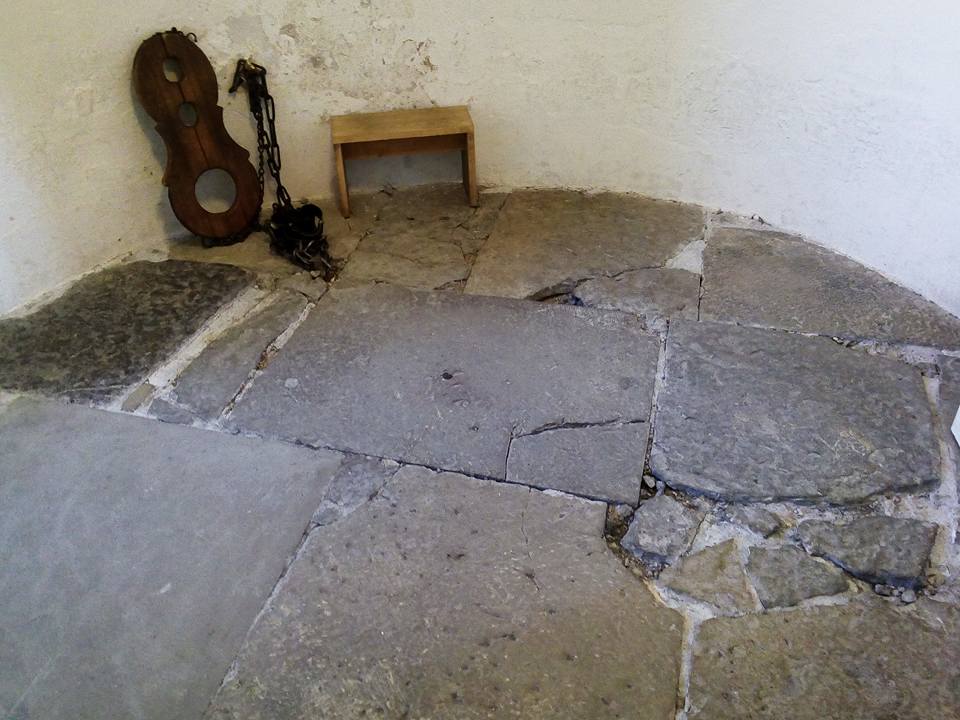
My sixth great-grandfather, Melchior Bronimann II “the exile”, born around 1631 in Oberdiessbach, Bern, Switzerland, a weaver, became part of this Anabaptist movement, specifically in the Mennonite sect. In 1659, at the age of 28, he was jailed for a year in the Castle of Thun, before being exiled, along with his wife and seven children to the Swiss Anabaptist refugee camp in Griesheim, Germany. Two cells in the tower in the Castle of Thun are open to tourists now; several years ago I was able to visit the area, sit in one of the cells for awhile and ponder if I could have made the same decision, at that young age and with a wife and a growing family. A sense of self-esteem in my family heritage is natural of course, even a pinch of sanctimonious pride. “We” stood up to an evil church-state alliance and remained true to “our faith”.
Thun CastleTower cell in Thun Castle
But then, the five hundred year refrain strikes a note. Where have I heard that before? Could it be that “we” were not the only thing going on? What else was happening five hundred years ago? Well, it turns out that quite a bit of change was taking place throughout the world which needs to be looked at in order to put the Anabaptist chapter in context. A related question is that of cause and effect; how individual movements impact or are impacted by world changing events. We all want to be the butterfly in the Butterfly Effect, right?
Overall, the time period of our interest, from around 1500 into the 1711’s, marked the end of the middle ages (also known as the dark ages) ushering in the enlightenment of the Renaissance period. Leonardo da Vince, Michelangelo, William Shakespeare, Descartes, Galileo and Copernicus among others molded our modern concepts of art, architecture and science during this time frame; basically forming all of current western cultural identity.
Long before Martin Luther nailed his 95 Thesis to the church door, an English theologian and early dissident in the Roman Catholic Church, John Wycliffe (1328-1384) had coined the phrase, “Priesthood of all believers” which would later become the basis of all Anabaptist theology. The bible translated for the common man, the equal footing of all believers and the right (and obligation) of each one to interpret the bible for themselves is central to this concept. I remember during my teenage years, a discussion at church regarding if the pulpit for the pastor should be on a raised platform or not. Raising the pulpit above floor level may give the impression of superiority, while keeping it at floor level meant he was no better than the rest of us, although it was more difficult to see and hear the sermon. The practical argument won out and the pulpit was raised, much to the chagrin of the traditionalists.
Wycliffe’s writings regarding the reformation of the church heavily influenced all reformers following in his footsteps. While he was able to stay out of the churches grasp and die a natural death in 1384, the Council of Constance in 1415 called for his bones to be dug up and burned for heresy.
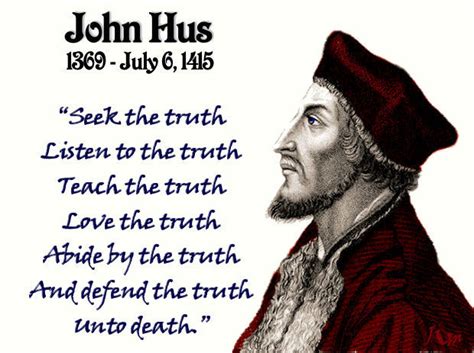
One of those who studied Wycliffe’s teachings was Jan Hus, hailing from what is now the Czech Republic. Born in 1369, Hus soon echoed his predecessor’s stance against indulgences, rejecting the power of the papacy and promoting the priesthood of all believers. His most recognized work titled “The Church” claimed that Christ was the founder of the church, not Peter. In 1414, he was given safe passage to a reforming council to be held in the city of Constance, Switzerland, purportedly in order to resolve his differences with the church. It was a trap; on arrival, his safe passage was withdrawn, he was tried and burned at the stake on July 6, 1415.
John Wycliffe
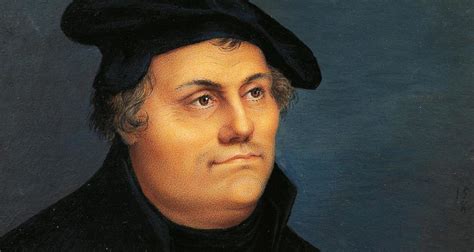
It is within the context of this 200 year discussion and coinciding with the enlightenment of the renaissance, that on October 31, 1517 Martin Luther nailed his 95 Thesis to the door of the Castle Church in Wittenberg, Germany. Initially there was an attempt to keep the discussion within the church, but to no avail. In 1521, he was excommunicated and the protestant reformation began in earnest, with a proliferation of proposed reforms and new doctrines and communities of faith. Among the most radical were the Anabaptists, and among them, the Mennonites.
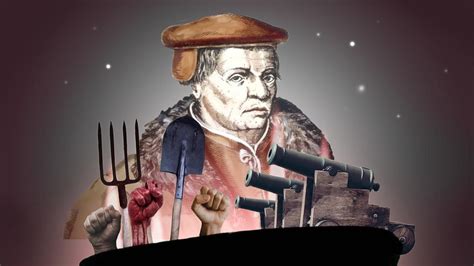
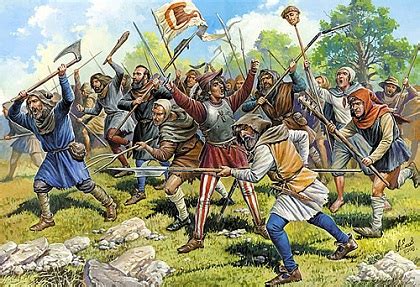
The debate over church doctrine went public and spread into the secular political arena. The German Peasants’ War (1524–1525) was a widespread popular revolt in the Holy Roman Empire that saw thousands of peasants, townsfolk, and lower-class individuals rise up against feudal authorities. Their demands were encompassed in “The Twelve Articles” which called for the abolition of certain feudal taxes, fair rents, access to common lands, and the right to choose their own pastors. The reaction to this movement by the theological reformers was by no means harmonious, exemplified by the clash between contemporaries Thomas Müntzer, a Protestant minister who fully supported the demands of the peasantry, and Martin Luther, who argued that the duty of the peasants was farm labor and the duty of the ruling classes was upholding the peace. Initially, Luther had expressed sympathy for the grievances of the peasants, as they were inspired by his work, writing an “Admonition to Peace Concerning the Twelve Articles of the Peasants”. However, once the rebellion turned violent and threatened the social order, he turned on them, writing a pamphlet “Against the Murderous, Thieving Hordes of Peasants” with rather violent rhetoric, “Therefore, let everyone who can, smite, slay, and stab, secretly or openly, remembering that nothing can be more poisonous, hurtful, or devilish than a rebel. It is just as when one must kill a mad dog; if you do not strike him, he will strike you, and a whole land with you”. Of the 300,000 participants in the uprising over 100,000 died, with the remainder punished and fined. Many fled to neighboring countries, spreading their ideology and promoting similar actions.
Thomas MüntzerMartin Luther
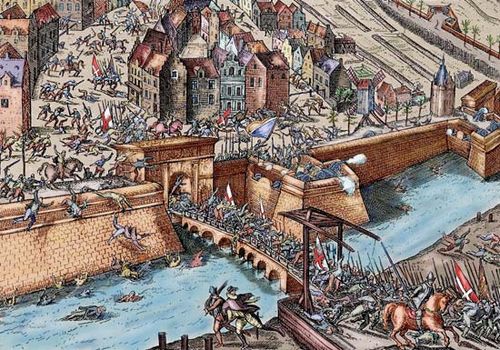
The ideological religious and political divide grew over decades within the Catholic and Protestant states that formed the Holy Roman Empire. It broke into open warfare once again around 1618 with what is known as The Thirty Years’ War. One of the longest and most brutal wars in human history, it saw more than 8 million casualties resulting from military battles as well as from the famine and disease provoked by the conflict. The other result was the destruction of the Roman Empire and the establishment of modern sovereign European nations, although many with their own manifestations of religious intolerance.
Simultaneous to the brutal European conflict, colonial expansionism to the “New World” began, both as pillaging treasure to pay for the war effort for the countries aligned with the Holy Roman Empire and as a steam valve for the resettlement of radical religious dissidents.
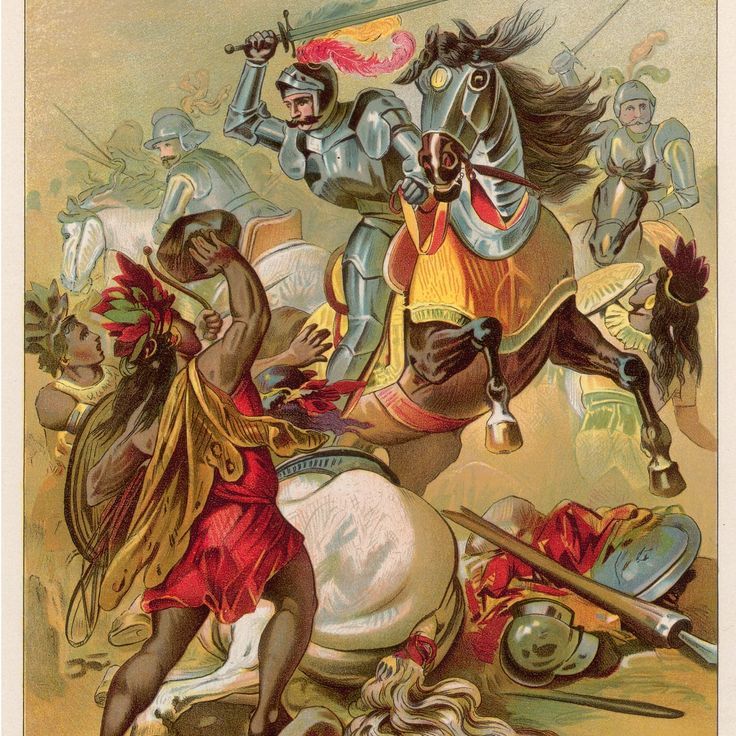
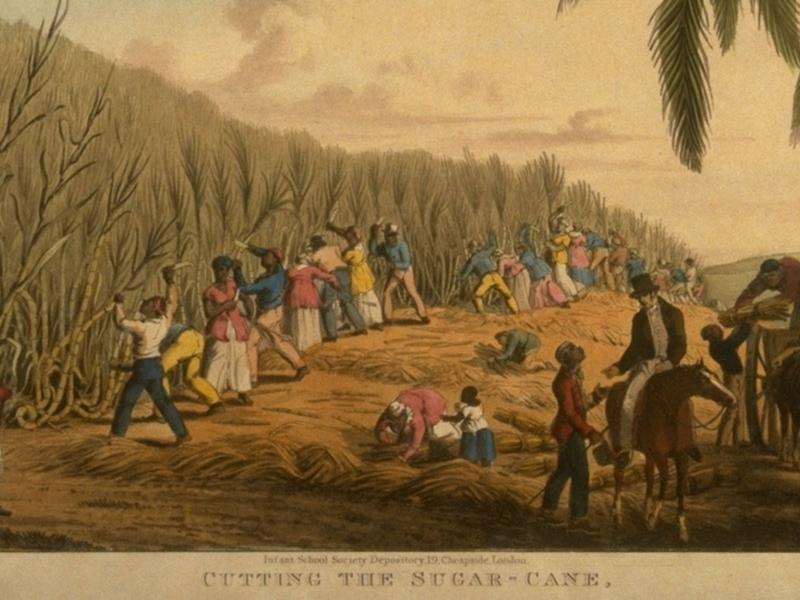
Pope Alexander VI issued the 1493 bull Inter Caetera, which divided the lands of the New World between Spain and Portugal, the same year Columbus made his second voyage to the Americas setting up shop in the Caribbean to extract gold, slaves and initiate sugar cane production. Pedro Álvares planted the Portuguese flag in Brazil in 1500. Portugal would also go on to establish colonies along the African coast, India and the Far East. Hernán Cortés led the Spanish conquest of the Aztec Empire in Mexico, in 1519, followed by Francisco Pizarro arriving to Peru in 1532 to conquer the Incas.
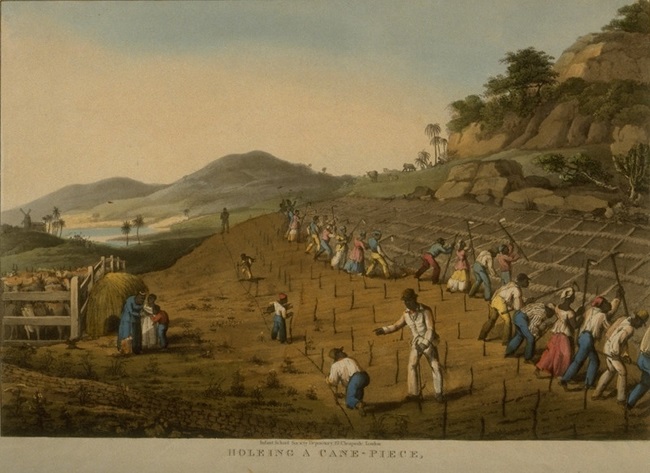
Forced labor, the slave trade and European diseases decimated the native population in the Americas and by 1517 the first groups of African slaves were brought to the Caribbean to replace the labor force. The native population in Mesoamerica, estimated to around 50 million persons was reduced to between 2 to 5 million over the time period in discussion. Reportedly, ninety percent of the overall African slave trade to the New World was to the Caribbean and South America, with close to five million just for sugar cane production in Brazil.
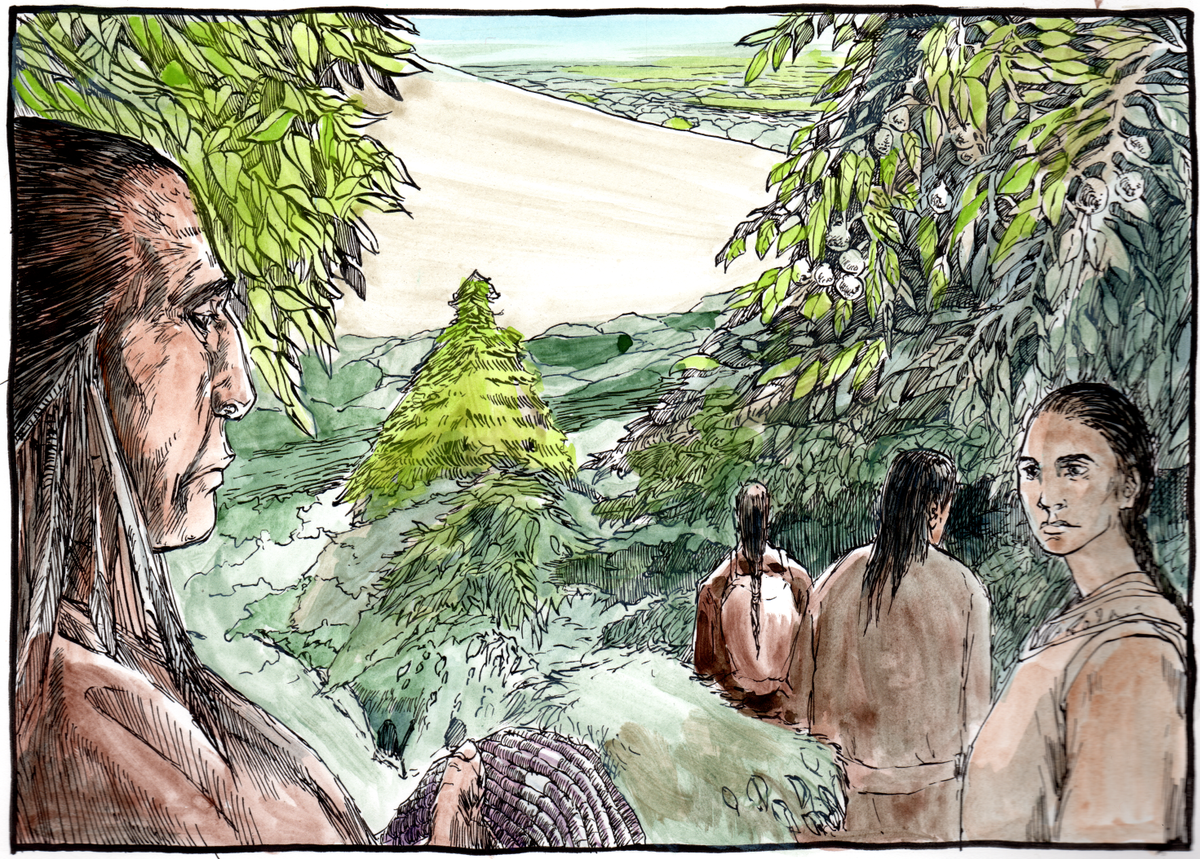
North America was also colonized during this period. In 1532, Jacques Cartier claimed parts of Canadian territory for France and the mid to late 1600’s saw the beginning of the original 13 colonies that would eventually form the USA. William Penn visited the Griesheim Swiss Anabaptist refugee settlement in September 1677 as he promoted his Pennsylvania religious tolerant colony in the New World. Four sons of Melchior Bronimann II “the exile” left for the New World with him, among them Melchior “The Pioneer” Brenneman, Sr., my fifth great grandfather. He settled in what was then the western frontier, now known as Conestoga Township in west central Lancaster County, Pennsylvania. The Brennemans co-existed with the local Conestoga Tribe for many years, as reported in an eyewitness account in the local newspaper at that time, Hazard’s Register, of the Mennonite immigrant’s children “playing in the most sportive and innocent manner with the little red faces, and I never know or heard of one little white face receiving any injury from their red brethren; that is, no intentional injury.” In December of 1763, the 20 Conestoga natives living as neighbors to the Brennemans were barbarously slaughtered by “The Paxton Boys”, a mob of Scots-Irish immigrants living in the area around Lancaster. Good intentions did not withstand the onslaught of expansion. And willingly or not, those fleeing mistreatment and persecution in the Old World became part and parcel of the perpetrators mistreating and displacing the native population in the New World.
The two hundred year period from 1500 through 1700 was a major paradigm shift. What I find interesting is the fact that each group or community impacted by this tumultuous change insists on telling their part as an independent story, unlinked to other similar stories and without context to the global upheaval which set the stage and contributed to everyone’s particular narrative. We all talk of the same 500 years, and as if we were the only true protagonist.
500 years of Anabaptism is a heritage to be proud of, but it needs to be humbly put in the perspective of playing just one small role in a world changing transformation which caused the untimely death of up to 60 million people, the displacement of many more and spawned countless similar accounts of courage and heroism.
Do we actually determine our our fate? Or are we just caught up in the events surrounding us, merely doing our best to keep our heads above water? Could the reformation had happened without the context leading up to it and the accompanying political turmoil?
Perhaps the real question is if the Reformation had not been carried out by our forebears 500 years ago, and given our sense of pride in that heritage, would we actually have the courage to carry it out today? Is there an equivalent to the reformation in our lifetime, and what would that be?
How will our descendants recall our deeds today five hundred years from now?
rab 3/6/25
Note: While writing this blog, I was overwhelmed by the sheer volume of world events from 1500 to 1700 and in no way am able to include all historical happenings in this condensed and humble attempt to bring some perspective to the Anabaptist beginnings.
How is it that revolutions invariably sputter to a halt and become merely a perverted caricature of the ideals that inspired so many to give so much and die much too early. And leave the survivors with a sour taste in their mouths and heartbroken; even jealous of the heroes who sacrificed all in the belief that the revolution would triumph and change the world.
Time after time after time: a plot written, a stage set, a foregone conclusion it would seem.
To what purpose? To become bitter? Or deny reality and wave the faded flag forever?
Or find the lesson in the script…
The lens once used to view without, separating light from dark and righteousness from evil, has grown cloudy, only reflecting dimly back on me.
Discovery the world around me is but a projection of myself my fears and joys, and beauty and shadow, darkest shadow
Just as the moon is a reflection of the earthly realm, revealing
Revolution is a personal journey
as that which inspires to action is but a clue to that needed to be rooted out deep inside
to grow or fall short and die inside
as Causes are but the two sides of the same coin with both sides feeding off and strengthening the other until victory and defeat are indistinguishable, leaving only lessons.
The cross to take up is my own, the evil to defeat is my own, the freedom to be won, mine as well
because
Liberation is a state of mind, on the path to Redemption.
¿Cómo es que las revoluciones siempre terminan perdiendo el pulso y se convierten en una caricatura barata de los ideales que inspiraron a tantos a darlo todo y morir tan jóvenes? Y dejan a los que quedan con un sabor amargo en la boca y el corazón hecho pedazos; hasta con envidia de los héroes que sacrificaron todo creyendo que la revolución iba a triunfar y cambiar el mundo.
Una y otra vez: un libreto escrito, un escenario montado, un final cantado, parece.
¿Para qué? ¿Para amargarse? ¿O negar la realidad y ondear la bandera desteñida para siempre?
¿O sacar alguna lección del guion…?
La lente que solía servir para observar afuera, separando la luz de la oscuridad y la justicia de la maldad, ha ido opacándose, ahora solo reflejando una borrosa imagen de mí mismo.
Descubrimiento el mundo que me rodea no es más que una proyección de mí propio ser, mis miedos y alegrías, y belleza y sombra, sombra más oscura
Así como la luna es un reflejo del reino terrenal, revelando que la
Revolución es un desafío personal
ya que lo que inspira a la acción no es más que una pista de lo que necesita ser erradicado profundamente adentro
para crecer o quedarse corto y morir adentro,
pues las Causas son las dos caras de la misma moneda con ambos lados alimentándose y fortaleciendo al otro hasta que la victoria y la derrota son indistinguibles, dejando solo lecciones.
La cruz que debo cargar es la mía, el mal a vencer es el mío, la libertad a obtener, también es mía porque
La Liberación es un estado mental, en el camino hacía la Redención.
For the purpose of contributing to a sustained discussion regarding the state of education in El Salvador, I would like to make a concrete proposal. My proposal is based on seven years of experience with the Amún Shéa Center for Integrated Development, in northern Morazán.
Amún Shéa is a proven educational option existing in El Salvador, Central America and is one of many that exist around the globe.
In a world with such diversity it becomes necessary to question whether the uniformity sought by a national education program is valid today. My premise is that the pace of learning, as well as interest and motivation, has a highly individualistic component, and is very unlikely to be fully developed through curricular and methodological standardization.
My proposal is aimed toward “liberation of education.” To do this academic standards are raised and pathways to learning are expanded, clearly establishing the goal of education and assessment requirements, but leaving freedom of choice for the individual regarding the route to reaching that goal.
It would also require establishing a committee or group of experts detached from the educational institutions themselves. Following the criterion of a separation between judge and jury, this commission would independently define standardized criteria of excellence, setting clear goals for each specialty and establishing mechanisms to evaluate those aspiring to graduate.
Currently schools and universities bestow titles and diplomas on their own students, with a variety of criterion and often with dubious results. With this new procedure, the effectiveness or validity of a center or education program would be determined only by the quality of graduate it produces, leaving behind the superfluous discussion on approaches, practices or the role of teachers.
In addition to technical and academic skills, educational goals would respond with a beneficial individual molding of citizens capable of bringing El Salvador out of its backwardness and current state of violence. I do not propose replacing the public system, but to enrich it with agile and independent alternatives, more adaptable to local needs and opportunities.
Educational liberation, as I see it, is the easing of curricular and methodological uniformity and bureaucratic obstacles that do not directly contribute to the learning process. In this scenario, government would focus on encouraging and supporting alternative programs that respond to the diversity of interests and passions of the student population, as well as meeting the genuine demand for local skilled labor and technical and professional skills.
Far from being an idealistic approach, this proposal responds to the reality of an unequal distribution of resources and opportunities based on geography and the social background of students. By contrast, the traditional education system is “idealistic” in that it assumes equality throughout the country that, despite being small in territory, is highly diverse. If we can free ourselves from rigid strategies we could level the playing field for all players. We have found that in the absence of resources, creative solutions to problems tend to blossom and thrive.
Those of us from the Pink Floyd generation remember that their classic “Another Brick in the Wall” invited us to change the world. The challenge was not limited to changing the color of the bricks or replacing them with a different material, but to deliver us once and for all from the enslaving uniformity that dominates the current notion of education.
————————
This blog appeared first as a article in spanish in the Jan. 20 edition of the Prensa Grafica in El Salvador. Go here to see the original article.
At Amún Shéa, we are enjoying a substantial degree of success using critical thinking, analysis and debate on relevant issues as tools to foster positive can-do attitudes. Our current challenge in this component is to instill a sense of social responsibility, intrinsic motivation and self-discipline in each student. This is easily the least understood aspect of the program within the educational community and requires considerable tact in its presentation. Empowerment of students sounds enlightening, but the shift in control that occurs when it is actually carried out (and not just spoken of) triggers an incredible resistance.
We have a formal educational community organization consisting of representation from the student council, the teachers’ commission, the parents’ organization, school administration and the Foundation. It is fascinating to observe the chemistry between these groups as we work towards shared decision making. Discipline is the “elephant in the room” theme brought up each time an adult feels pressured by this process. The discipline conversation always directs our attention to an idealistic and more ordered past where social structure seemingly had greater definition, and appearance revealed worth.
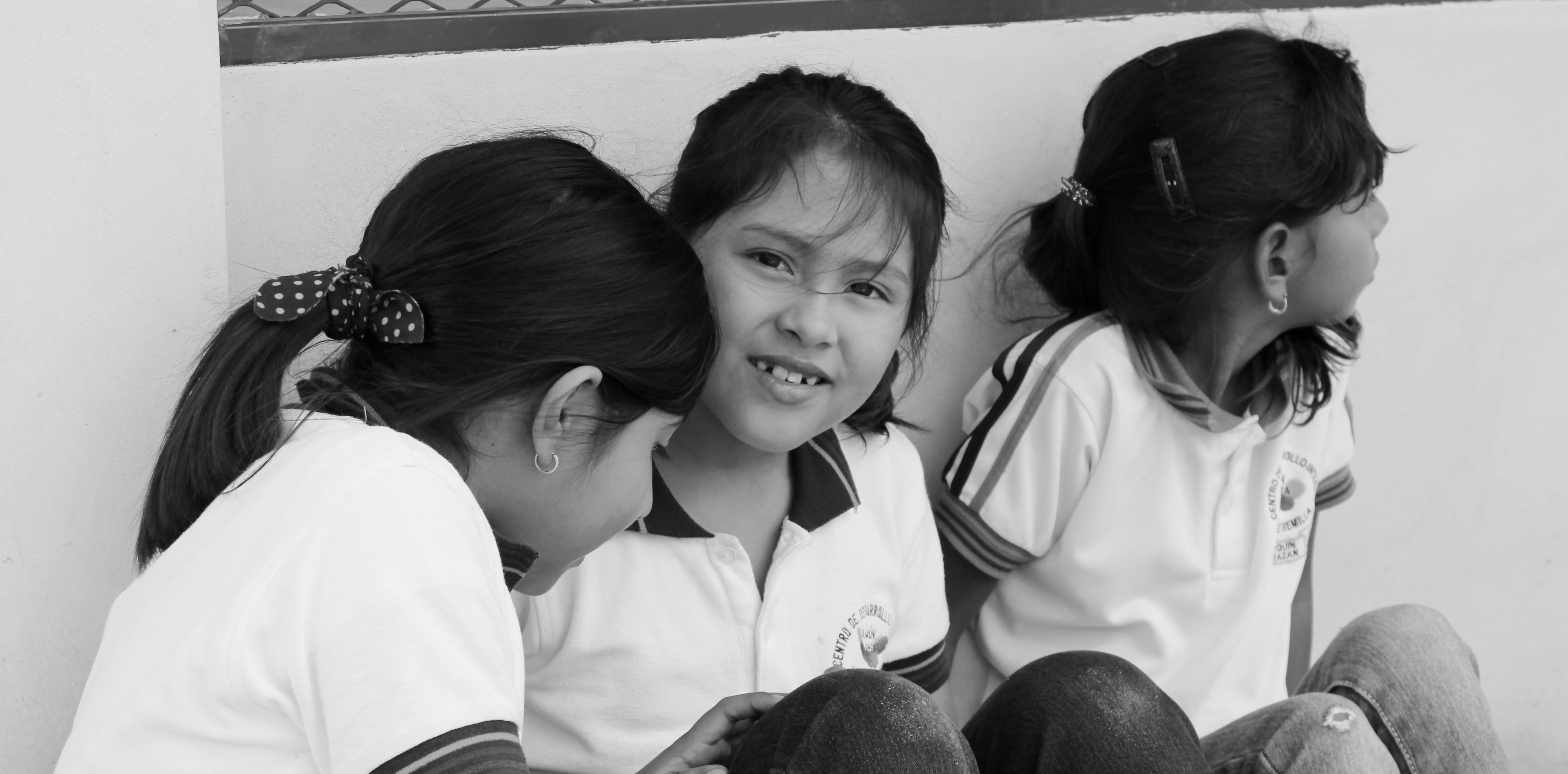
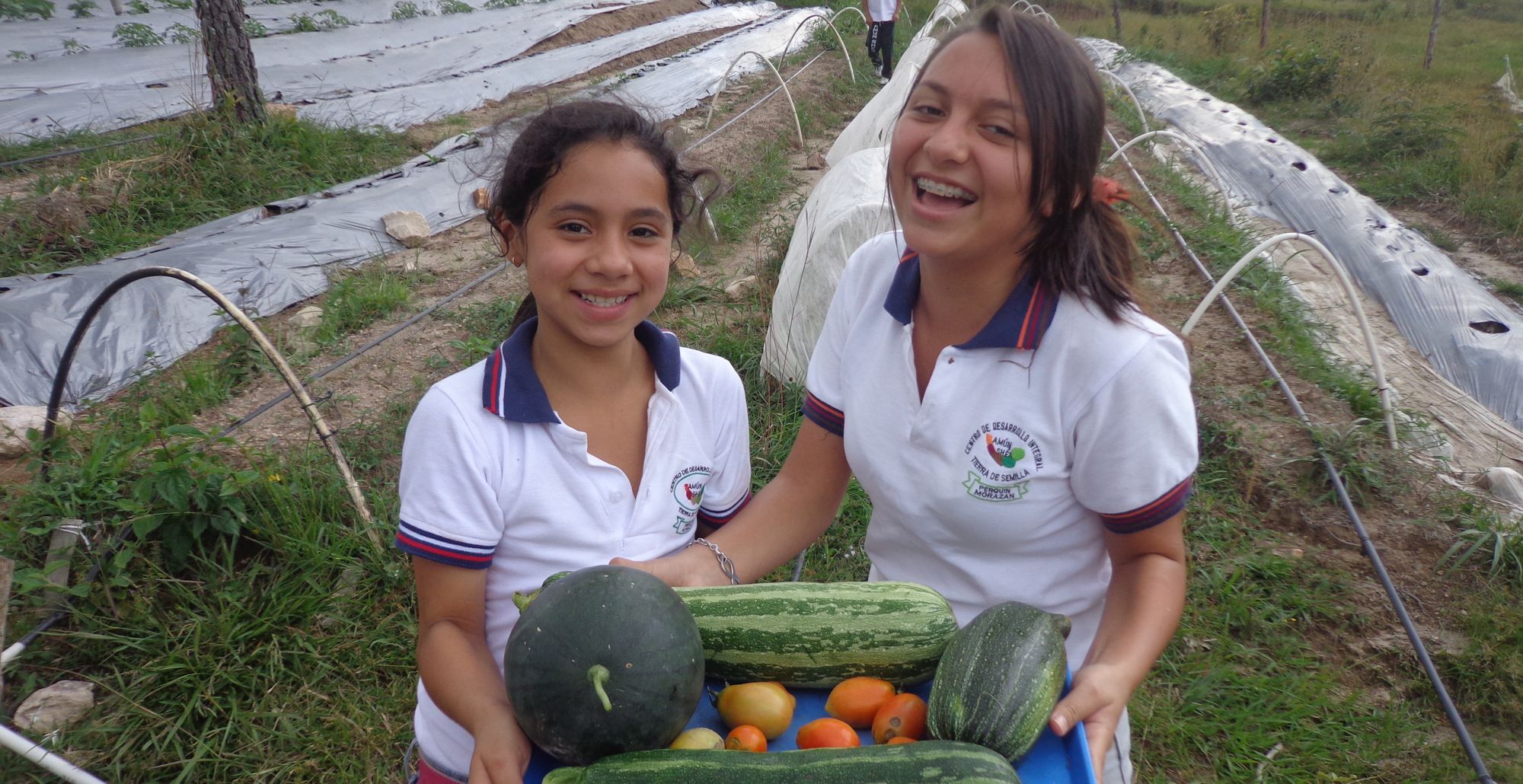
Perhaps the uncertainty of the world today causes one to yearn for a simpler, less complicated period. The vision of impeccably uniformed students with greased-back hair, toes pinched in freshly polished shoes and creases you could cut cheese on, mothers pretending they love getting up at four in the morning to produce such a fine specimen and fathers over in the shade nodding their approval, brings to mind a safe haven in the past. Perhaps a reluctance to accept the inevitable changes that children push for, a reluctance to abandon status quo, creates this yearning for “The way it used to be.”
This “safe haven” period generally refers to the industrial age educational system. The world moves on however, and humanity evolves. We have entered into a new age, not yet fully defined perhaps, but marked by what can only be defined as dimensional or evolutionary changes. Either by design, choice or by chance, the past is relevant only as a lesson and a reference point as we move forward. New definitions as well as fresh norms of social conduct are necessary in order to navigate ever-changing currents, hurdles and opportunities in our increasingly complex world.
Strict obedience to authority is absolutely necessary in many minds, and there within lies a major problem in changing attitudes. Our position is that the final product of strict obedience is dependence, which is fine if your objective is to create soldiers and employees for the industrial age, but which does nothing to jump-start new socioeconomic growth. Genuine progress demands out-of-the-box thinkers, independent and skeptical of external approval, willing to take risks and with a high degree of both ability and self-confidence. We must understand that the phrase, “Because I am in charge,” is a direct affront to this process.
Observation leads me to contemplate the extent to which our thinking processes are evolving. Not all of the differences of opinion and position may be attributed to adolescence and generational “growing pains.” Without overstepping my area of experience, I believe we need to take a good look at decision making processes and the impact that honor codes have on that process. I would hazard a guess that those who yearn for the “safe haven” past maintain a strict code of honor which firmly establishes right and wrong within their understanding. An evolutionary process manifesting itself in many younger people seems to be that of developing a decision making process of comprehensive assessment unique to each situation; flexibility.
Care must be taken that our attempt to promote acceptable social behavior among our youth, through codes of honor, does not actually condition them to accept superficial codes. Codes which are imposed and not naturally assimilated are easily exchanged for another. While strict ethical codes are pictured as noble, there are many sectors of society which operate with authoritarian codes that accept no questioning; criminal organizations, youth gangs and cults, to name a few. We would be much further ahead by accepting that both evolution and our youth are moving in the right direction and support them in this transition.
Caught in transition between the industrial/information age and the incoming yet-to-be-named eon, we need to structure our programs with flexibility that bridges rather than breaks down community during this period. A level of tension, both generational and from a difference in vision will be prevalent, even volatile at times. We must learn how to responsibly manage those differences and understand the processes provoking those them.
It is clear that changing attitudes is a long-term endeavor, in all probability involving several generations. The length of the process should not be seen as a problem, insomuch as we have a comprehensive strategy and are moving daily in the right direction.
Northern Morazán is a remote border region in El Salvador. It is an area where the dimensional divide between education and development is very clearly demonstrated. Hundreds of local young people graduate from “vocational school” each year and enter “the real world” without the basic skills needed to face daily obstacles and to seize the occasional opportunities when presented.
High school in El Salvador has both a two-year general program as the route to university studies and a three year vocational option. Most rural students opt for vocational studies, as they lack the financial resources involved not only for tuition but for travel, lodging and living expenses to go to university. The problem is that most rural high schools have only one, and at the most two, vocational options. The high school in Perquín, Morazán provides Accounting and Secretary as the two vocational options, from which over one hundred students graduate each year. The obvious contradiction is that northern Morazán, statically the poorest area in El Salvador has little to no openings for these positions. The other difficulty is that the educational curriculum for these specialties is outdated, requiring the graduate who does find employment to relearn their skills once again.
Actually, a vanguard educational system should be the most significant means available to lead development and fight poverty in remote areas of developing countries. However, the traditional separation of formal education from socioeconomic developmental programs results with both falling far short of essential expectations and having little impact on real living conditions. It is indeed a sad truth that expectations regarding both program areas have plummeted, as the status quo of helplessness reigns supreme.
Attempts to effect change are often viewed as unrealistic and discarded as impractical theories. Programs too often are funded only because tradition and political correctness mandates tolerating this social burden, even though the probability of failure can easily be assumed.
Both, may we say, industries, have become institutionalized and increasingly specialized, conceivably to their own detriment. There is an obvious flaw in educational programs that are focused on forming excellent employees but work within a reality of very few job opportunities. Equally, developmental programs often mistakenly assume that the beneficiary population has sufficient knowledge or has the capacity to assimilate new techniques and productive innovations, creating frustration and inefficiency during program implementation and operation.
Very often these educational and developmental programs operate side by side without ever coming into contact with each other. Ostensibly they are all inclusive and mutually exclusive. Unfortunately, neither has managed to solve the social or economic woes in rural areas of developing countries. Both focus on content, knowledge, tools, resources and projected outcome. It is striking that neither consider attitude, self-motivation and self-realization to be basic components in their strategic planning and methodology.
A credible study of the long history of charity programs, reconstruction projects and readily available technical training courses will reveal a high degree of passivity and dependence on outside intervention as a direct result of their implementation. Development projects actually become a means of subsistence in and of themselves without hope of actually originating self-perpetuating productiveness and sustainability. The projects themselves become the employer and the organizations are often converted into a type of family business. Within this setting, traditional education has no clear purpose and therefore offers very little beyond simply keeping the children occupied while parents are working. It could essentially be said that these areas are primary components (purposely or not) of the Poverty Industry, in that “Education” provides the beneficiaries for continuous “Development” which maintains the demand for perpetual assistance and expert intervention.
Constructive socioeconomic change requires integrating the technical capacity focus of development with motivation or positive change in attitudes which are developed through appropriate educational methodology. This implies bringing the two programs together in a way that will enhance both. It requires providing education with a purpose for its existence. It means channeling development through those with interest, willingness and the capacity to assimilate innovative programs. It will provide a support structure to development and coverts education into a relevant, meaningful activity.
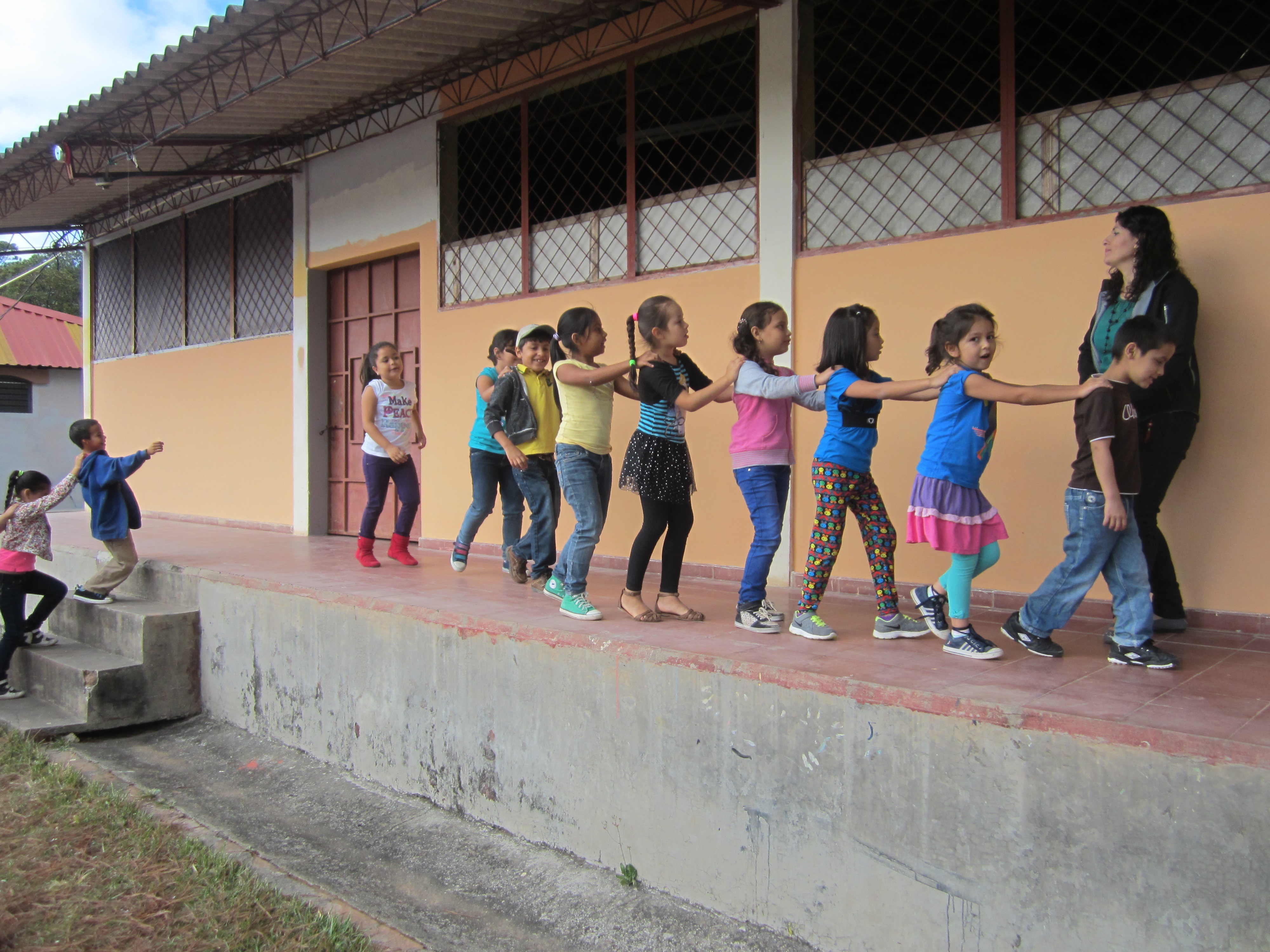
Amún Shéa, Center for Integrated Development in Perquín, Morazán is an example of the needed integration, with a curriculum that strives to bridge the dimensional split between academics and development. This is done with hands-on participation by the students in building solutions to local developmental hurdles. Beginning in 2008 with kindergarten through third grade, the program has expanded one grade per year, reaching ninth grade this year (2014.) Accreditation for High School next year is in process with the Salvadoran Educational Ministry.
Amún Shéa stands out from the Salvadoran norm in several concrete ways. The Amún Shéa program runs from 7:30 am to 3:00 pm, practically doubling the half-day public education system. Whereas the methodology in the public system is limited to the teacher copying material from a textbook to the chalkboard (whiteboard now, in some cases) and the student copying that same information into their notebook, our problem-based methodology integrates current and developmental concerns into the subject matter.
As the school runs a full day and nutritional-related health deficiencies within the area are alarming, Amún Shéa incorporates a complete nutrition program which provides nourishing meals, nutrition training, cooking lessons, vegetable farming, fishing farming and hygiene training. Coordinated with the USA-based organization GlobeMed, the objective of the program is to go beyond providing the daily snack and lunch to each student to actually modifying eating habits and diet within the community, beginning with the families of the students. As well, this activity opens the opportunity for families to learn from the program and implement vegetable gardening and fish farming as a business enterprise, which helps broaden the local production base from subsistence basic grains.
Amún Shéa students take on real-world problems for their scientific investigation projects. In one case, the sixth grade investigated the local municipal water supply after experiencing firsthand in their homes the indication of contamination within the distribution system. They traveled to the water source of the system, high in the neighboring Honduran mountains, interviewed the inhabitants living around the source and inspected the source. They then inspected the filtration plant, tanks and distribution system. They uncovered lapses and gaps of responsibility between the municipality and local health authorities. In the end, their investigation forced improvements in the water system for over 3,000 people.
Creation of business plans is another exercise for the integration of real-world situations into the subject material. Several small enterprises have germinated from this process, as parents are convinced of the viability by their child´s work.
Cultural research and investigation as a means of building community and personal identity is an elemental part of the program. Collecting testimony from senior citizens regarding past events, practices and local history, researching local legends and lore, and searching out traces of indigenous roots all assist in personal orientation. In this aspect, not only the past is covered, but current tendencies as well, including immigration, economic activities and opinion polls.
Each student is equipped with a Personal Learning Environment, basically the digital tool-kit and portfolio they will use and further develop throughout their lives. This emphasis on digital tools and resources actually levels the playing field for our students, giving them access to the same information and processes as students in more favorable conditions. It also compensates for the lack of locally available information in needed areas of technical study.
Integration of education and development is the key to initiating positive socioeconomic changes. Its success will depend on the extent that real-world application is implemented throughout the process.
Fundamental changes are currently taking place in this brief and eternal moment we share as reality. The idea that we can actually take some type of action and “get things back to normal” brings to mind that oft repeated adage “There are none so blind as those who will not see.” There is no “going back!” We can only move forward.
Although we glowingly refer to our children as the future, we have largely surrendered their training for life to an outdated archaic educational system which does little more than remove them from our presence during part of the day. Indeed, that day often provides little in the way of substantive education. The little formation that does take place does not prepare them for the real world. An argument could actually be made that we are training them for unemployment. Yes, there are exceptions to this, but unfortunately they are exactly that; exceptions!
Globalization is a very interesting phenomenon, and one which has brought about a most profound change to humanity. Initiated primarily to leverage corporate advantage, it has morphed into the social field as well. Perhaps it is this corporate global takeover that has so homogenized our social and economic woes throughout the world? However an obvious advantage of globalization is that we are also now equipped to share experiences and build common solutions.
Our globally shared obstacles, to the happy and prosperous existence some once considered an inherent right, include:
An ever deepening chasm between the populace and government as national laws respond to faceless “international agreements” and corporate interests, as opposed to the “will of the people”.
A diminishing of “stable job markets,” resulting from outsourcing, hiring practices designed to reduce the burden of long-term financial commitment, a general reduction in available positions and unfunded government mandates.
An unstable and abused natural environment, becoming much less friendly and bountiful in providing our basic needs, including air, water and food production.
Any political stance on these points is pointless and only distracts from the task at hand of forming our children for the new normal. The new normal calls for greater self-reliance, initiative and adaptability. It calls for greater cooperation at grassroots level and less dependency on bureaucratic systems. It calls for the construction of local alternatives and solutions. It calls for an educational system with a purpose, willing and able to adapt to local needs and, above all, willing to teach and learn new things.
We must start training our children to be productive and successful in a world where traditional employment becomes increasingly scarce. Their substance and happiness must be of their own making, as a result of cooperation and must not depend on external sources. Our task is to strive to understand the nature of current changes and to build pro-active strategies and responding flexibility into the programs and systems that prepare our children for their own changes.