Going back or moving forward? (English version)
by Ron Brenneman
After thirty-six years in Central America, I have decided it is time to move on and face the new challenge of going “back home”. Perhaps a more accurate portrayal would be to expand my area of activity to include the area where I once grew up.
I have no intention of completely abandoning El Salvador, but it is now time to step out of the day to day operational duties I had taken on in my adopted country. It is also time to introduce my children to their other country.
El Salvador has entered into a new phase. The new president calls it the end of the post-war, while some good friends, based on the Japanese experience after WWII, call it the beginning of the post-war era. Either way it is called, the recent Salvadoran presidential election marked a change and a drastic decline in the two major political parties.
Both ARENA and the FMLN were both created as instruments of war. A never-ending “cold war” between the two, a continuation of conflict set in rhetoric of the 80s, blocked out innovation and real progress as a nation for 27 years after the peace accords were signed. The voters, sick and tired of the situation, soundly booted both of them out and elected a fresh face.
Reflecting upon the election results and the underlying message, I was forced to revise my own thinking and participation in education, community development and business in El Salvador. I had made my home in northern Morazán, formerly one of the major theatres of the Salvadoran Civil War. I came to the realization that much of my vision and strategy for development is based on that same mindset of the conflict in the 80s.
While I do consider myself to be one of “the good guys”, I must accept that it is time to step aside. Outside intervention remains just that, regardless of good intentions. I recall a delightful conversation several years ago, in which an insightful friend analyzed my vision of community as the desire to install a Mennonite colony in Morazán. I did not agree, of course, nevertheless the need to be aware of baggage was a point well taken.
The era of change in El Salvador, of fresh vision and ideas, must have its own space to flourish and must be supported, but in such a manner that allows authentic local leadership and natural institutional building. Too long have outside models and standards been held up as ideal. I trust that to some degree, those outdated models took a beating in the election as well.
Before showering me with praise for such vision and foresight, I will confess that it took a jolting reminder of my own mortality, in the form of serious heart failure, to put me into a deeper reflective mode. This type of reminder quickly converts us into sages and wise philosophers.
Perkin Educational Opportunities Foundation (PEOF) and Amún Shéa Center for Integrated Development have grown into solid institutions over the past twelve years. Starting from that one-room schoolhouse in 2008, they have grown into a program with positive tangible impact on public education, especially in the province of Morazán.
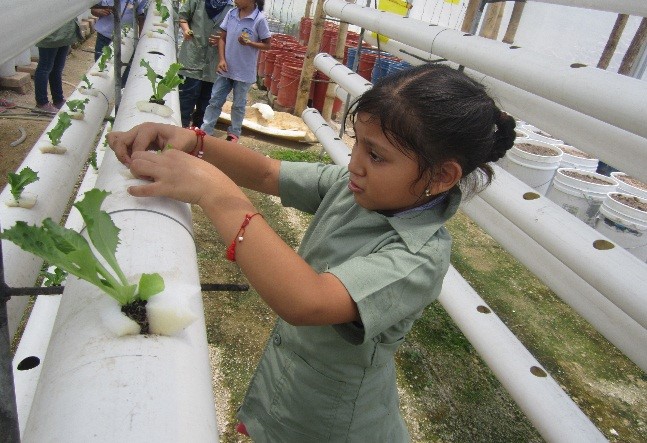
Alliances and agreements with governmental and non-governmental organizations in strategic areas of interest to develop, such as Agro-ecology, Science and Technology and Forest Restoration broaden the bridge being built between development and relevant education.
The program has solid roots and I have full confidence in the capable team of executive directors who have taken on the responsibility, not just of maintaining but, of broadening the influence and impact of PEOF and Amún Shéa in El Salvador. While I will maintain a level of input with strategic planning and fundraising, the daily operations, administration and implementation will be managed by the Executive Director team.
To our loyal supporters and fundraisers, I would request you continue and redouble your valuable support to PEOF and Amún Shéa. With your support, I am confident the program will flourish and continue to bring positive change, and more so as an authentic homegrown solution to the problems facing a new El Salvador.
I recall conversations with several of you during the last several years regarding what would happen when I am no longer around. The ever-present question was of whether the program was just Ron´s project or if it would indeed take root on its own. A transition initiated in this manner truly has a much better chance of success than one of a sudden and dramatic departure.
As a family, we are currently working our way through the bureaucratic paperwork to get all of us up to the east coast, to the state of Delaware. Quite the challenge to just pick up and go. From what I´ve glimpsed so far, little is the same as when I left in 1983. While in many ways it seems like starting from scratch, family and friends form an important bridge over the gap of time and distance. Not entirely sure what we will do yet, but fishing, gardening, carpentry and pole lima beans are all in the picture.
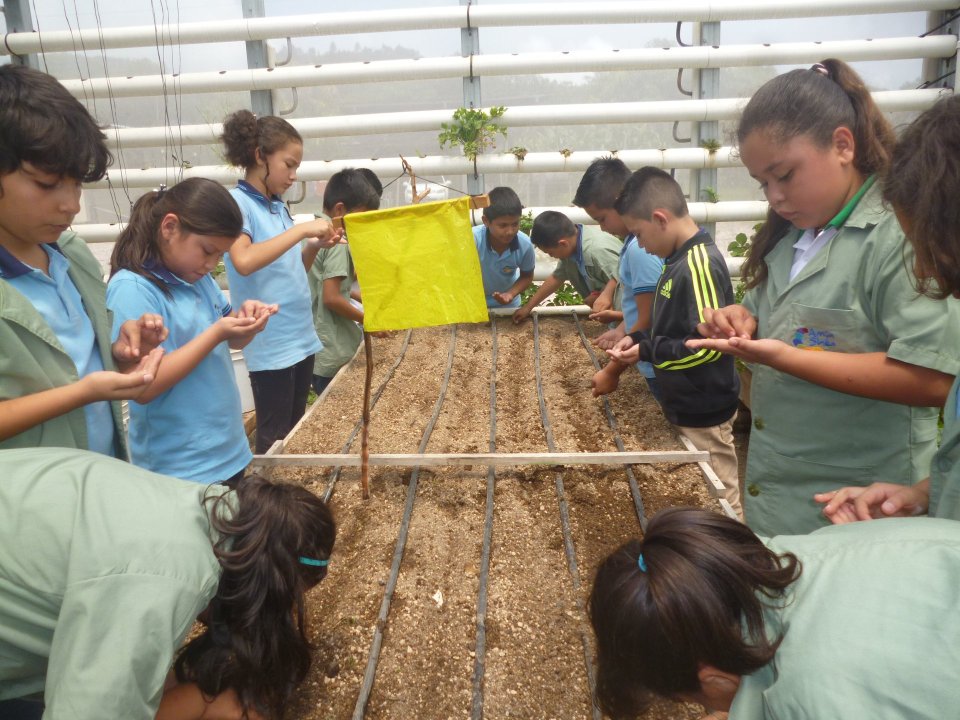

 We founded Amún Shéa, Center for Integrated Development as a correction to a programmed failure. The problem-based learning curriculum focuses on real-world and local developmental issues. And we started young, with a K through third grade program in 2008, expanding one grade per year. Our students do not study subjects; they study problems and create solutions. Math, Science and other subjects are used as tools in the application of solutions, consulted as needed to get the job done.
 21st Century Introspective