
January 21 of this year marked five hundred years of Anabaptism, the movement that spawned the Amish, Mennonite, Hudderite and Brethren religious communities, so congratulations are in order.
In a nutshell, Anabaptists rejected Roman Catholic infant baptism as invalid, insisting that this sacrament could only be taken by one conscious of it’s deep spiritual meaning. While this is the stance that led to the name “Anabaptist”, their new doctrine also rejected the Pope’s authority and called for a layman’s understanding and interpretation of the bible. This was countered by religious persecution and death for many followers by drowning, being burnt at the stake or broken on the rack, among other barbaric methods of Inquisitional torture. In the period from 1527 until 1711, an estimated four to five thousand Anabaptists were executed for their faith. Many are documented in the “Martyrs Mirror” or “The Bloody Theater”, first published in Holland in 1660 in Dutch by Thieleman J. van Braght.
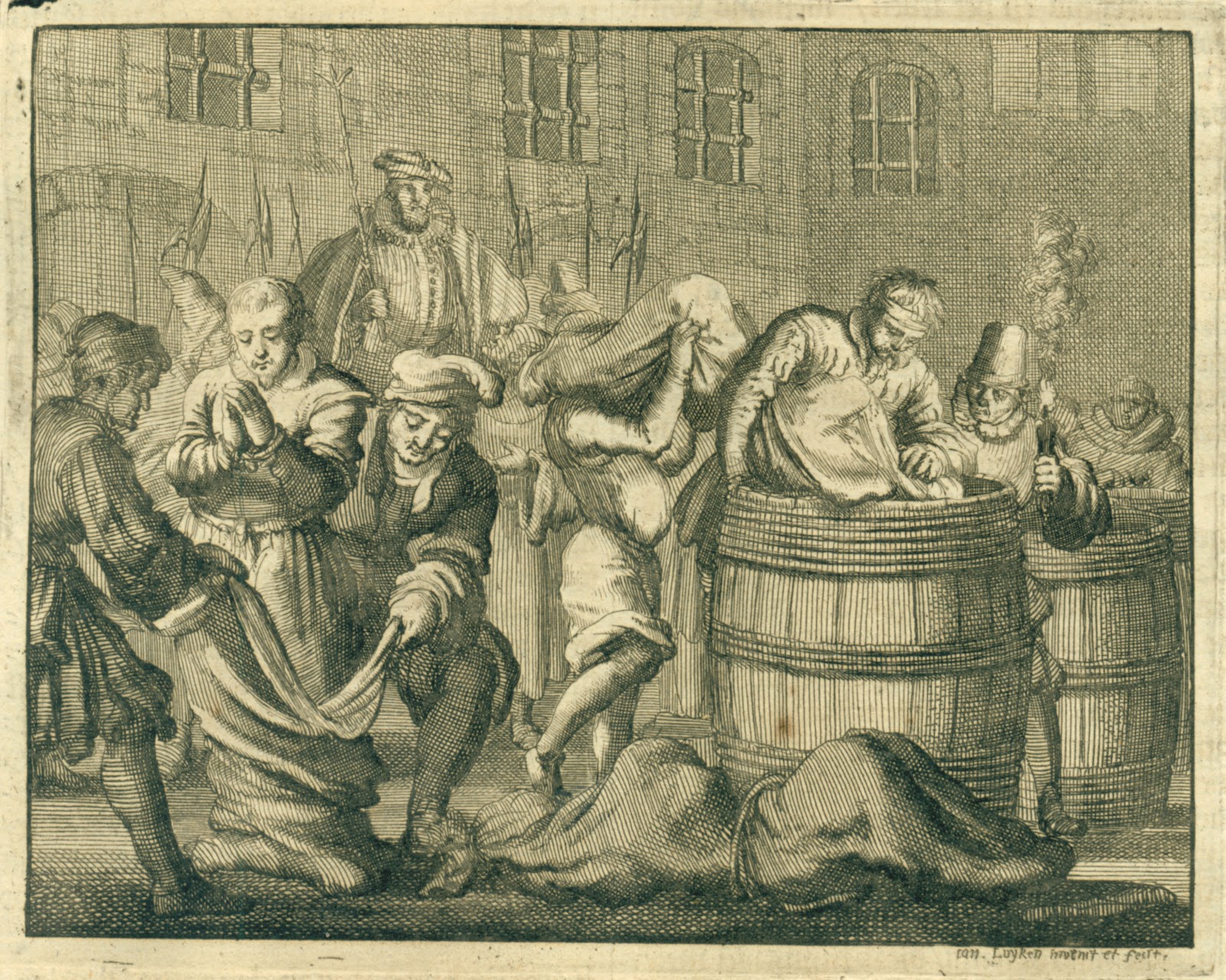
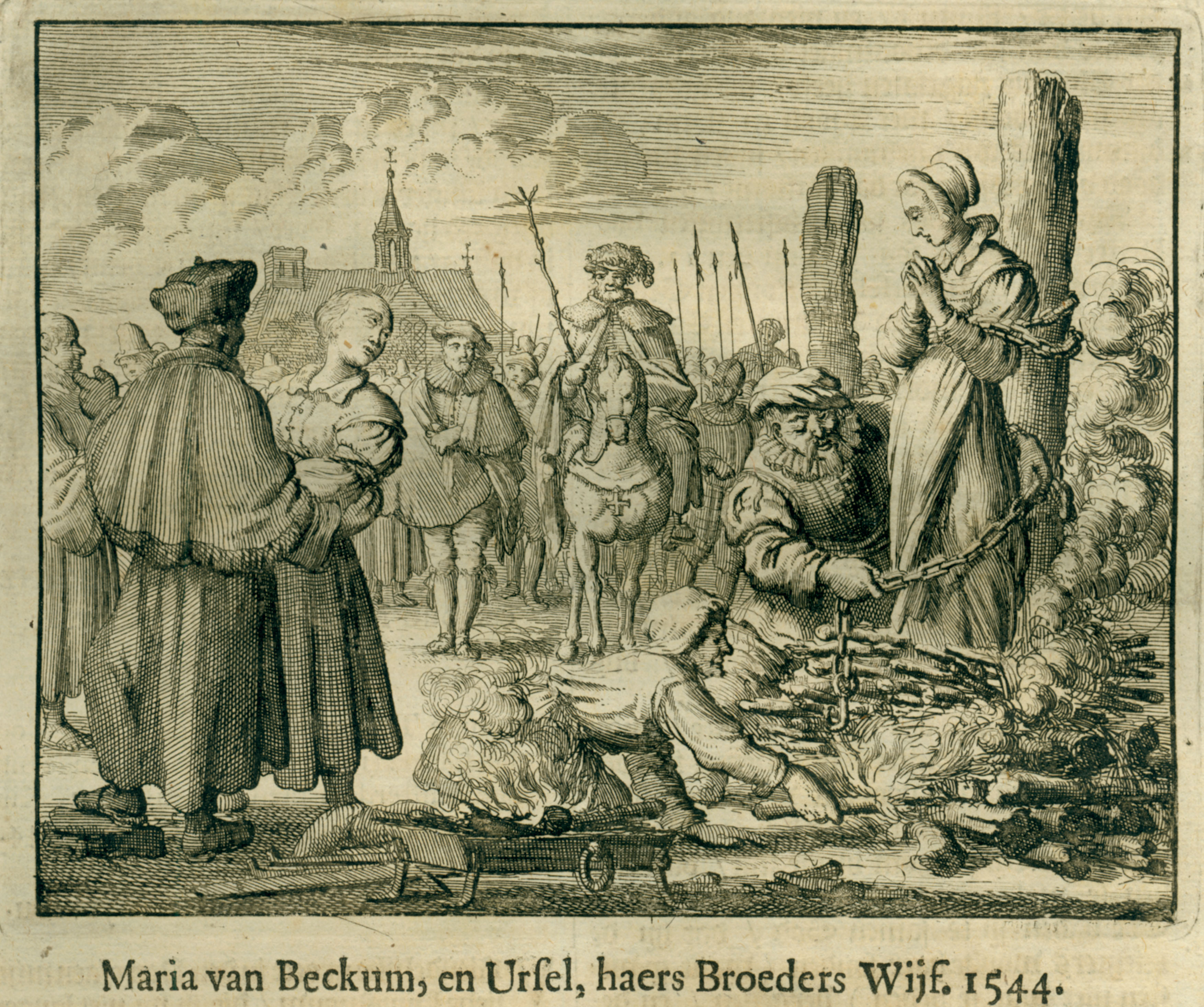
My sixth great-grandfather, Melchior Bronimann II “the exile”, born around 1631 in Oberdiessbach, Bern, Switzerland, a weaver, became part of this Anabaptist movement, specifically in the Mennonite sect. In 1659, at the age of 28, he was jailed for a year in the Castle of Thun, before being exiled, along with his wife and seven children to the Swiss Anabaptist refugee camp in Griesheim, Germany. Two cells in the tower in the Castle of Thun are open to tourists now; several years ago I was able to visit the area, sit in one of the cells for awhile and ponder if I could have made the same decision, at that young age and with a wife and a growing family. A sense of self-esteem in my family heritage is natural of course, even a pinch of sanctimonious pride. “We” stood up to an evil church-state alliance and remained true to “our faith”.


But then, the five hundred year refrain strikes a note. Where have I heard that before? Could it be that “we” were not the only thing going on? What else was happening five hundred years ago? Well, it turns out that quite a bit of change was taking place throughout the world which needs to be looked at in order to put the Anabaptist chapter in context. A related question is that of cause and effect; how individual movements impact or are impacted by world changing events. We all want to be the butterfly in the Butterfly Effect, right?
Overall, the time period of our interest, from around 1500 into the 1711’s, marked the end of the middle ages (also known as the dark ages) ushering in the enlightenment of the Renaissance period. Leonardo da Vince, Michelangelo, William Shakespeare, Descartes, Galileo and Copernicus among others molded our modern concepts of art, architecture and science during this time frame; basically forming all of current western cultural identity.
Long before Martin Luther nailed his 95 Thesis to the church door, an English theologian and early dissident in the Roman Catholic Church, John Wycliffe (1328-1384) had coined the phrase, “Priesthood of all believers” which would later become the basis of all Anabaptist theology. The bible translated for the common man, the equal footing of all believers and the right (and obligation) of each one to interpret the bible for themselves is central to this concept. I remember during my teenage years, a discussion at church regarding if the pulpit for the pastor should be on a raised platform or not. Raising the pulpit above floor level may give the impression of superiority, while keeping it at floor level meant he was no better than the rest of us, although it was more difficult to see and hear the sermon. The practical argument won out and the pulpit was raised, much to the chagrin of the traditionalists.
Wycliffe’s writings regarding the reformation of the church heavily influenced all reformers following in his footsteps. While he was able to stay out of the churches grasp and die a natural death in 1384, the Council of Constance in 1415 called for his bones to be dug up and burned for heresy.
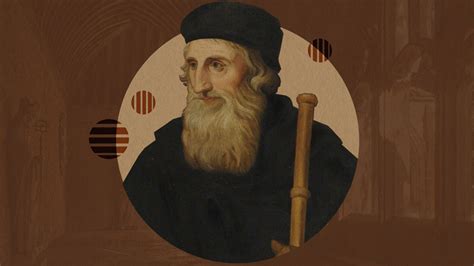
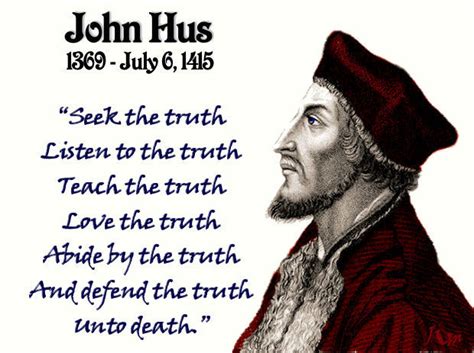
One of those who studied Wycliffe’s teachings was Jan Hus, hailing from what is now the Czech Republic. Born in 1369, Hus soon echoed his predecessor’s stance against indulgences, rejecting the power of the papacy and promoting the priesthood of all believers. His most recognized work titled “The Church” claimed that Christ was the founder of the church, not Peter. In 1414, he was given safe passage to a reforming council to be held in the city of Constance, Switzerland, purportedly in order to resolve his differences with the church. It was a trap; on arrival, his safe passage was withdrawn, he was tried and burned at the stake on July 6, 1415.
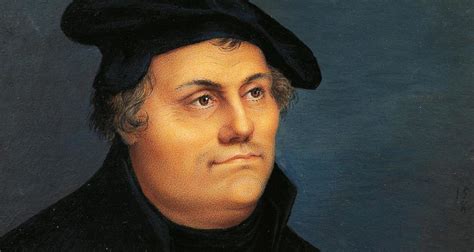
It is within the context of this 200 year discussion and coinciding with the enlightenment of the renaissance, that on October 31, 1517 Martin Luther nailed his 95 Thesis to the door of the Castle Church in Wittenberg, Germany. Initially there was an attempt to keep the discussion within the church, but to no avail. In 1521, he was excommunicated and the protestant reformation began in earnest, with a proliferation of proposed reforms and new doctrines and communities of faith. Among the most radical were the Anabaptists, and among them, the Mennonites.
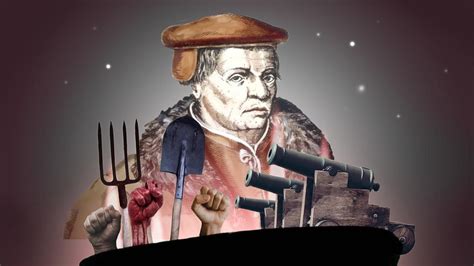
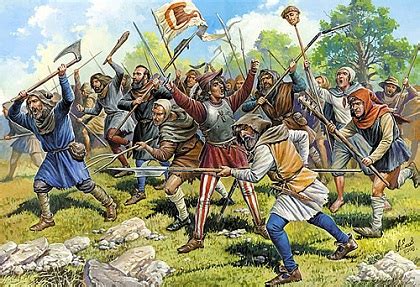
The debate over church doctrine went public and spread into the secular political arena. The German Peasants’ War (1524–1525) was a widespread popular revolt in the Holy Roman Empire that saw thousands of peasants, townsfolk, and lower-class individuals rise up against feudal authorities. Their demands were encompassed in “The Twelve Articles” which called for the abolition of certain feudal taxes, fair rents, access to common lands, and the right to choose their own pastors. The reaction to this movement by the theological reformers was by no means harmonious, exemplified by the clash between contemporaries Thomas Müntzer, a Protestant minister who fully supported the demands of the peasantry, and Martin Luther, who argued that the duty of the peasants was farm labor and the duty of the ruling classes was upholding the peace. Initially, Luther had expressed sympathy for the grievances of the peasants, as they were inspired by his work, writing an “Admonition to Peace Concerning the Twelve Articles of the Peasants”. However, once the rebellion turned violent and threatened the social order, he turned on them, writing a pamphlet “Against the Murderous, Thieving Hordes of Peasants” with rather violent rhetoric, “Therefore, let everyone who can, smite, slay, and stab, secretly or openly, remembering that nothing can be more poisonous, hurtful, or devilish than a rebel. It is just as when one must kill a mad dog; if you do not strike him, he will strike you, and a whole land with you”. Of the 300,000 participants in the uprising over 100,000 died, with the remainder punished and fined. Many fled to neighboring countries, spreading their ideology and promoting similar actions.
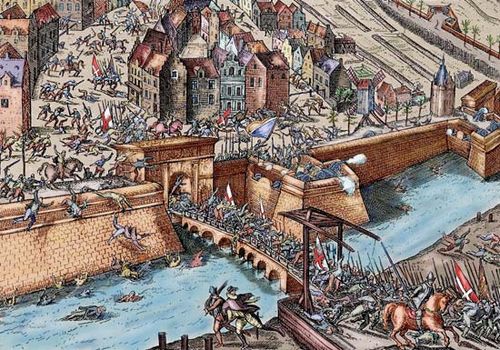
The ideological religious and political divide grew over decades within the Catholic and Protestant states that formed the Holy Roman Empire. It broke into open warfare once again around 1618 with what is known as The Thirty Years’ War. One of the longest and most brutal wars in human history, it saw more than 8 million casualties resulting from military battles as well as from the famine and disease provoked by the conflict. The other result was the destruction of the Roman Empire and the establishment of modern sovereign European nations, although many with their own manifestations of religious intolerance.
Simultaneous to the brutal European conflict, colonial expansionism to the “New World” began, both as pillaging treasure to pay for the war effort for the countries aligned with the Holy Roman Empire and as a steam valve for the resettlement of radical religious dissidents.
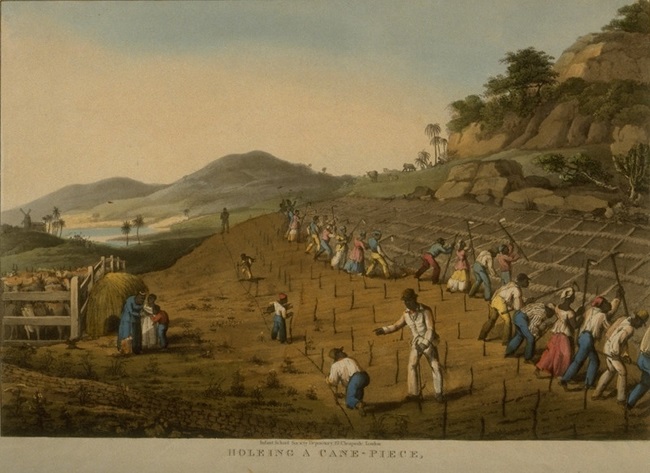
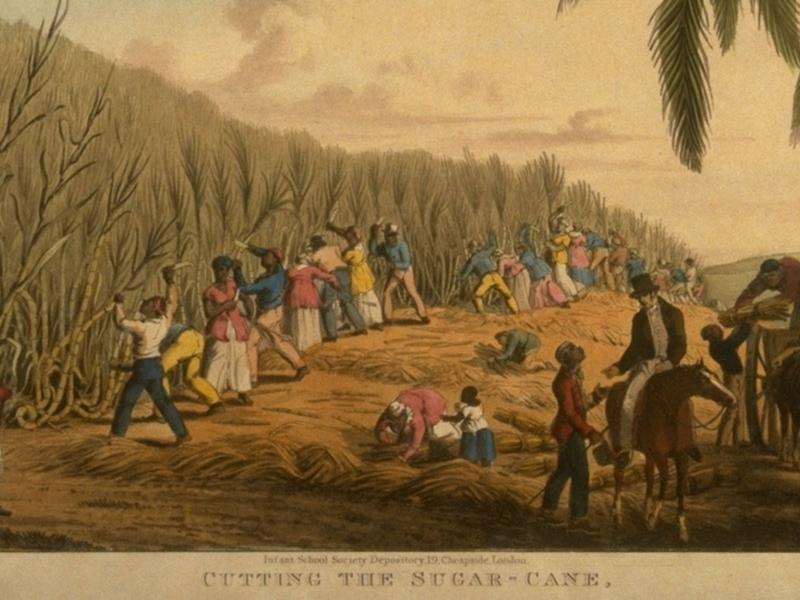
Pope Alexander VI issued the 1493 bull Inter Caetera, which divided the lands of the New World between Spain and Portugal, the same year Columbus made his second voyage to the Americas setting up shop in the Caribbean to extract gold, slaves and initiate sugar cane production. Pedro Álvares planted the Portuguese flag in Brazil in 1500. Portugal would also go on to establish colonies along the African coast, India and the Far East. Hernán Cortés led the Spanish conquest of the Aztec Empire in Mexico, in 1519, followed by Francisco Pizarro arriving to Peru in 1532 to conquer the Incas.

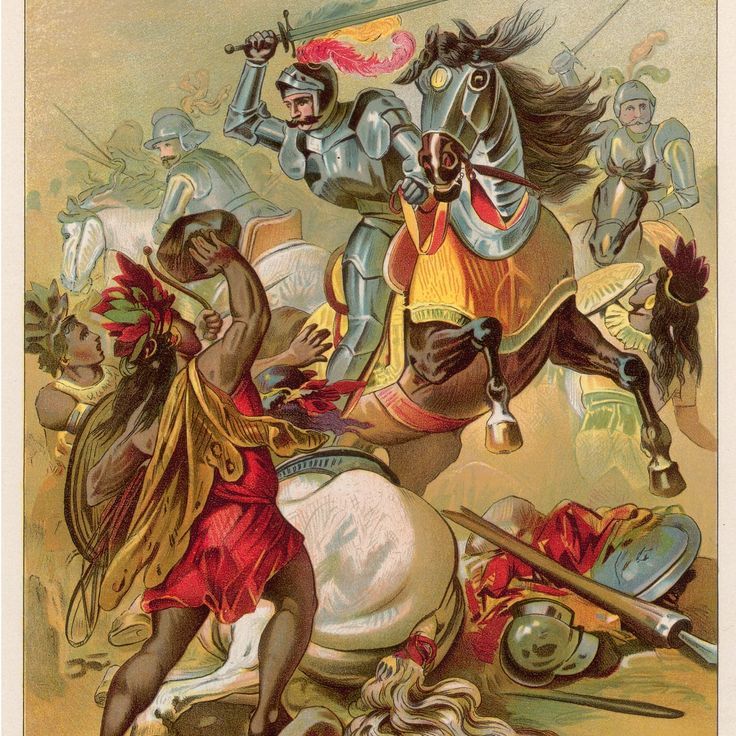
Forced labor, the slave trade and European diseases decimated the native population in the Americas and by 1517 the first groups of African slaves were brought to the Caribbean to replace the labor force. The native population in Mesoamerica, estimated to around 50 million persons was reduced to between 2 to 5 million over the time period in discussion. Reportedly, ninety percent of the overall African slave trade to the New World was to the Caribbean and South America, with close to five million just for sugar cane production in Brazil.
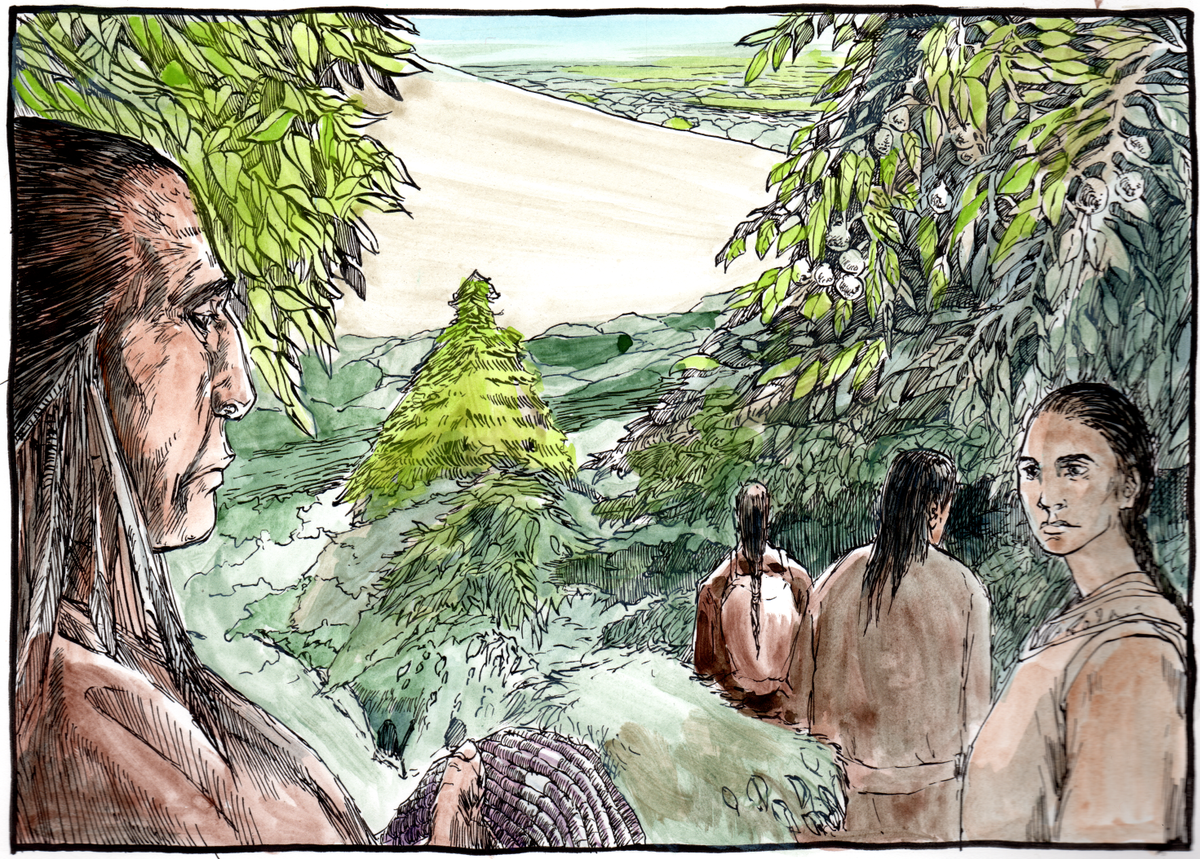
North America was also colonized during this period. In 1532, Jacques Cartier claimed parts of Canadian territory for France and the mid to late 1600’s saw the beginning of the original 13 colonies that would eventually form the USA. William Penn visited the Griesheim Swiss Anabaptist refugee settlement in September 1677 as he promoted his Pennsylvania religious tolerant colony in the New World. Four sons of Melchior Bronimann II “the exile” left for the New World with him, among them Melchior “The Pioneer” Brenneman, Sr., my fifth great grandfather. He settled in what was then the western frontier, now known as Conestoga Township in west central Lancaster County, Pennsylvania. The Brennemans co-existed with the local Conestoga Tribe for many years, as reported in an eyewitness account in the local newspaper at that time, Hazard’s Register, of the Mennonite immigrant’s children “playing in the most sportive and innocent manner with the little red faces, and I never know or heard of one little white face receiving any injury from their red brethren; that is, no intentional injury.” In December of 1763, the 20 Conestoga natives living as neighbors to the Brennemans were barbarously slaughtered by “The Paxton Boys”, a mob of Scots-Irish immigrants living in the area around Lancaster. Good intentions did not withstand the onslaught of expansion. And willingly or not, those fleeing mistreatment and persecution in the Old World became part and parcel of the perpetrators mistreating and displacing the native population in the New World.

The two hundred year period from 1500 through 1700 was a major paradigm shift. What I find interesting is the fact that each group or community impacted by this tumultuous change insists on telling their part as an independent story, unlinked to other similar stories and without context to the global upheaval which set the stage and contributed to everyone’s particular narrative. We all talk of the same 500 years, and as if we were the only true protagonist.
500 years of Anabaptism is a heritage to be proud of, but it needs to be humbly put in the perspective of playing just one small role in a world changing transformation which caused the untimely death of up to 60 million people, the displacement of many more and spawned countless similar accounts of courage and heroism.
Do we actually determine our our fate? Or are we just caught up in the events surrounding us, merely doing our best to keep our heads above water? Could the reformation had happened without the context leading up to it and the accompanying political turmoil?
Perhaps the real question is if the Reformation had not been carried out by our forebears 500 years ago, and given our sense of pride in that heritage, would we actually have the courage to carry it out today? Is there an equivalent to the reformation in our lifetime, and what would that be?
How will our descendants recall our deeds today five hundred years from now?
rab 3/6/25
Note: While writing this blog, I was overwhelmed by the sheer volume of world events from 1500 to 1700 and in no way am able to include all historical happenings in this condensed and humble attempt to bring some perspective to the Anabaptist beginnings.

 21st Century Introspective