Tag Archives: Amún Shéa

Going back or moving forward?

2

Going back or moving forward? (English version)

by Ron Brenneman

After thirty-six years in Central America, I have decided it is time to move on and face the new challenge of going “back home”. Perhaps a more accurate portrayal would be to expand my area of activity to include the area where I once grew up.

I have no intention of completely abandoning El Salvador, but it is now time to step out of the day to day operational duties I had taken on in my adopted country. It is also time to introduce my children to their other country.

El Salvador has entered into a new phase. The new president calls it the end of the post-war, while some good friends, based on the Japanese experience after WWII, call it the beginning of the post-war era. Either way it is called, the recent Salvadoran presidential election marked a change and a drastic decline in the two major political parties.

Both ARENA and the FMLN were both created as instruments of war. A never-ending “cold war” between the two, a continuation of conflict set in rhetoric of the 80s, blocked out innovation and real progress as a nation for 27 years after the peace accords were signed. The voters, sick and tired of the situation, soundly booted both of them out and elected a fresh face.

Reflecting upon the election results and the underlying message, I was forced to revise my own thinking and participation in education, community development and business in El Salvador. I had made my home in northern Morazán, formerly one of the major theatres of the Salvadoran Civil War. I came to the realization that much of my vision and strategy for development is based on that same mindset of the conflict in the 80s.

While I do consider myself to be one of “the good guys”, I must accept that it is time to step aside. Outside intervention remains just that, regardless of good intentions. I recall a delightful conversation several years ago, in which an insightful friend analyzed my vision of community as the desire to install a Mennonite colony in Morazán. I did not agree, of course, nevertheless the need to be aware of baggage was a point well taken.

The era of change in El Salvador, of fresh vision and ideas, must have its own space to flourish and must be supported, but in such a manner that allows authentic local leadership and natural institutional building. Too long have outside models and standards been held up as ideal. I trust that to some degree, those outdated models took a beating in the election as well.

Before showering me with praise for such vision and foresight, I will confess that it took a jolting reminder of my own mortality, in the form of serious heart failure, to put me into a deeper reflective mode. This type of reminder quickly converts us into sages and wise philosophers.

Perkin Educational Opportunities Foundation (PEOF) and Amún Shéa Center for Integrated Development have grown into solid institutions over the past twelve years. Starting from that one-room schoolhouse in 2008, they have grown into a program with positive tangible impact on public education, especially in the province of Morazán.

Alliances and agreements with governmental and non-governmental organizations in strategic areas of interest to develop, such as Agro-ecology, Science and Technology and Forest Restoration broaden the bridge being built between development and relevant education.

The program has solid roots and I have full confidence in the capable team of executive directors who have taken on the responsibility, not just of maintaining but, of broadening the influence and impact of PEOF and Amún Shéa in El Salvador. While I will maintain a level of input with strategic planning and fundraising, the daily operations, administration and implementation will be managed by the Executive Director team.

To our loyal supporters and fundraisers, I would request you continue and redouble your valuable support to PEOF and Amún Shéa. With your support, I am confident the program will flourish and continue to bring positive change, and more so as an authentic homegrown solution to the problems facing a new El Salvador.

I recall conversations with several of you during the last several years regarding what would happen when I am no longer around. The ever-present question was of whether the program was just Ron´s project or if it would indeed take root on its own. A transition initiated in this manner truly has a much better chance of success than one of a sudden and dramatic departure.

As a family, we are currently working our way through the bureaucratic paperwork to get all of us up to the east coast, to the state of Delaware. Quite the challenge to just pick up and go. From what I´ve glimpsed so far, little is the same as when I left in 1983. While in many ways it seems like starting from scratch, family and friends form an important bridge over the gap of time and distance. Not entirely sure what we will do yet, but fishing, gardening, carpentry and pole lima beans are all in the picture.
A proposal for education from Morazán

IMG_7357For the purpose of contributing to a sustained discussion regarding the state of education in El Salvador, I would like to make a concrete proposal. My proposal is based on seven years of experience with the Amún Shéa Center for Integrated Development, in northern Morazán.

Amún Shéa is a proven educational option existing in El Salvador, Central America and is one of many that exist around the globe.

In a world with such diversity it becomes necessary to question whether the uniformity sought by a national education program is valid today. My premise is that the pace of learning, as well as interest and motivation, has a highly individualistic component, and is very unlikely to be fully developed through curricular and methodological standardization.

My proposal is aimed toward “liberation of education.” To do this academic standards are raised and pathways to learning are expanded, clearly establishing the goal of education and assessment requirements, but leaving freedom of choice for the individual regarding the route to reaching that goal.

It would also require establishing a committee or group of experts detached from the educational institutions themselves. Following the criterion of a separation between judge and jury, this commission would independently define standardized criteria of excellence, setting clear goals for each specialty and establishing mechanisms to evaluate those aspiring to graduate.

Currently schools and universities bestow titles and diplomas on their own students, with a variety of criterion and often with dubious results. With this new procedure, the effectiveness or validity of a center or education program would be determined only by the quality of graduate it produces, leaving behind the superfluous discussion on approaches, practices or the role of teachers.

In addition to technical and academic skills, educational goals would respond with a beneficial individual molding of citizens capable of bringing El Salvador out of its backwardness and current state of violence. I do not propose replacing the public system, but to enrich it with agile and independent alternatives, more adaptable to local needs and opportunities.

Educational liberation, as I see it, is the easing of curricular and methodological uniformity and bureaucratic obstacles that do not directly contribute to the learning process. In this scenario, government would focus on encouraging and supporting alternative programs that respond to the diversity of interests and passions of the student population, as well as meeting the genuine demand for local skilled labor and technical and professional skills.

Far from being an idealistic approach, this proposal responds to the reality of an unequal distribution of resources and opportunities based on geography and the social background of students. By contrast, the traditional education system is “idealistic” in that it assumes equality throughout the country that, despite being small in territory, is highly diverse. If we can free ourselves from rigid strategies we could level the playing field for all players. We have found that in the absence of resources, creative solutions to problems tend to blossom and thrive.

Those of us from the Pink Floyd generation remember that their classic “Another Brick in the Wall” invited us to change the world. The challenge was not limited to changing the color of the bricks or replacing them with a different material, but to deliver us once and for all from the enslaving uniformity that dominates the current notion of education.

————————

This blog appeared first as a article in spanish in the Jan. 20 edition of the Prensa Grafica in El Salvador. Go here to see the original article.

Integrating Education and Development

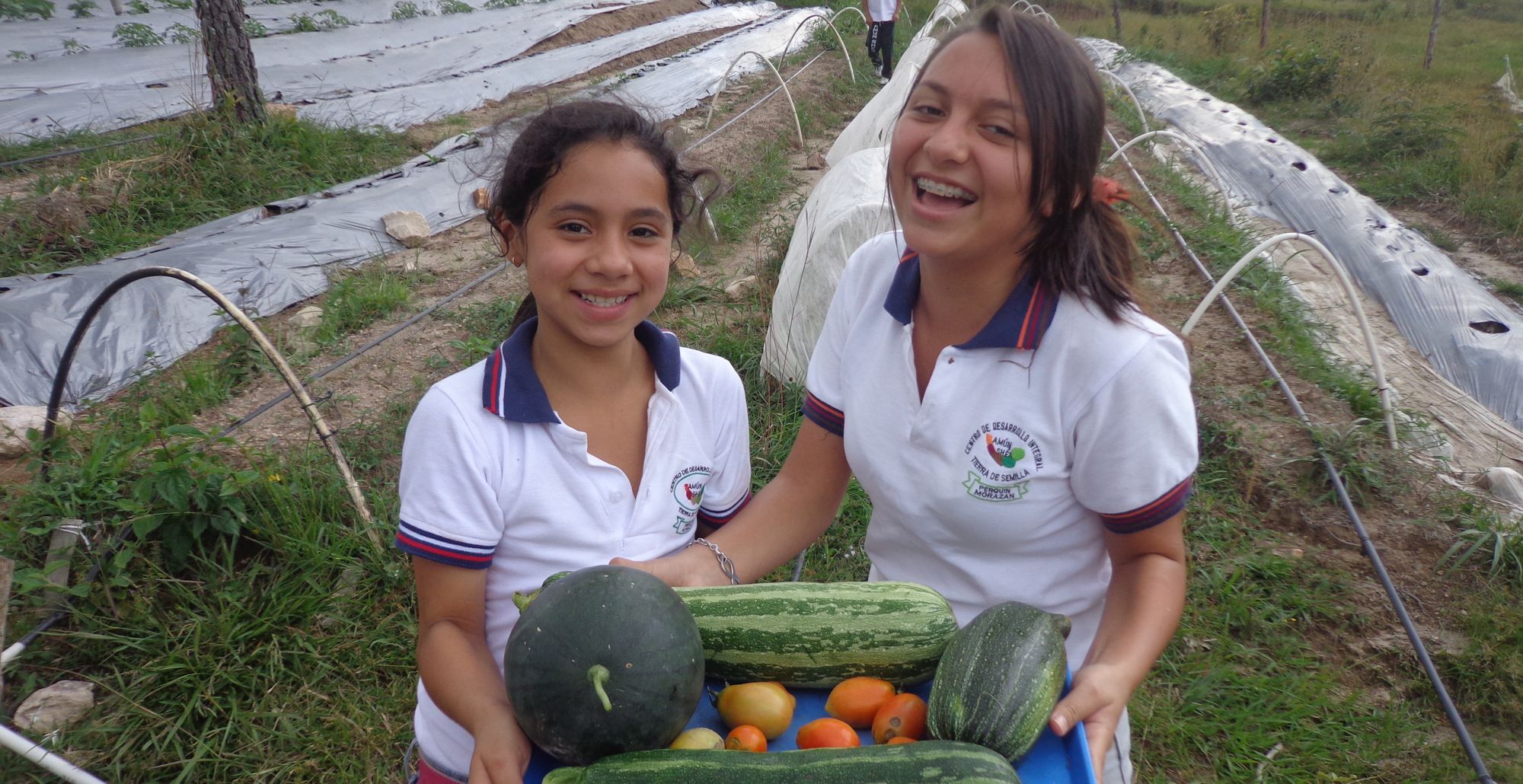
Garden Results

Northern Morazán is a remote border region in El Salvador. It is an area where the dimensional divide between education and development is very clearly demonstrated. Hundreds of local young people graduate from “vocational school” each year and enter “the real world” without the basic skills needed to face daily obstacles and to seize the occasional opportunities when presented.

High school in El Salvador has both a two-year general program as the route to university studies and a three year vocational option. Most rural students opt for vocational studies, as they lack the financial resources involved not only for tuition but for travel, lodging and living expenses to go to university. The problem is that most rural high schools have only one, and at the most two, vocational options. The high school in Perquín, Morazán provides Accounting and Secretary as the two vocational options, from which over one hundred students graduate each year. The obvious contradiction is that northern Morazán, statically the poorest area in El Salvador has little to no openings for these positions. The other difficulty is that the educational curriculum for these specialties is outdated, requiring the graduate who does find employment to relearn their skills once again.

Actually, a vanguard educational system should be the most significant means available to lead development and fight poverty in remote areas of developing countries. However, the traditional separation of formal education from socioeconomic developmental programs results with both falling far short of essential expectations and having little impact on real living conditions. It is indeed a sad truth that expectations regarding both program areas have plummeted, as the status quo of helplessness reigns supreme.

Attempts to effect change are often viewed as unrealistic and discarded as impractical theories. Programs too often are funded only because tradition and political correctness mandates tolerating this social burden, even though the probability of failure can easily be assumed.

Both, may we say, industries, have become institutionalized and increasingly specialized, conceivably to their own detriment. There is an obvious flaw in educational programs that are focused on forming excellent employees but work within a reality of very few job opportunities. Equally, developmental programs often mistakenly assume that the beneficiary population has sufficient knowledge or has the capacity to assimilate new techniques and productive innovations, creating frustration and inefficiency during program implementation and operation.

Very often these educational and developmental programs operate side by side without ever coming into contact with each other. Ostensibly they are all inclusive and mutually exclusive. Unfortunately, neither has managed to solve the social or economic woes in rural areas of developing countries. Both focus on content, knowledge, tools, resources and projected outcome. It is striking that neither consider attitude, self-motivation and self-realization to be basic components in their strategic planning and methodology.

A credible study of the long history of charity programs, reconstruction projects and readily available technical training courses will reveal a high degree of passivity and dependence on outside intervention as a direct result of their implementation. Development projects actually become a means of subsistence in and of themselves without hope of actually originating self-perpetuating productiveness and sustainability. The projects themselves become the employer and the organizations are often converted into a type of family business. Within this setting, traditional education has no clear purpose and therefore offers very little beyond simply keeping the children occupied while parents are working. It could essentially be said that these areas are primary components (purposely or not) of the Poverty Industry, in that “Education” provides the beneficiaries for continuous “Development” which maintains the demand for perpetual assistance and expert intervention.

Constructive socioeconomic change requires integrating the technical capacity focus of development with motivation or positive change in attitudes which are developed through appropriate educational methodology. This implies bringing the two programs together in a way that will enhance both. It requires providing education with a purpose for its existence. It means channeling development through those with interest, willingness and the capacity to assimilate innovative programs. It will provide a support structure to development and coverts education into a relevant, meaningful activity.

Amún Shéa, Center for Integrated Development in Perquín, Morazán is an example of the needed integration, with a curriculum that strives to bridge the dimensional split between academics and development. This is done with hands-on participation by the students in building solutions to local developmental hurdles. Beginning in 2008 with kindergarten through third grade, the program has expanded one grade per year, reaching ninth grade this year (2014.) Accreditation for High School next year is in process with the Salvadoran Educational Ministry.

Amún Shéa stands out from the Salvadoran norm in several concrete ways. The Amún Shéa program runs from 7:30 am to 3:00 pm, practically doubling the half-day public education system. Whereas the methodology in the public system is limited to the teacher copying material from a textbook to the chalkboard (whiteboard now, in some cases) and the student copying that same information into their notebook, our problem-based methodology integrates current and developmental concerns into the subject matter.

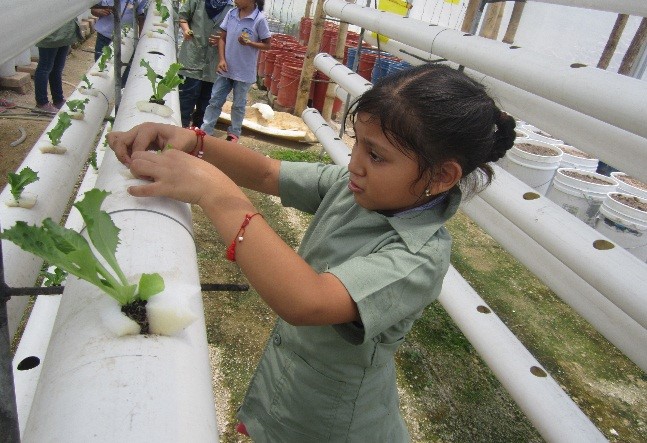
As the school runs a full day and nutritional-related health deficiencies within the area are alarming, Amún Shéa incorporates a complete nutrition program which provides nourishing meals, nutrition training, cooking lessons, vegetable farming, fishing farming and hygiene training. Coordinated with the USA-based organization GlobeMed, the objective of the program is to go beyond providing the daily snack and lunch to each student to actually modifying eating habits and diet within the community, beginning with the families of the students. As well, this activity opens the opportunity for families to learn from the program and implement vegetable gardening and fish farming as a business enterprise, which helps broaden the local production base from subsistence basic grains.

Amún Shéa students take on real-world problems for their scientific investigation projects. In one case, the sixth grade investigated the local municipal water supply after experiencing firsthand in their homes the indication of contamination within the distribution system. They traveled to the water source of the system, high in the neighboring Honduran mountains, interviewed the inhabitants living around the source and inspected the source. They then inspected the filtration plant, tanks and distribution system. They uncovered lapses and gaps of responsibility between the municipality and local health authorities. In the end, their investigation forced improvements in the water system for over 3,000 people.

Creation of business plans is another exercise for the integration of real-world situations into the subject material. Several small enterprises have germinated from this process, as parents are convinced of the viability by their child´s work.

Cultural research and investigation as a means of building community and personal identity is an elemental part of the program. Collecting testimony from senior citizens regarding past events, practices and local history, researching local legends and lore, and searching out traces of indigenous roots all assist in personal orientation. In this aspect, not only the past is covered, but current tendencies as well, including immigration, economic activities and opinion polls.

Each student is equipped with a Personal Learning Environment, basically the digital tool-kit and portfolio they will use and further develop throughout their lives. This emphasis on digital tools and resources actually levels the playing field for our students, giving them access to the same information and processes as students in more favorable conditions. It also compensates for the lack of locally available information in needed areas of technical study.

Integration of education and development is the key to initiating positive socioeconomic changes. Its success will depend on the extent that real-world application is implemented throughout the process.

The Brightest and the Best

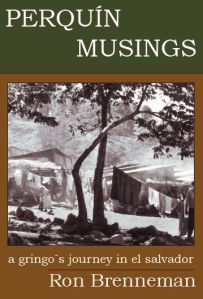
Perquín Musings, a book I penned in 2009 contains commentary regarding immigration. Given the current focus on the subject, and the fact that we have not seen much progress on the subject during the past five years, I present the short chapter “The Brightest and the Best.”

9780988592100That is a very innovative selection process up North to get the type of foreign workers needed.

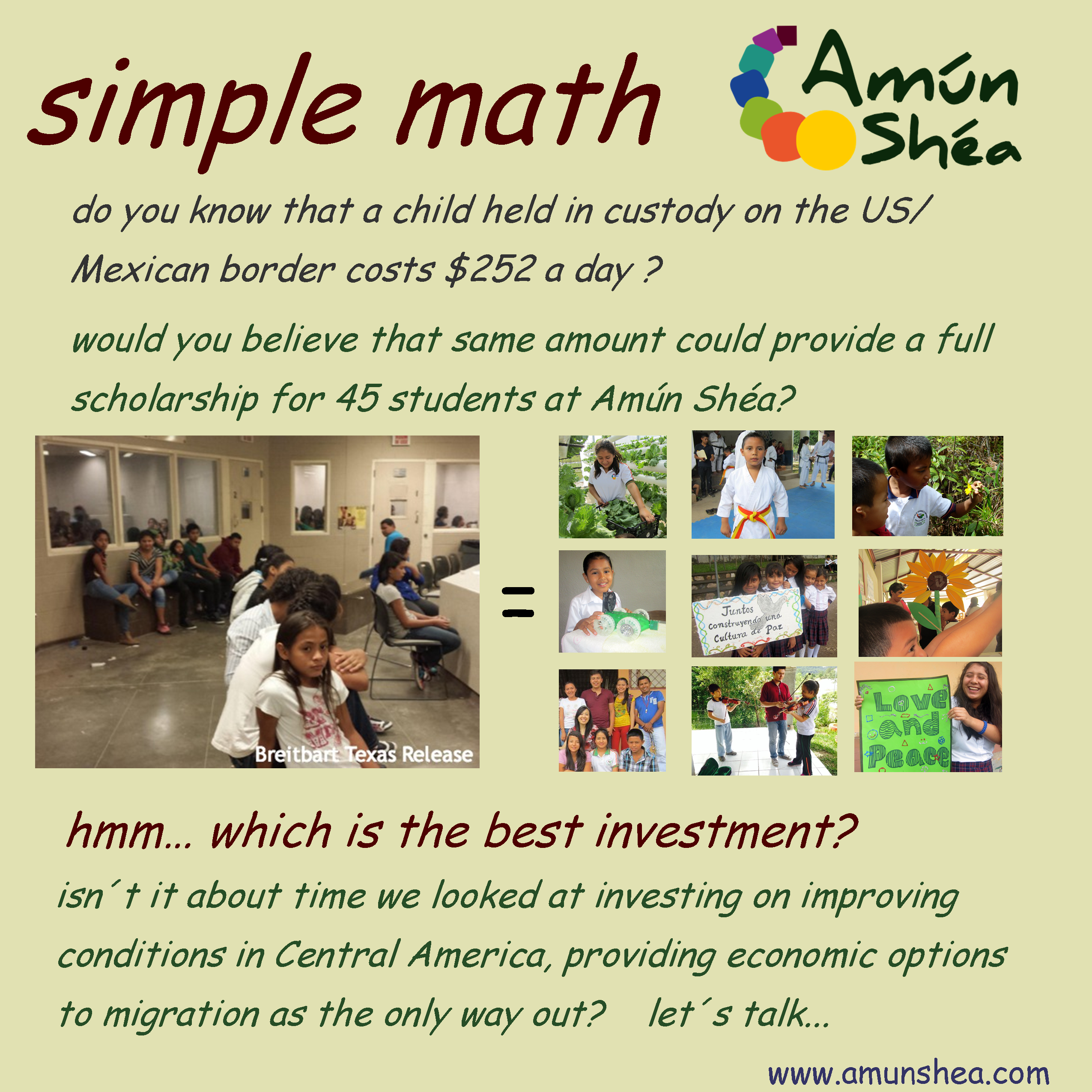
First, set up the prize. Earn as much in one hour as for a whole day in El Salvador. Second, set up the obstacle course. Practically no visas, dangerous route through Guatemala and Mexico, jump the fence and a high-risk desert run at the end. Once there, faced with illegal status and immigration roundups as the order of the day.

Maybe there ought to be a new Statue of Liberty on the Rio Grande, dividing Texas from Mexico. It would have to be updated, of course, modeled after Britney Spears or the latest iconic talent, with her belly showing. The inscription reading “give me your tired, your poor…” would also need a little updating. It should read “Give me your most daring, your fittest, those willing to take chances. Give me your initiative, your future, your brightest and best.”

With around two million Salvadorans in the States, the largest national product is the remittances they send home. In sheer numbers, that workforce probably compares pretty much with the workforce left in El Salvador.

The Darwinist selection of those who go north, however, results in a quality unbalance within the two groups, at least at the gumption level.

It is probably too early to speculate on changes to the gene pool, but we are left working with those left behind.

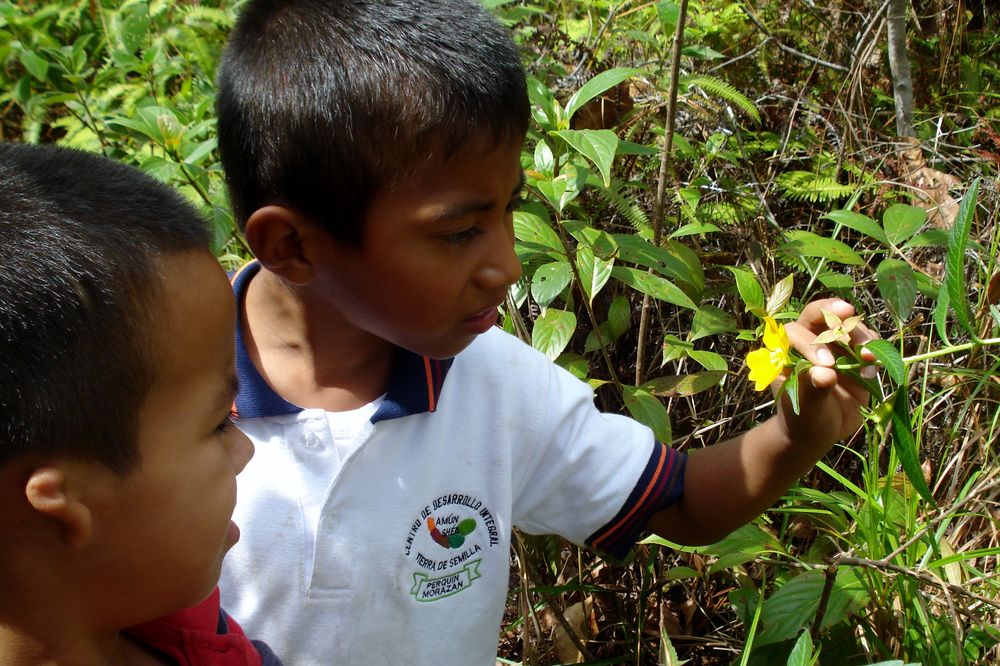
FlowerWe are working to slow that talent drain. El Salvador needs a few of the brighest and best to stay here at home; to change the conditions that leave migration as the only option for providing a decent living.

We do not believe in quick fixes, but that with a focused effort, change will start happening before we know it.

We are Amún Shéa and we are out to change our world. Join with us! It will change, only if we work together on this.

The Mandate of Education in Development

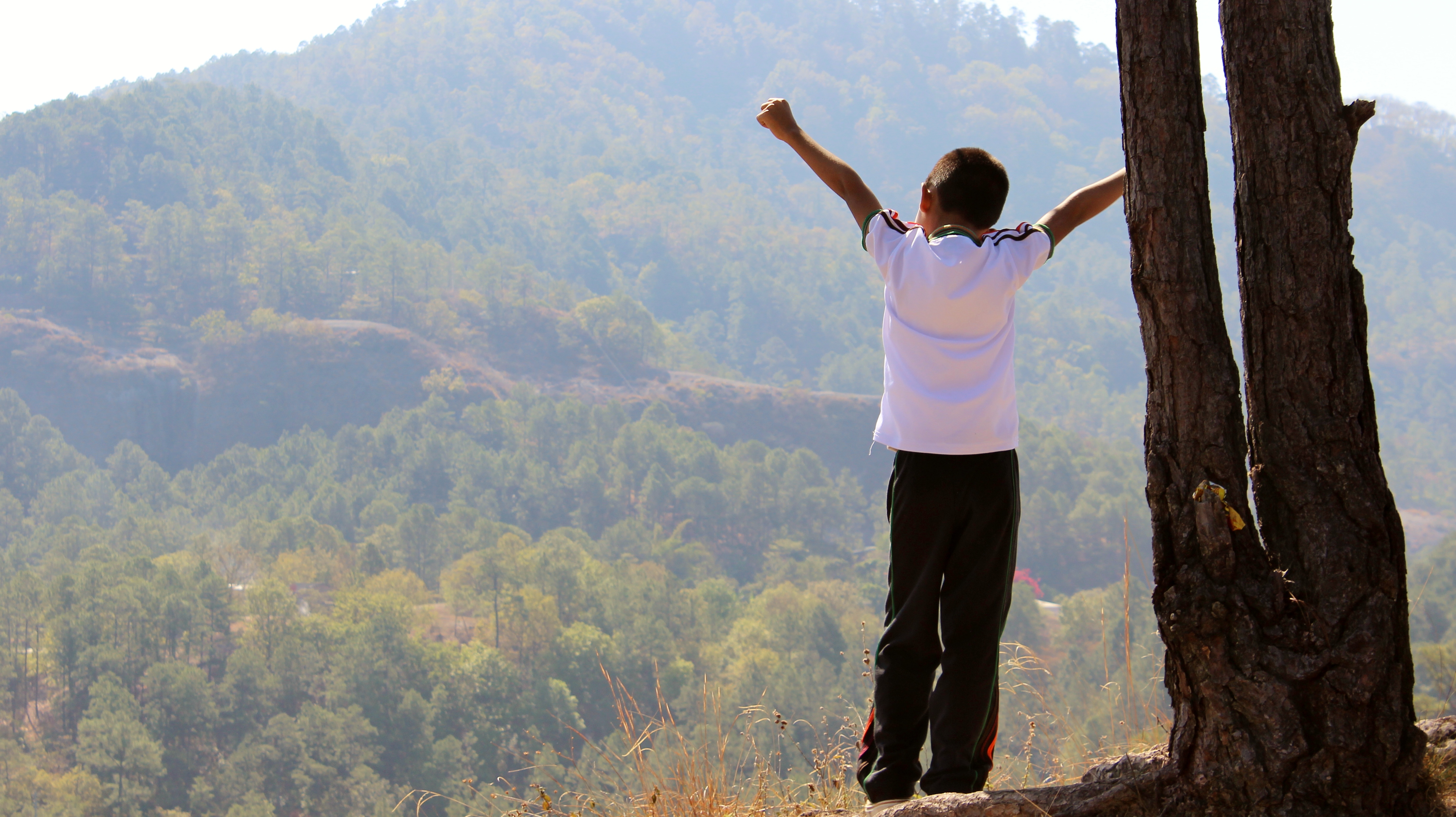
Niño brazos en alto

Education has a mandate in socioeconomic development! Especially in economically unstable regions, the implementation of new productive endeavors or innovative methods requires a time consuming learning process. In underdeveloped regions of the world, much of the effort of outside experts is consumed in teaching basic concepts and simple mathematic operations instead of implementing the necessary modernization.

Typically, these development projects are implemented in close proximity to a local school. These schools, as part of the “formal educational system” use standardized lessons which are often completely divorced from community needs and employment opportunities. This void easily reaches a point where the focus on the hypothetical leaves students unprepared for real-world situations. This situation actually disempowers people and generates passivity in the face of personal and shared challenges.

The mandate is to bridge this gap between education given and the knowledge needed, if we are to see positive change in socioeconomic statistics. A first step is to merge the activities of education and development so that obstacles to growth become areas of study in the school. Next, outside technical assistance must be made available through the school, which amplifies coverage, lessens time spent on basic concepts and takes advantage of potent youthful energy. This merging of activities enhances the quality of each by providing purpose and motivation for each.

Unfortunately, the intent of creating equal opportunity through the standardization process, while claiming different degrees of success in different places, in general failed completely throughout economically stagnant regions of the world. The wholesale training of an employee class, and then sending them out into a jobless situation, is counterproductive. Opportunity lies in entrepreneurship and the application of creativity to specific local circumstances.

Amún Shéa, a school in the Morazán province of El Salvador, has accepted this mandate and has taken on the challenge of merging education and development. It is a unique but proven educational project, designed to combat the self-perpetuating underdevelopment that is endemic to the region. It is working to stop this repetitive cycle through human development which focuses on changing attitudes, building real-world skills and creating opportunity for realization of hopes, dreams and goals.

It is gratifying and provides hope to see endeavors similar to Amún Shéa developing quietly throughout the world. It makes the future brighter. Be a part of it!

De la Realidad hacía lo Ideal

Boy with Pipe banner 44Es muy fácil clavarnos en un debate sin fin sobre la educación, si no nos ubicamos primero referente al ángulo o punto de vista representado. La brecha entre la realidad, más bien entre las variadas realidades según circunstancias y ubicación, y lo ideal se duplica muchas veces en la discusión.

Como me dijo un amigo, Menno, hace ya unos veinticinco años atrás, “todo plan es perfecto sobre papel; el problema es que depende del hombre para implementarlo.” Coincido totalmente con Menno, en que todos los proyectos y reformas educativos son perfectos, hasta son ideales, pero hasta el momento de su aplicación. He aquí la razón del enfoque e importancia que da el PNUD y otras instancias sobre el desarrollo humano, ya que es el elemento que determina el éxito o fracaso operativo de todo plan.

Si aceptamos la realidad de una brecha entre el programa educativo nacional y su aplicación, y si evaluamos que, lejos de mejorar, tiene una tendencia marcada de espiral descendente, entonces el debate debería centrar en las medidas a tomar para revertir el proceso hacia lo positivo.

Tenemos que aceptar además que todo programa nacional es centro-céntrico, valga la redundancia, y que las condiciones del centro difieren mucho del periférico. Así “las medidas a tomar” en toda probabilidad son reflejo de cada realidad actual, aunque tengamos un ideal o norte en común para guiarnos.

La ley de desarrollo desigual nos indica que entre más atrasada, más posibilidad de un salto de calidad, ya que difícilmente se abandona inversión de infraestructura y procesos que están todavía funcionando aún a medias. Donde tal inversión no existe y no hay necesidad de deshacer para construir, la acción de cambio tiene mayor libertad y menos ataduras.

Propongo que el norte de Morazán se encuentra en una posición de ventaja para poder realizar cambios radicales y tomar las medidas de corrección necesarias en materia educativa, ya que se encuentra firmemente en el último lugar de rendimiento académico y el primer lugar en la pobreza de la nación. Continuidad solo garantiza continuidad.

La opción de esperar que las reformas nuevas y los directrices operacionales filtran del centro hacía la periferia no es viable. Así como está la situación, cada región o realidad tendrá que proponerse a realizar los cambios necesarios para sacudir al fondo la inercia de un sistema estancado.

Mas sin embargo, estando en el piso sin más salida que para arriba, fácilmente se puede caer en un nivel de activismo o maquearismo que aparenta mejora en el corto plazo pero que carece de bases fundamentales sobre lo cual se puede continuar construyendo. Eso es el gran reto actual; hacer los cambios necesarios, radicales incluso, sin despegar de los cimientos fundamentales de la educación. Pues, es fácil hacer olas en un charco pacho.

Previo al debate de fondo sobre la educación viene el estire y coge de quien o que instancia es la que puede determinar cuáles son los fundamentos intocables académicos. ¿Quién es el dueño del circo? …..y ¿por qué?

Algunas preguntas para la discusión:

1. ¿Es un docente con escalafón la mejor opción para las responsabilidades de director, o estos se resuelvan mejor otro profesional?

2. ¿Con un profesional no-docente como director, podría haber otro nivel de aplicación de las reformas educativas?

3. ¿Se obtiene conocimiento con teoría o es necesario aplicación? ¿y si es posible enseñar un conocimiento no aplicado?

4. ¿Es el docente la única vía y realmente insustituible en la obtención de la educación?

5. ¿Podríamos diversificar el “programa” educativo, creando opciones de vías de aprendizaje en concordancia con los intereses, capacidades y expectativas de los “clientes?” ¿No llevan todos los caminos a Roma?

6. ¿Cómo se organice un programa “nacional” que no es marcado por centro y periférica?

7. ¿Cuál es el producto que buscamos con la educación, el tigre o el perico?

Entrepreneur Spirit

Third Achievement Fair 2013 048We are instilling entrepreneur spirit and know-how in our students at Amun Shea School, in northern Morazán, El Salvador. Through investigation and research, they construct solutions to very real local developmental problems and are becoming the changemakers within their homes and communities.

The communities in northern Morazan suffer a self-perpetuating cycle of poverty. Historic isolation and civil war have provided excuses for apathy and conformism. Traditional education reinforces this negativity by preparing students for jobs that do not exist, leaving them to fend for themselves with only minimal academic skills. The challenge of breaking this vicious cycle resides in providing an education that changes attitudes and motivates the development of the entrepreneurial spirit.

Technological capacity building is fundamental for social entrepreneurial development. It also ignites access to global networks which span borders and build common agenda, injecting that paradigm changing ingredient required to activate qualitative cultural progress. This then breaks the traditional cycle of poverty, open horizons and create a positive sequence of development, with positive cultural identity and attitude.

The creation of a group of well-educated and motivated leaders, with social entrepreneurial skills will gradually change the status quo in northern Morazan. We foresee alternatives to illegal immigration in search of opportunity, a leveling of the playing field in academic and economic terms. We see the creation of new services and industry. More importantly, we see global community networks created and brought to bear on shared global objectives; connectivity breaking isolation.

Clipping Wings

smart kid

Taking a carefree, imaginative young person and molding them into an upstanding, productive member of society normally involves an educational program that places an emphasis on behavior. It is argued by many that social conduct is the most important aspect in preparing for life. That may be true for the portion of the population who live in urban areas and have the necessity and opportunity to find their place in the labor force. Obedience is considered vital in the workplace.

Our experience in Morazán indicates that ingenuity, resourcefulness and self-assurance are much more important qualities to hone than proper social behavior. Properly taught, these qualities will also promote good social behavior. We would argue that the flip side of absolute obedience is dependence and that dependence condemns us to maintaining status quo. We feel that learning systems and curriculum in underdeveloped rural areas must be pertinent to the needs of that area and not a rote copy of a standard designed for creating factory workers.

At Amún Shéa, negotiations between students and teachers establish agreed upon conditions for classroom management. This method is under development and is not always implemented in perfect form, but that´s what school is about.

School is where we should make our mistakes and learn from them. What school should not be is where we clip wings and then expect flight upon graduation.