De la Realidad hacía lo Ideal

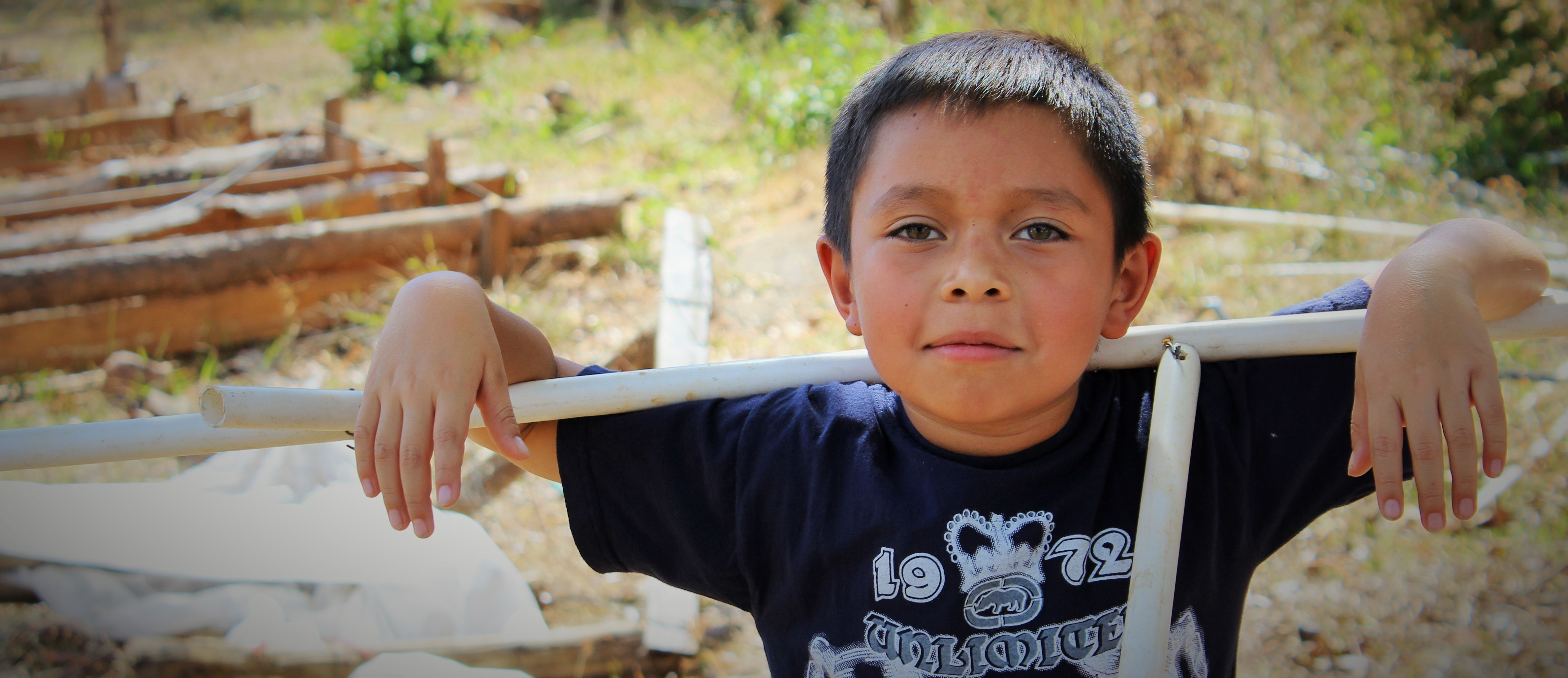
Boy with Pipe banner 44Es muy fácil clavarnos en un debate sin fin sobre la educación, si no nos ubicamos primero referente al ángulo o punto de vista representado. La brecha entre la realidad, más bien entre las variadas realidades según circunstancias y ubicación, y lo ideal se duplica muchas veces en la discusión.

Como me dijo un amigo, Menno, hace ya unos veinticinco años atrás, “todo plan es perfecto sobre papel; el problema es que depende del hombre para implementarlo.” Coincido totalmente con Menno, en que todos los proyectos y reformas educativos son perfectos, hasta son ideales, pero hasta el momento de su aplicación. He aquí la razón del enfoque e importancia que da el PNUD y otras instancias sobre el desarrollo humano, ya que es el elemento que determina el éxito o fracaso operativo de todo plan.

Si aceptamos la realidad de una brecha entre el programa educativo nacional y su aplicación, y si evaluamos que, lejos de mejorar, tiene una tendencia marcada de espiral descendente, entonces el debate debería centrar en las medidas a tomar para revertir el proceso hacia lo positivo.

Tenemos que aceptar además que todo programa nacional es centro-céntrico, valga la redundancia, y que las condiciones del centro difieren mucho del periférico. Así “las medidas a tomar” en toda probabilidad son reflejo de cada realidad actual, aunque tengamos un ideal o norte en común para guiarnos.

La ley de desarrollo desigual nos indica que entre más atrasada, más posibilidad de un salto de calidad, ya que difícilmente se abandona inversión de infraestructura y procesos que están todavía funcionando aún a medias. Donde tal inversión no existe y no hay necesidad de deshacer para construir, la acción de cambio tiene mayor libertad y menos ataduras.

Propongo que el norte de Morazán se encuentra en una posición de ventaja para poder realizar cambios radicales y tomar las medidas de corrección necesarias en materia educativa, ya que se encuentra firmemente en el último lugar de rendimiento académico y el primer lugar en la pobreza de la nación. Continuidad solo garantiza continuidad.

La opción de esperar que las reformas nuevas y los directrices operacionales filtran del centro hacía la periferia no es viable. Así como está la situación, cada región o realidad tendrá que proponerse a realizar los cambios necesarios para sacudir al fondo la inercia de un sistema estancado.

Mas sin embargo, estando en el piso sin más salida que para arriba, fácilmente se puede caer en un nivel de activismo o maquearismo que aparenta mejora en el corto plazo pero que carece de bases fundamentales sobre lo cual se puede continuar construyendo. Eso es el gran reto actual; hacer los cambios necesarios, radicales incluso, sin despegar de los cimientos fundamentales de la educación. Pues, es fácil hacer olas en un charco pacho.

Previo al debate de fondo sobre la educación viene el estire y coge de quien o que instancia es la que puede determinar cuáles son los fundamentos intocables académicos. ¿Quién es el dueño del circo? …..y ¿por qué?

Algunas preguntas para la discusión:

1. ¿Es un docente con escalafón la mejor opción para las responsabilidades de director, o estos se resuelvan mejor otro profesional?

2. ¿Con un profesional no-docente como director, podría haber otro nivel de aplicación de las reformas educativas?

3. ¿Se obtiene conocimiento con teoría o es necesario aplicación? ¿y si es posible enseñar un conocimiento no aplicado?

4. ¿Es el docente la única vía y realmente insustituible en la obtención de la educación?

5. ¿Podríamos diversificar el “programa” educativo, creando opciones de vías de aprendizaje en concordancia con los intereses, capacidades y expectativas de los “clientes?” ¿No llevan todos los caminos a Roma?

6. ¿Cómo se organice un programa “nacional” que no es marcado por centro y periférica?

7. ¿Cuál es el producto que buscamos con la educación, el tigre o el perico?

OVEREXPOSURE!

It’s an ornery word! Comes complete with various negative conations. With sun, it can burn and turn your skin red. With a photograph, it will bleach and take out color. With a rock star it can reduce popularity. I worry what it might do to a foundation seeking funding. Or to put it bluntly, am I overexposed!

On the other hand, overexposure can be beneficial. I have a friend who told the story of a car dealership in southeastern Pennsylvania who found overexposure to be a good thing. As the story goes, a Ford dealership in a small town was trying to get their name out to a wider customer base. Some advertising genius somewhere came up with an ad that had as their tag line, “I got a hunnert dollar better deal at Keller Ford!”. Not hundred dollar, it was carefully pronounced “hunnert” by the pseudo customers in the various ads. Apparently it was a pretty obnoxious ad and it played on radio and television several times a day, for many days in a row. After a short break, the whole campaign was repeated. This went on for a couple of years. It seemed like everyone within a hundred miles of the dealership was repeating the mantra of “I got a hunnert dollar better deal”, and then complaining about it. But everybody knew it! Overexposure! The friend, who was acquainted with a son of the owner, was told by the son that he and the rest of the family would apologize to anyone about the ad, but continued to use it. It was used because it was very effective and everyone knew about Keller Ford because of that ad! So for them overexposure worked.

Hopefully Amun Shea will not suffer from overexposure. I have been told a couple of times, not many, to hold back on our fundraising efforts. Unfortunately we are so close to our goal that I don’t think I can do that. Of the several million people who might be interested in our school, we are aware of only a few hundred that have been reached. Can’t call that overexposure. So help us attain the beginnings of overexposure. Tell all your friends about us. Call them. Email them. Facebook them. Perhaps even talk to them.

We can’t promise a “Hunnert dollar better deal”, but with your help we can promise a “Hundred student better education”!


Seeking Harmony

I am in the midst of learning valuable lessons. As the lessons continue, I find it hard to say what the conclusions may be. I do now recognize that each person and event around me is one of my teachers. In all likelihood, the conclusion will continue to be just out of reach, just as the horizon is on a journey.

World-changing ideas seem to abound. So why then do things stay more or less the same? You would think that great ideas, formed to improve our wellbeing as humankind, would be snapped up like Black Friday Specials. Is status quo really that much more comfortable?

I have a passion. Much more than an idea, I have a working model with experience and results! It is a learning process that is currently changing the world around me. I thought that people would be falling over themselves to support it. It is rather self-evident, is it not, that things are not as they should be and if they had half the chance they should jump right in to fix it? Ok, that isn’t happening, so I´ve got to get more information out there to them.

So, while I thoroughly dislike the “asking” part of fundraising, I do understand it to be necessary. Otherwise the passion remains a dream, lovely but unrealized; great ideas circling back on themselves until I run out of steam. Traditional funding seems to be fading away or has made itself much harder to find. Social media is the new path to enlightenment and endowment, so I begin to facebook, publish, blog, tweet, scoop, pin, post, crowdfund, email and I´m not even sure what else, except that perfect keywords appear in my dreams only to dissipate right before awakening.

I find that I must lay aside my passion for a period, in order to realize it. I halt the focus on innovating the educational process to become a dull administrator struggling to cover a budget that has those unattractive operating costs and teacher´s salaries in it. The huge problem is finding the balance between getting the information out and becoming a nuisance to friend and stranger alike. “This is overkill, Ron, counterproductive, too many posts, too much, too often,” complains a good friend. Thirty minutes later, another writes, “Love those photos and the information. I´d really like to see more of that.” Ok, what to do?

This whole thing remains a learning process, which I now understand is its purpose, not only for the students enrolled in class but for all involved and particularly for me. The higher you dream, the more involved you must become in the nuts and bolts on the ground level. Harmony is not one-sided, but managing the extremes. A sincere thank you to all of you, my teachers.

Learning sans Barriers

EntrepreeursOur belief is that it is high time we level the playing field for young people no matter where they happen to live and that information technology is one of the primary tools to make that happen.

Our project is Amun Shea, Center for Integrated Development, in El Salvador, a Problem-Based Learning program with the objective of doing away with the barriers that entrap and perpetuate traditional cycles of poverty.

Our students have tossed the textbooks aside to work with real-world issues, learn “basic subjects” as only as tools for problem-solving and are overcoming “being poor.” Connecting ideas and sharing solutions with peers around the globe is breaking the ever-repeating dynamic of marginalization and isolation.

Amún Shéa is about Positive Attitude, Capacity Building and the Creation of Opportunity. Join with us in changing the world.

Entrepreneur Spirit

Third Achievement Fair 2013 048We are instilling entrepreneur spirit and know-how in our students at Amun Shea School, in northern Morazán, El Salvador. Through investigation and research, they construct solutions to very real local developmental problems and are becoming the changemakers within their homes and communities.

The communities in northern Morazan suffer a self-perpetuating cycle of poverty. Historic isolation and civil war have provided excuses for apathy and conformism. Traditional education reinforces this negativity by preparing students for jobs that do not exist, leaving them to fend for themselves with only minimal academic skills. The challenge of breaking this vicious cycle resides in providing an education that changes attitudes and motivates the development of the entrepreneurial spirit.

Technological capacity building is fundamental for social entrepreneurial development. It also ignites access to global networks which span borders and build common agenda, injecting that paradigm changing ingredient required to activate qualitative cultural progress. This then breaks the traditional cycle of poverty, open horizons and create a positive sequence of development, with positive cultural identity and attitude.

The creation of a group of well-educated and motivated leaders, with social entrepreneurial skills will gradually change the status quo in northern Morazan. We foresee alternatives to illegal immigration in search of opportunity, a leveling of the playing field in academic and economic terms. We see the creation of new services and industry. More importantly, we see global community networks created and brought to bear on shared global objectives; connectivity breaking isolation.

Clipping Wings

smart kid

Taking a carefree, imaginative young person and molding them into an upstanding, productive member of society normally involves an educational program that places an emphasis on behavior. It is argued by many that social conduct is the most important aspect in preparing for life. That may be true for the portion of the population who live in urban areas and have the necessity and opportunity to find their place in the labor force. Obedience is considered vital in the workplace.

Our experience in Morazán indicates that ingenuity, resourcefulness and self-assurance are much more important qualities to hone than proper social behavior. Properly taught, these qualities will also promote good social behavior. We would argue that the flip side of absolute obedience is dependence and that dependence condemns us to maintaining status quo. We feel that learning systems and curriculum in underdeveloped rural areas must be pertinent to the needs of that area and not a rote copy of a standard designed for creating factory workers.

At Amún Shéa, negotiations between students and teachers establish agreed upon conditions for classroom management. This method is under development and is not always implemented in perfect form, but that´s what school is about.

School is where we should make our mistakes and learn from them. What school should not be is where we clip wings and then expect flight upon graduation.


Dangerous Education

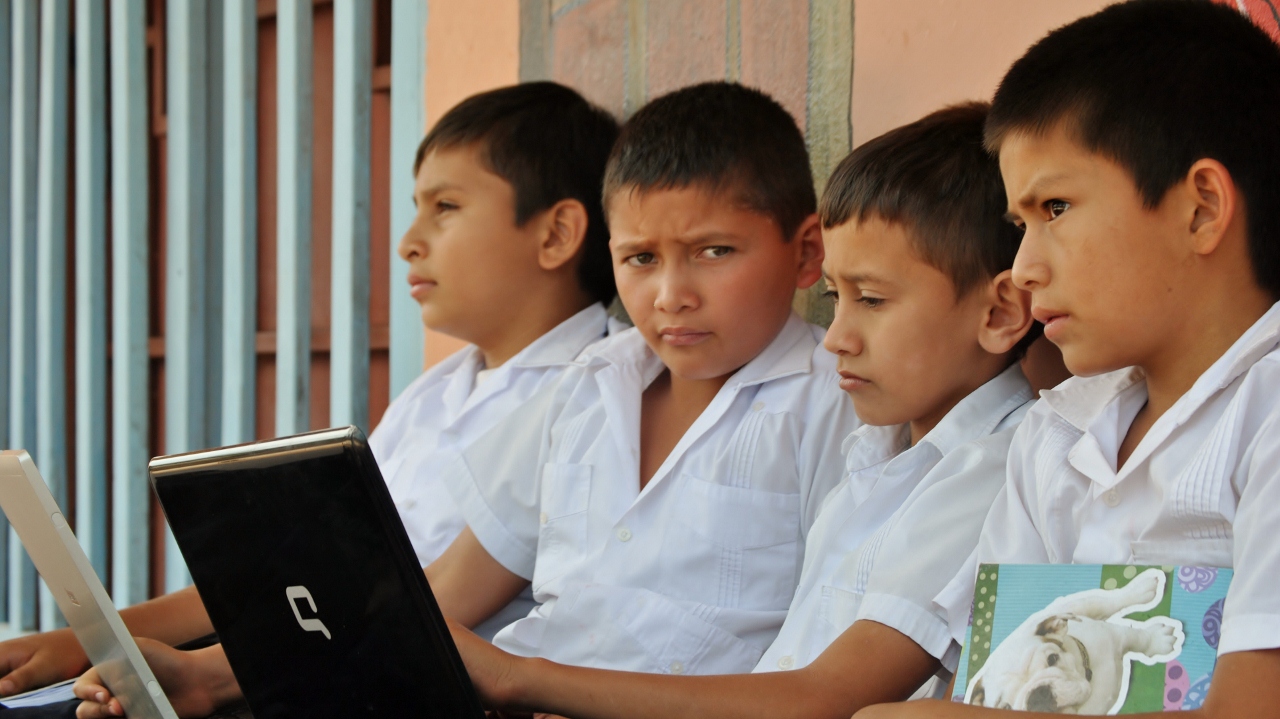
DSC_0074 (1280x719)

For some people all changes in our educational systems bring the inherent danger of loss of control. We love it when an alternative program results showcasing talent, or what we recognize as talent, in our children. We are willing to invest time, energy and resources into extracurricular activities and even the odd “unconventional” digression some teachers are permitted to employ.

But what happens when our children begin to think for themselves? Not the cute parroting of preconceived opinions, but creating their own world view. What happens when our children suddenly become more knowledgeable in some areas than we, those charged with their upbringing? At what point do we feel threatened by our children´s achievements, views and positions? “Nonsense,” you may say, “I would never feel that way about my child.”

But when superiority in a child starts to become apparent in emotional maturity, in life vision and belief systems, watch out. That is the real test of commitment to building an educational model that frees the human spirit rather than clipping wings. Now that is a dangerous education.

This is just one of the real-world challenges in building an educational model designed to change the status quo in Morazán. The area has been traditionally marginalized, suffered complete destruction of infrastructure and displacement of the civil population during the Civil War (1981-1992) and currently holds the dubious honor of maintaining both the highest poverty levels and the lowest academic achievement in all of El Salvador.

The socioeconomic conditions in Morazán create a fertile setting for implementing alternative solutions, as it is very clear to all that current programs are not making a dent in poverty indicators or academic standards. At the same time, this does establish a fairly low threshold in expectations and skills required to maintain status quo.

At Amún Shéa, we are seeing a process, starting about the fifth grade where our students begin to surpass teachers and parents in analysis, synthesis and establishing goals. By the eighth grade, the maturing process has entered the emotional turf, making for some very interesting and dramatic situations.

As we expand by one grade per year, we are looking forward to ninth through twelfth grades as a tremendous challenge and a fantastic opportunity to deal with this issue, not just in theory but in real life.

Amún Shéa, Center for Integrated Development is a project of Perkin Educational Opportunities Foundation, located in the northeast corner of El Salvador, in Central America.