Category Archives: Uncategorized

Revolución

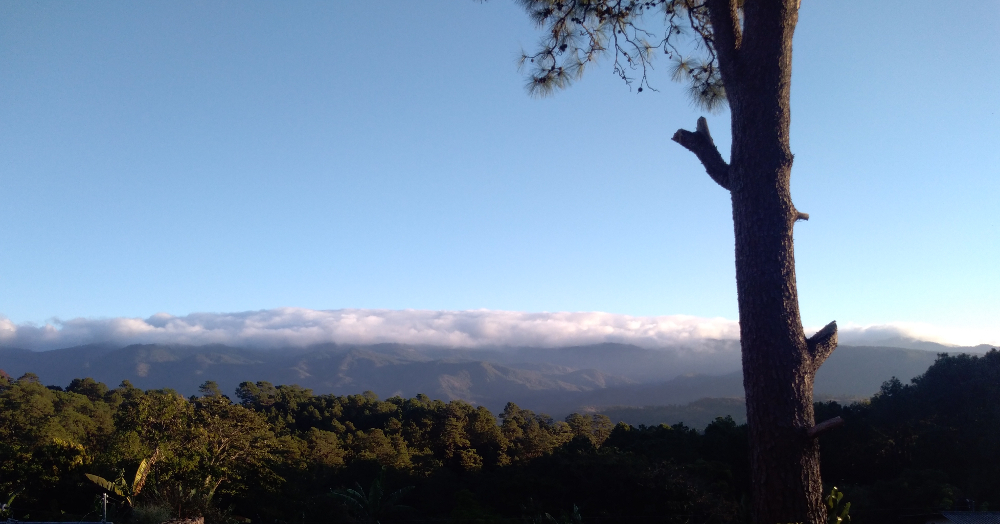
foto por Augusto Vázquez

¿Cómo es que las revoluciones siempre terminan perdiendo el pulso y se convierten en una caricatura barata de los ideales que inspiraron a tantos a darlo todo y morir tan jóvenes? Y dejan a los que quedan con un sabor amargo en la boca y el corazón hecho pedazos; hasta con envidia de los héroes que sacrificaron todo creyendo que la revolución iba a triunfar y cambiar el mundo.

Una y otra vez: un libreto escrito,
un escenario montado, un final cantado, parece.

¿Para qué? ¿Para amargarse? ¿O negar la realidad y ondear la bandera desteñida para siempre?

¿O sacar alguna lección del guion…?

La lente que solía servir para observar afuera,
separando la luz de la oscuridad y la justicia
de la maldad,
ha ido opacándose, ahora solo
reflejando una borrosa imagen de mí mismo.

Descubrimiento
el mundo que me rodea
no es más que una proyección de mí propio ser,
mis miedos y alegrías,
y belleza
y sombra, sombra más oscura

Así como la luna
es un reflejo del reino terrenal,
revelando que la

Revolución
es un desafío personal

ya que lo que inspira a la acción
no es más que una pista
de lo que necesita ser erradicado
profundamente
adentro

para crecer
o quedarse corto
y morir
adentro,

pues las Causas son las dos caras de la misma moneda
con ambos lados alimentándose y fortaleciendo al otro
hasta que la victoria y la derrota son indistinguibles,
dejando solo lecciones.

La cruz que debo cargar
es la mía,
el mal a vencer
es el mío,
la libertad a obtener,
también es mía
porque

La Liberación es un estado mental,
en el camino hacía la Redención.

Revolución o Muerte!

rab 2/27/25

Visita mi tienda..

Relevant education

Planting

traslated from Educación pertinente

Relevant education. Exactly what do we mean by relevant education? Whenever a new phrase is used to describe some new process, there is a danger of falling into the assumption that we all handle the same interpretation, moreso when it becomes a fashionable term.

So that we are on the same page on the subject, we should define it. For us, the Perkin Educational Opportunities Foundation, relevant education is defined by the concepts of Adaptation, Transformation and Insertion.

Adaptation refers to situational awareness, of being conscience of our position in the economic, social and cultural processes of our environment and the relationship and connection or influence with the broader environment, including global trends. Then, once aware, to equip ourselves in the best manner to face and even thrive in those conditions.

Transformation involves starting with what we have at hand, what we know, with our experiences and practices, and then based on those, and with the needs and opportunities of our environment, to build new practices and processes to improve our surroundings. We can not confuse transformation with transplantation. The transplant of methodology and practices implies maintaining dependence on external forces. Transformation develops from strengthening our own roots.

Insertion into the labor market and full participation in the transformational processes are required in order for an educational program to qualify as relevant. Access to real employment and self-employment options and access to specialization training for this purpose are the only evidence of the relevance of an educational program.

Education is relevant to the extent that the student is equipped, not only with academic and technical skills, but with the skills of adaptation, the power of transformation and with full integration into the socio-economic and cultural development of their environment.

-Ron Brenneman

Educación pertinente

IMG_20180607_141209

Exactamente qué queremos decir con eso de educación pertinente? Siempre cuando una frase nueva se utiliza para describir algún proceso nuevo, podemos caer en la suposición que todos manejamos la misma interpretación, más cuando se convierte en un término de moda.

Para que estemos en la misma página sobre el tema, mejor lo definimos. Para nosotros, la Fundación Perquín para el Fomento de Oportunidades Educativas, la educación pertinente se define con los conceptos de Adaptación, Transformación e Inserción.

Adaptación se refiere a la conciencia situacional, de ubicarnos en los procesos económicos, sociales y culturales de nuestro entorno y su relación y conexión o influencia del entorno más amplio, incluyendo las tendencias a nivel global. Eso, para luego equiparnos de la mejor forma para enfrentar y hasta prosperar en dichas condiciones.

Transformación implica iniciar con lo que tenemos a la mano, lo que conocemos, la experiencia y la práctica nuestra, y luego en base a ello, y a partir de las necesidades y oportunidades de nuestro entorno, ir construyendo nuevas prácticas y procesos para mejorar éste entorno más cercano. No podemos confundir transformación por trasplantación. El trasplante de metodología y prácticas implica mantener dependencia de fuerzas externas. La transformación sale desarrollándose de las raíces propias nuestras.

La Inserción laboral y participación plena en los procesos de transformación son requeridos para poder calificar de pertinente a la educación propuesta o programada. Acceso a opciones reales de empleo y autoempleo y acceso a formación en especializaciones para tal fin son las únicas pruebas de la pertinencia de un programa educativo.

La educación es pertinente en la medida que el estudiante es equipado, no solo de capacidades académicas y técnicas, sino con las competencias de adaptación, el poder de transformación y con la plena inserción en el desarrollo socioeconómico y cultural de su entorno.

-Ron Brenneman

Cause and effect- the migration problem

North Morazan

The north of Morazán, in the mountainous north-east of El Salvador is hands down the most beautiful place in the world. Yet it has one of the highest rates of migration in the country of young people seeking opportunity elsewhere. Many are in the USA, most with no legal status to be there.

Why, you would ask, would anyone in their right mind leave the most beautiful place in the world and leave family and children behind to live in the shadows in a foreign land where they are not fully welcome.

Leaving politics aside, where all positions may be justified, let us take a look at cause and effect. The north of Morazán was a free fire zone during the Salvadoran civil war, causing 100% displacement of the civilian population and complete destruction of productive infrastructure. As a volunteer during the 80s in the Colomoncagua refugee camp, across the border in Honduras, I watched the daily bombing runs of Dragonfly jets over Morazán, part of the one million dollars a day in USA military aid to El Salvador. This period marked the beginning of the migration problem, which continues today given the failure of post-war reconstruction in providing economic opportunity.

Regarding President Trump’s remark that the USA should only accept the best, I would argue that we need them here. Our brightest and best went to war in the late 70s and most were killed or maimed. They continue to leave today in search of a means to care for their families. We need to create conditions that allow the brightest and best to stay here and build Morazán into its full potential.

Morazán was not destroyed in one day. It took a decade of pounding and a lot of resources to do it. It will take some time, resources and determination to reach our goal of prosperity.

Amún Shéa is focused on assisting the creation of that reality in which  the brightest and best may prosper and thrive here at home and migration is no longer the only option. It is no magic formula and offers no quick political solution. It is an arduous task, one step at a time, one student at a time, often seemingly against the current.

Public policy is important, but if you would like to join us on the groundwork, building change from this remote territory, we would more than welcome you.

Thank you
Ron Brenneman


Education as a motor for development

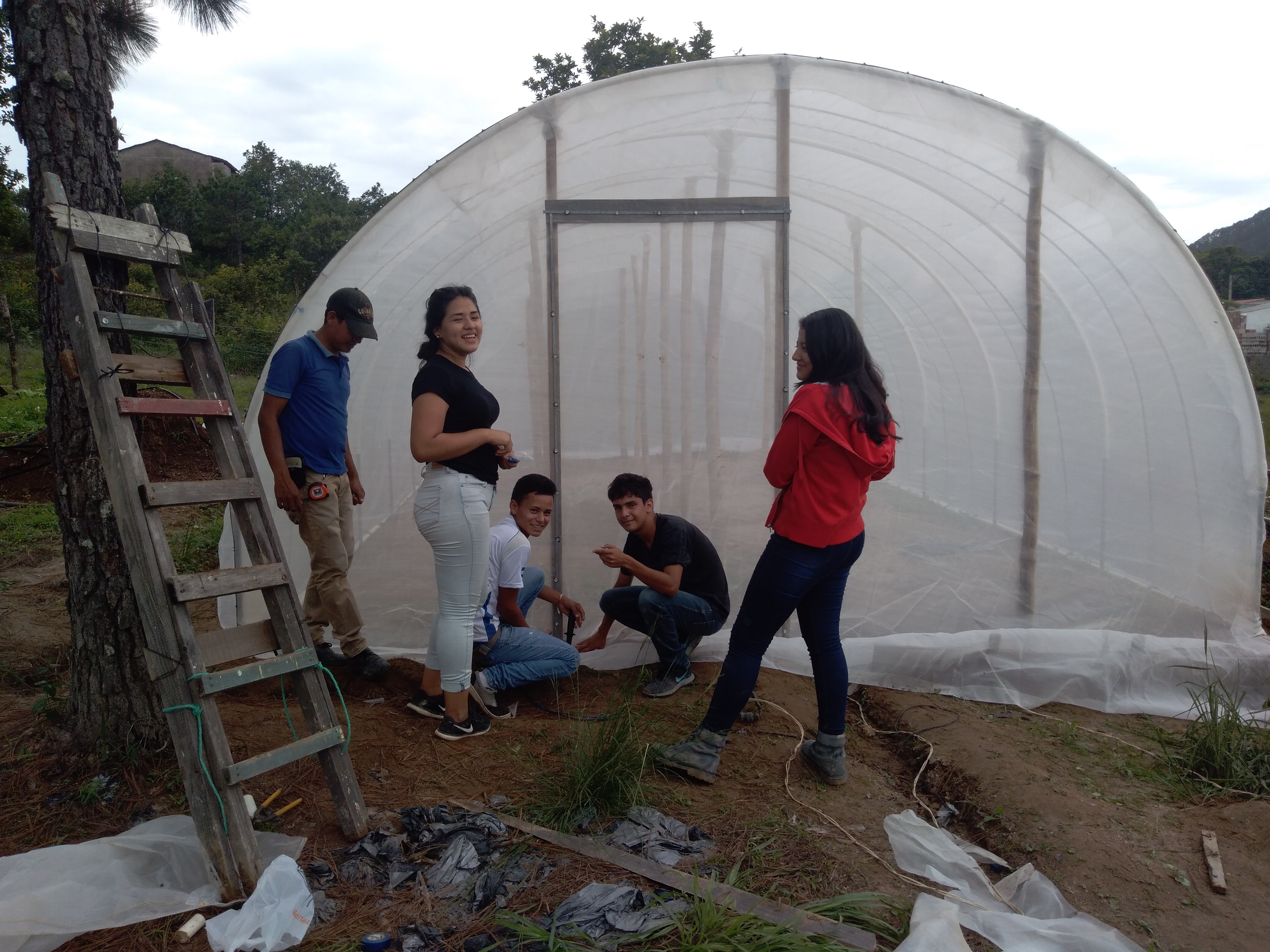
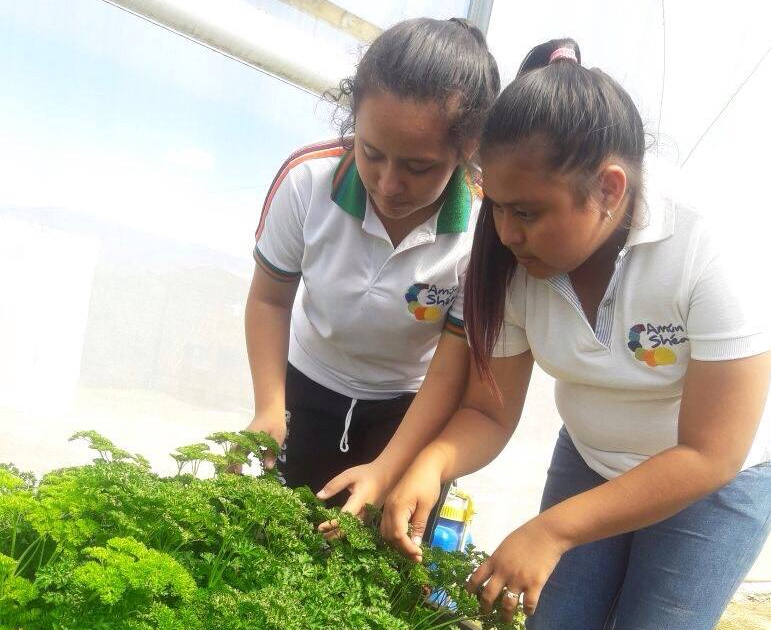
Greenhouse
Translated from original article in La Prensa Grafica, El Salvador

Center for Integrated Development Amún Shéa in Perquín, Morazán, achieved a global score of 7.88 in the 2017 national standardized test of learning and skills, PAES. This is the Salvadoran standardized test for high school students and 2017 was our first year of participation. As the results were made known, it was very gratifying to receive the news and the recognition of friends and colleagues. With all its imperfections, PAES is still the only measuring instrument to compare the effectiveness of educational institutions and programs at the national level, creating healthy competition.

The important result for us however, is the validation that a non-traditional program such as ours can “compete on the same playing field” with traditional programs and succeed. Although it is true that throughout its nine years of existence the program has aroused much interest in its educational innovations, it is also true that doubts were raised regarding the soundness of its academic foundation and ability to cover basic subject material.

Amún Shéa is a program of Perkin Educational Opportunities Foundation, PEOF and was created with the aim of supporting the socioeconomic development of northern Morazán through human capacity building, and has adopted a methodology of Problem Based Learning (PBL) through developing applications that offer answers to the needs of the local surroundings.

It was designed as an “educational laboratory” to develop methodology and applications for the official curriculum, with the confidence that this would contribute to the improvement of public and rural education in El Salvador. In 2016 PEOF signed a Cooperation Agreement with the Salvadoran Ministry of Education, MINED, as a pilot project to share the PBL methodology with seven public schools in the municipality of Perquín.

Who attends our school? Our educational program is open to all families who want a comprehensive and non-traditional education for their children. We do not reject any student for economic reasons. PEOF subsidizes on average 75% of students’ tuition.

The financing for the operation of the educational program comes mainly from individuals in the USA, El Salvador, Ireland, Portugal, England, Spain and Germany. It is not an easy task. The growth of the program requires greater financing and a sustained flow of funding. We are looking for partners, both individuals, businesses and organizations to convert the north of Morazán into a true hub of development. We are convinced that human capacity building allows us to create and take advantage of opportunities, and gives positive impulse to socio-economic and cultural changes.

The PEOF program is, in fact, a public-private partnership, where the parties act with respect and obtain mutual benefits. It is part of an effort by MINED to improve and make rural education relevant, in coordination with the private sector and organizations dedicated to development. It is a sign that it is possible to build proposals and solutions from the territory to complement and enrich the national study program.

A single swallow doesn’t make summer. The space created by the PEOF-MINED agreement has allowed a concerted effort enriched by the experience and participation of organizations such as ConTextos, Glasswing, TECHO, Pestalozzi Foundation, Naturaleza El Salvador Foundation, Fe y Alegría Association, CLUSA, the Vice Ministry of Science and Technology and the Foundation for Higher Education (FES).

Our achievements, however modest, have been influenced by the environment. The department of Morazán has been showing a marked educational advance over the national average, for which it is necessary to congratulate Lic. Luis Méndez, departmental director of MINED, and his entire team.

The north of Morazán surprises, and will continue to surprise you. We invite you to come and visit, you will see that it is not as far away as you think.

Ron Brenneman

Sistema de gestión educativa

CIAC

El mundo está repleto de desafíos y oportunidades de una amplitud inimaginable. Resulta inconcebible que hoy día un estudiante todavía esté limitado por un currículum o un plan de estudios rígido. En cambio, un enfoque más ágil y receptivo en la toma de decisiones permite optimizar las oportunidades educativas de los estudiantes individuales.

Con el Centro de Desarrollo Integral Amún Shéa iniciamos un programa de aprendizaje hace nueve años en las montañas de norte de Morazán. Desde el principio la meta era convertir la educación en una herramienta relevante y efectiva para mejorar el bienestar individual y colectivo.

Estos nueve años han estado repletos de retos formidables, descubrimientos inesperados y resultados gratificantes. Tres son las preguntas que nos hacen a menudo: cuál es el currículum que utilizamos, cuál es nuestra metodología, y dónde se forman nuestros docentes.

Podríamos decir que no importan ni el currículum, ni la metodología y tampoco de dónde viene el docente, pero sería un tanto cortante. Lo que queremos enfatizar es que lo más importante es el objetivo del programa. Lo demás son tan solo medios para alcanzar la meta. Si nos enfocáramos en ellos, correríamos el riesgo de solo reemplazar los medios rígidos tradicionales por otros que se terminarían volviendo igual de rígidos y de contraproducentes en el mediano o largo plazo.

En Amún Shéa, nuestro objetivo es crear habilidades de vida y conciencia situacional enfocada. Nuestro protocolo opera en cinco pasos:

  1. Investigación
  2. Invención
  3. Cooperación
  4. Creación y
  5. Publicación

a través de un sistema de gestión educativa, que:

  1. Dé responsabilidad y autoridad;
  2. Utilice información y herramientas disponibles y cambiantes;
  3. Ponga énfasis en los resultados;
  4. Construya redes estratégicas para fortalecer nuestro programa y;
  5. Cree conciencia situacional.

Medimos el éxito por el impacto: el impacto que nuestros estudiantes tienen en sus familias y comunidades, pero sobretodo en ellos mismos. Medimos el éxito en nuestros estudiantes por la soltura, la confianza, la solidaridad y la capacidad para construir soluciones.

El mundo de hoy no solo es diverso en cuanto a oportunidades, sino también se caracteriza por la velocidad de los cambios en la información y en su aplicación. Un ejemplo formidable de ello es la reciente y célebre elección presidencial en los Estados Unidos. El ganador y actual presidente Donald Trump contrató a Cambridge Analytica, una empresa especialista en psicometría, para diseñar su campaña digital. La psicometría se centra en medir rasgos psicológicos como la personalidad a fin de construir mensajes según estos rasgos. Hillary Clinton, por otro lado, confiaba en el apoyo de Google, Facebook, Twitter y otras plataformas digitales tradicionales, debido al éxito experimentado por el primer “presidente de redes sociales”, Barack Obama. Ya conocemos el resultado, pero lo que tenemos que tomar en cuenta es que acabamos de referirnos a Google, Facebook y Twitter como medios tradicionales y prácticamente anticuados. La lección para nosotros es que mientras nuestras escuelas están patinando en la edad del “contenido”, ya pasó la etapa de los“procesos” y ha llegado la actualidad del “pensamiento.” ¿Quién sabe qué nos trae el día de mañana?

La pregunta del millón, entonces, es cuál es el currículum y la metodología y quién es el docente que nos puede mantener al día con esta velocidad de cambio. Podemos inferir que todo enfoque de contenido está condenado a formar parte de una memoria histórica. La etapa del “contenido” finalizó hace tiempo.

Por ello, necesitamos un norte, un objetivo claro pero con suficiente distancia en el horizonte para orientarnos sin encerrarnos. Las habilidades requeridas para la vida actual incluyen conocimientos duros, pero con flexibilidad y agilidad, y sobre todo con una lectura situacional constante.

Los retos son enormes. La tradición, las expectativas de los padres de familia y la burocracia institucional representan filtros que, de una manera u otra, nos aterrizan de nuevo en la realidad. No son del todo negativos, ya que se trata de la preparación de nuestros hijos e hijas y esto exige responsabilidad.

Sin embargo, debemos reconocer que el mayor reto es nuestro propio miedo de tomar la responsabilidad. Iniciar un cambio es un gran paso, y siempre implica enfrentar crítica y oposición. Todo proyecto de innovación real ha pasado por eso, ninguno entra con desfile, fiesta y pompa, sino solo, con miedo y a la defensiva. Es curioso pensar que el método tradicional fue toda una innovación en su momento y pasó por este mismo camino.

Es sumamente importante que entendamos lo dinámico de la situación y que la respuesta no reside en levantar otra “vaca sagrada” para reemplazar la ya pasada de moda, sino más bien en desarrollar un protocolo aplicable para navegar en ella.

La conciencia situacional no solo responde al entorno exterior, sino también efectúa ajustes fluidos al interior del programa y en el desarrollo del mismo protocolo.

Por ejemplo, acabo de darme cuenta de que mientras una persona habla a una velocidad de 150 palabras por minuto, la comprensión funciona a 400 palabras por minuto y los pensamientos de los oyentes corren de mil a tres mil palabras por minuto.  De repente entiendo la razón que explica la distracción de los estudiantes en clase; a partir de ello estamos haciendo los ajustes correspondientes.  

Así, confío en que los treinta mil pensamientos provocados por estas dos páginas, habrán despertado su imaginación y contribuido a su conciencia situacional. Es hora de cambiar la institucionalidad rígida por un sistema de gestión educativo ágil y eficaz.


Educational Management System

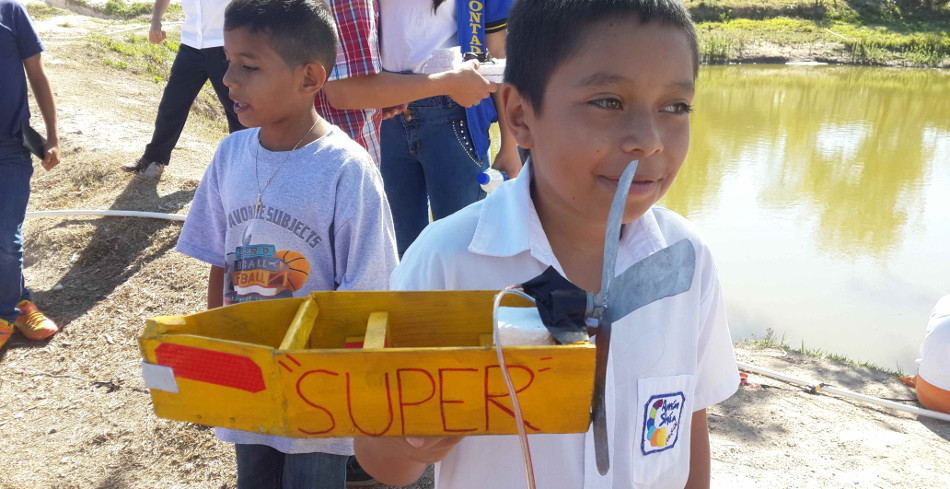
boat

From our viewpoint, the world today is replete with challenges and opportunities of an unimaginable depth and width. It is unthinkable that in a period such as this a student should be limited by a curriculum or a fixed study plan.

This world demands an agile and responsive approach in decision making to optimize educational opportunities for individual students. We reject rigid institutional procedure as counterproductive.

Nine years ago we started a learning program in the mountains of northern Morazán, through the Amún Shéa Integrated Development Center. From the outset, the goal was to make education a relevant and effective tool for improving individual and collective well-being.

The nine years have resulted in formidable challenges, unexpected discoveries and rewarding results. Three questions we are often asked are: what curriculum is used; what is the methodology; and where we get the teachers.

We could go so far as to say that the type of curriculum is not important, neither the methodology nor where the teacher comes from, but that would be a bit sharp. What we want to emphasize is that the most important thing is the goal of education. The rest are means to reach the goal and if we are not careful, we will only replace traditional rigid means with others that become just as rigid and counterproductive in the short term.

At Amún Shéa, our goal is to create unassailable life skills and focused situational awareness. This is put into practice with a five step protocol:

  1. Investigation,
  2. Invention,
  3. Cooperation,
  4. Creation,
  5. Publication,

Through an Educational Management System, which requires:

  1. Giving responsibility and authority to both teachers and students;
  2. Utilization of available and changing information and tools;
  3. An emphasis in results over procedure;
  4. Strategic networking to strengthen our core program and;
  5. Instituting situational awareness.

We measure success by the impact our students have on their families and communities, and above all, on themselves. We measure success in our students by their ease, confidence, solidarity and ability to build solutions.

Today’s world is not only diverse in terms of information and opportunities, but also is characterized by the speed of change in that information and its application. A formidable example of this is the recent presidential election in the United States. Winner and current President Trump hired Cambridge Analytica, a specialist in psychometrics, to design his digital campaign. Psychometrics focuses on measuring psychological traits such as personality, and directs messages according to these traits. Hillary Clinton, on the other hand, relied on the support of Google, Facebook, Twitter and other traditional digital platforms, because of the success with them for the first “social networking president”, Barack Obama. We know the result, but what we need to take into account is that we have just referred to Google, Facebook and Twitter as traditional and practically outdated. The lesson for us is, while our schools are bogged down in the age of “what we know”, the stage of “what we think” has passed by and come to the current age of “how we think.” Who knows what tomorrow will bring?

The critical question then is what is the curriculum and methodology and what is the teacher that can keep us up to speed with this change. We can infer that any focus of content is doomed to be part of a historical memory. The “what we know” stage ended long ago.

Therefore, we need direction with a clear objective but with enough distance to the horizon to guide us without locking us in. The skills required for today’s life include hard knowledge, but with flexibility and agility, and above all with a constant situational reading.

There are formidable challenges. Tradition and expectations of parents and the institutional bureaucracy represent filters that in one way or another bring us back in reality. These filters are not at all negative, in that they address the preparation of our sons and daughters. Consequently it is a subject that demands responsibility.

However, we must recognize that the biggest challenge is our own fear of taking that responsibility of making changes. Creating a change is always a big step, and always involves facing criticism and opposition. Every real innovational project has gone through that, no one enters with parade, party and pomp, but alone, with fear and on the defensive. Curiously, we could understand that the traditional method which resists change today was quite the innovation in itś time and has passed down this same path.

It is extremely important that we understand the dynamics of the situation and understand that the answer is not to raise another “sacred cow” to replace the old one, but rather to develop an applicable protocol for navigating it.

Situational awareness not only responds to the external environment, but also makes fluid adjustments within the program and in the development of the protocol itself.

For example, I just realized that while a person speaks at a rate of 150 words per minute, comprehension works at 400 words per minute and the thoughts of listeners run from one thousand to three thousand words per minute. Suddenly I begin to understand the reason behind the distraction in class and as such, we are already making the corresponding adjustments.

Likewise, our mind is constantly generating thoughts and ideas while reading, and boring is boring, whether spoken or written. Thus I trust that the thousands of thoughts provoked by these two pages have awakened your imagination and contributed to your situational awareness.

It is high time to change rigid institutionally into an agile and effective educational management tool!

Losing Control

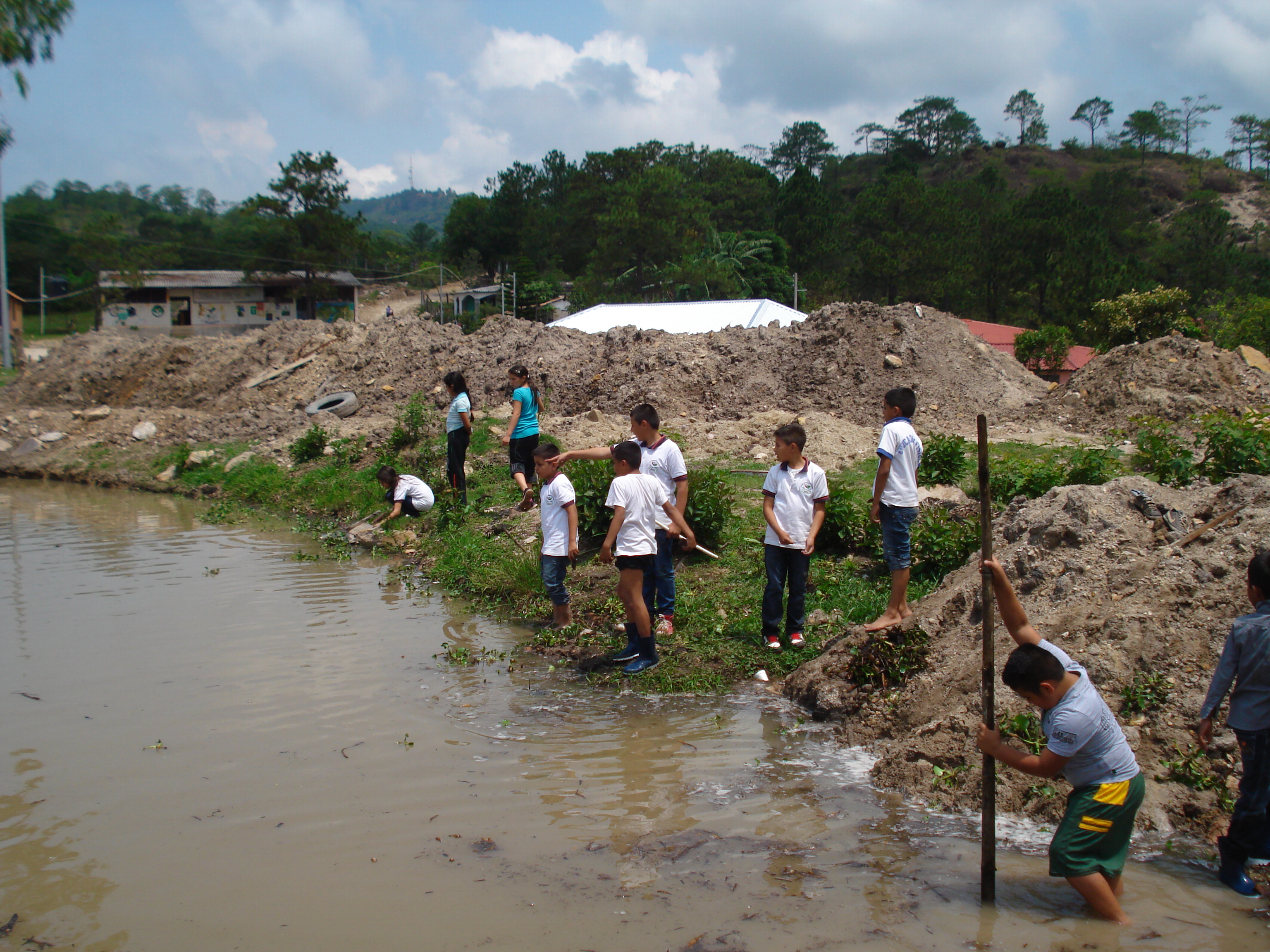
pondA simple search on internet for “alternative education methods” pulls up over 2.5 million resources in just under half a second. “Problems in educational system” brings up 13.5 million in even less time. “Spinning your wheels” is the image that comes to mind. And here I am about to add one more bit to the discussion.

I have come to a conclusion that we will continue to spin our wheels, until we deal with the one central issue of Control. Who controls education? And perhaps the followup; to what end? Actually, we could even avoid going through the agony of answering the question and move forward.

How? Simply by placing full control of learning into the hands of the students. We would be much better served if our educational institutions would provide structure, tools and mentorship as requested, but leave the “program” to the individual student. That individual then may choose the combinations and settings most appropriate for marking out their life plan.

Content-based industrialized education needs to be tossed out, not modified. I fully agree with the concepts expressed by Terry Shaneyfelt in his article titled COPs, PLN, and Connectivism: A Creative Expression. I would go further and propose that our schools need to reflect the “communities of practice and a shared domain of interest” as Terry explains.

All of the tools required to allow individualized learning already exist. There are no excuses, just fear. Fear of losing control.

We need to lose control, hand over the responsibility and trust that true progress will develop. And perhaps write less and actually put our proposals into practice?

Seeking Harmony

I am in the midst of learning valuable lessons. As the lessons continue, I find it hard to say what the conclusions may be. I do now recognize that each person and event around me is one of my teachers. In all likelihood, the conclusion will continue to be just out of reach, just as the horizon is on a journey.

World-changing ideas seem to abound. So why then do things stay more or less the same? You would think that great ideas, formed to improve our wellbeing as humankind, would be snapped up like Black Friday Specials. Is status quo really that much more comfortable?

I have a passion. Much more than an idea, I have a working model with experience and results! It is a learning process that is currently changing the world around me. I thought that people would be falling over themselves to support it. It is rather self-evident, is it not, that things are not as they should be and if they had half the chance they should jump right in to fix it? Ok, that isn’t happening, so I´ve got to get more information out there to them.

So, while I thoroughly dislike the “asking” part of fundraising, I do understand it to be necessary. Otherwise the passion remains a dream, lovely but unrealized; great ideas circling back on themselves until I run out of steam. Traditional funding seems to be fading away or has made itself much harder to find. Social media is the new path to enlightenment and endowment, so I begin to facebook, publish, blog, tweet, scoop, pin, post, crowdfund, email and I´m not even sure what else, except that perfect keywords appear in my dreams only to dissipate right before awakening.

I find that I must lay aside my passion for a period, in order to realize it. I halt the focus on innovating the educational process to become a dull administrator struggling to cover a budget that has those unattractive operating costs and teacher´s salaries in it. The huge problem is finding the balance between getting the information out and becoming a nuisance to friend and stranger alike. “This is overkill, Ron, counterproductive, too many posts, too much, too often,” complains a good friend. Thirty minutes later, another writes, “Love those photos and the information. I´d really like to see more of that.” Ok, what to do?

This whole thing remains a learning process, which I now understand is its purpose, not only for the students enrolled in class but for all involved and particularly for me. The higher you dream, the more involved you must become in the nuts and bolts on the ground level. Harmony is not one-sided, but managing the extremes. A sincere thank you to all of you, my teachers.

Entrepreneur Spirit

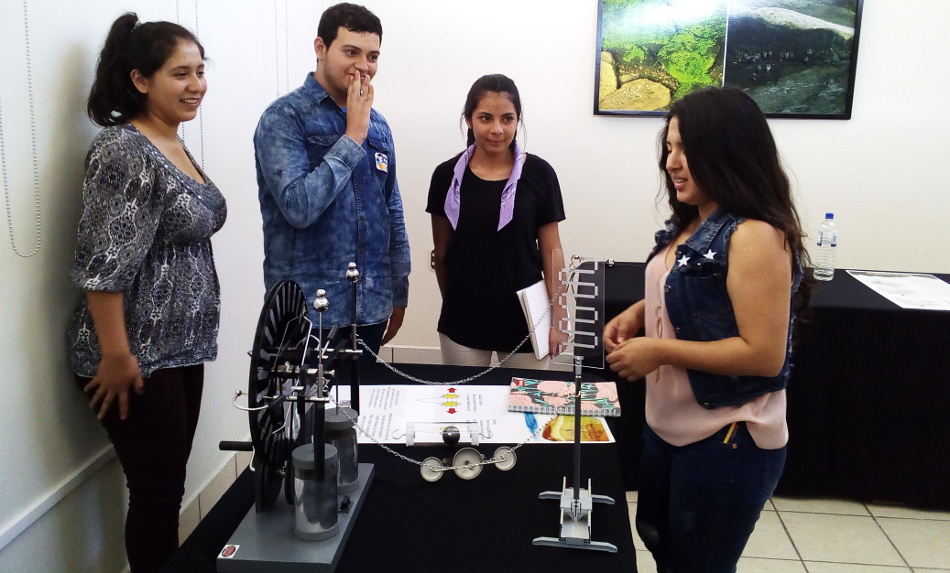
Third Achievement Fair 2013 048We are instilling entrepreneur spirit and know-how in our students at Amun Shea School, in northern Morazán, El Salvador. Through investigation and research, they construct solutions to very real local developmental problems and are becoming the changemakers within their homes and communities.

The communities in northern Morazan suffer a self-perpetuating cycle of poverty. Historic isolation and civil war have provided excuses for apathy and conformism. Traditional education reinforces this negativity by preparing students for jobs that do not exist, leaving them to fend for themselves with only minimal academic skills. The challenge of breaking this vicious cycle resides in providing an education that changes attitudes and motivates the development of the entrepreneurial spirit.

Technological capacity building is fundamental for social entrepreneurial development. It also ignites access to global networks which span borders and build common agenda, injecting that paradigm changing ingredient required to activate qualitative cultural progress. This then breaks the traditional cycle of poverty, open horizons and create a positive sequence of development, with positive cultural identity and attitude.

The creation of a group of well-educated and motivated leaders, with social entrepreneurial skills will gradually change the status quo in northern Morazan. We foresee alternatives to illegal immigration in search of opportunity, a leveling of the playing field in academic and economic terms. We see the creation of new services and industry. More importantly, we see global community networks created and brought to bear on shared global objectives; connectivity breaking isolation.