Category Archives: Development

In memory of Don Warnick

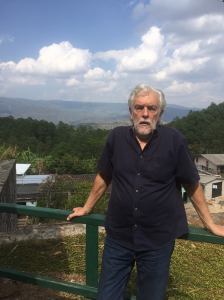
66620959_10220052924337710_1914725381521276928_oDonald L. Warnick passed away peacefully on July 5, 2019. Don was my friend, my advisor and my partner. I was honored to be invited to speak at his memorial service. What follows is a condensed version of what I shared:
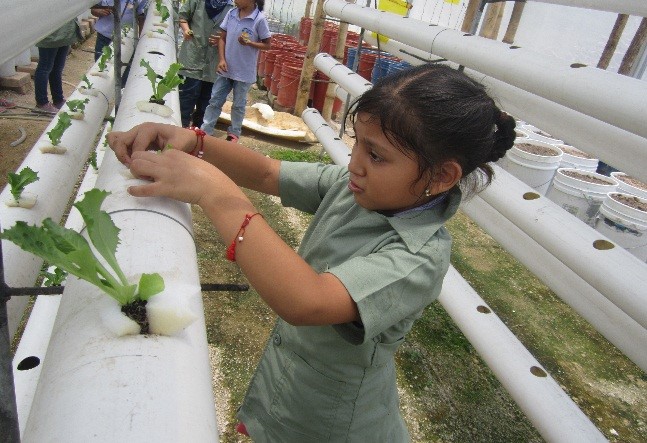
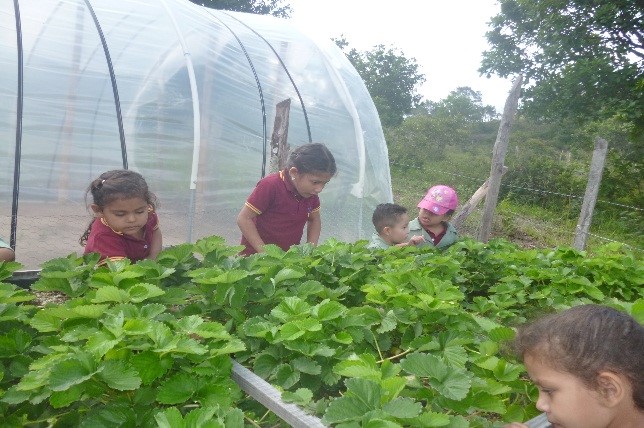
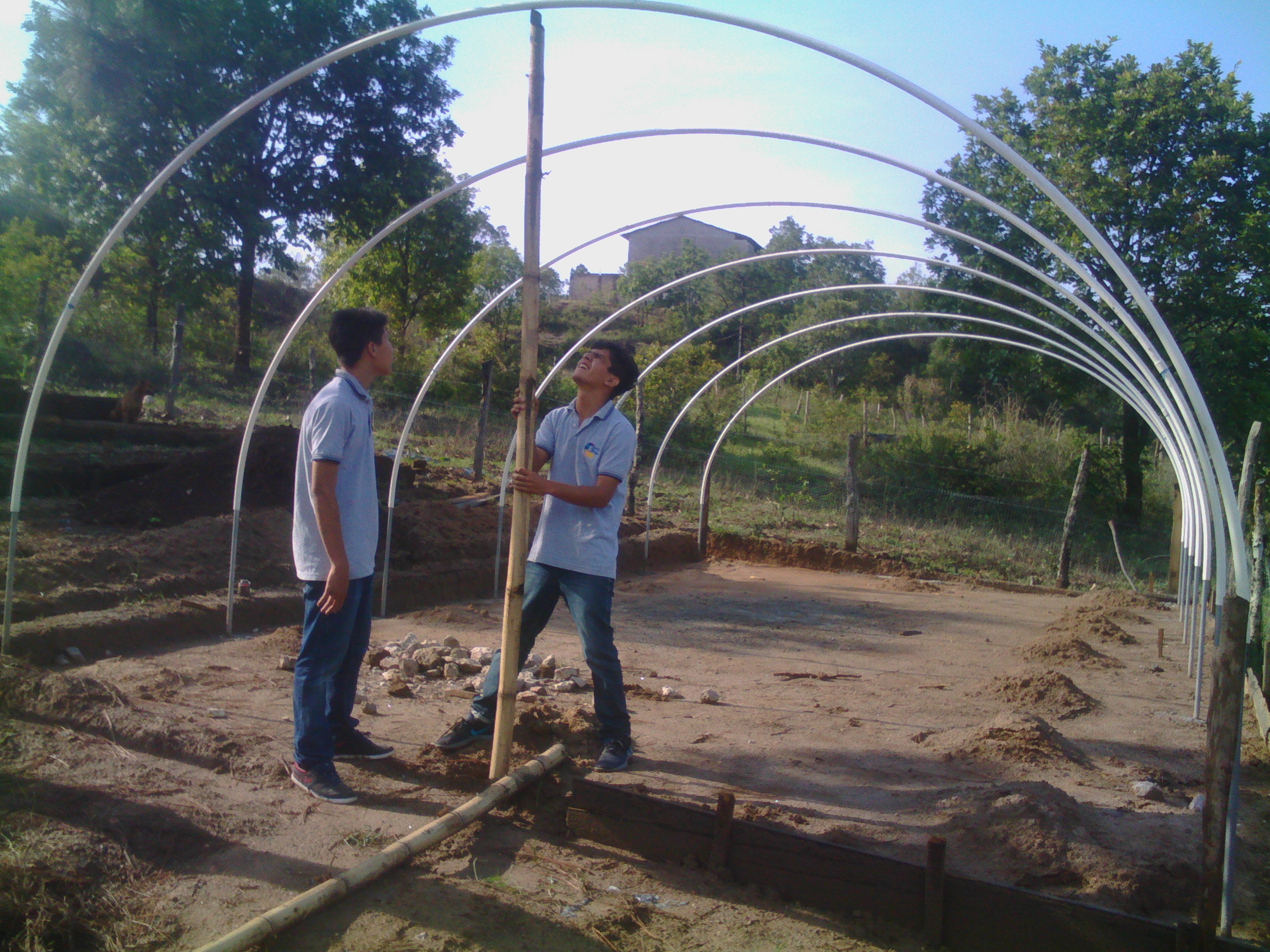
The term that comes to mind while trying to condense my experience with Don down to a common theme is harmony between realism and idealism. While for the most part realism and idealism are considered absolutist philosophies- in opposition and incompatible, Don embodied a living philosophy of realistic idealism.

Selective in where he put his energy, all-in once convinced, and always with a plan for obtainable results. Not so quick to jump on the band wagon, but once convinced by well-founded arguments, Don would join up, with the activity fully researched and with workable operational plans.

We made a good team. I tend to jump into things and then flounder about learning the ropes. Don tempered my idealism, a balancing which made possible the implementation of those lofty dreams. Personally, I benefited greatly from this process of healthy tension between the ideal and the possible.

Don and I grew up in southern Delaware. Our families attended the Tressler Mennonite Church at Greenwood, so we would see each other most Sundays and during other church and family activities. Don was 13 years older than I, so we didn’t really run in the same circles. I believe he and Mary Ann were chaperons to my MYF group and that he managed a volunteer activity in Ocean City, Maryland where I helped out one summer. I went to Honduras as a volunteer with MCC in 1983, so we basically lost track of each other.

I ended up stretching out my stay in Central America, relocating to El Salvador in 1986 and, well staying there until this year. Once the Salvadoran Civil War ended, in 1992, my parents were finally able to visit. Don and Mary Ann had become traveling companions with my parents, and once my father died in 1995, they began to accompany my mother on her visits to El Salvador.

It was on these visits that Don and I began to talk. And we did talk, for hours and hours on technology, philosophy, human nature and how to change the world. I was in the process of building my business Perkin Lenca, when this began. Don understood the goal of community development ingrained within the enterprise and jumped in with support- advise, business sense and financial help.

Don and Mary Ann continued to visit, every year for the past some 22 or 23 years, became part of our family, and part of our goals and vision for El Salvador.

In 2007, we decided that while a business model as an example is good, we needed to improve the quality of education within the region to have a lasting positive impact on the community.

We invited a small group of people from El Salvador and from the USA, founded Perkin Educational Opportunities Foundation, and started the Amun Shea Center for Integrated Development, a small private school in the heart of what once was a major war theatre in El Salvador and what today is a major contributor to irregular immigration to the USA in search of opportunity.

Our vision has been to build a model for relevant rural education, linking education to social, economic and cultural development. Once developed and implemented in our school, then sharing the methodology with the local public school system. Presently, we are in the fourth year of an official agreement with the Salvadoran Ministry of Education to replicate our educational model in 7 nearby public schools. We are also training the public educational supervisors for the entire province of Morazan.

Our goal is to create conditions that lessen the felt need to look for opportunity elsewhere. Irregular or forced immigration begins with losing hope at home, the solution lies with bringing hope and a sense of future back home.

I managed the operational side of PEOF in El Salvador. Don covered the state-side activities of finances, reporting, donor communication and legal status. Great team-work and impossible to carry off without this dual management.

I am very grateful to Don, his patient honing of ideas into reality, his grounding and participation in dreams, and something which I confess to only recently discovering- his ability to make me believe that the entire project was my creation. I missed that completely.

Realistic idealism? Working quietly on root causes of problems, building up others, making it doable, little rhetoric, much patience, a lot of effort and plenty of wit and humor. On a deeper level, building unity over polarity. Don had a deep concern over the current level of division and polarity in our society. He did not fuss over it as some things need to run their course, but I do believe it was his one un-resolved issue. I will miss those conversations.

I do convey condolences from the staff of PEOF and Amun Shea in El Salvador. They held Don in much respect and admiration.

As to our staff at Perkin Lenca, Don and Mary Ann have always been family. Deeply saddened by Don’s passing, Gloria, Rosibel, Reina, Jessica, Lorenzo, Alex, Arely, Aracely and Elsa, on behalf of the whole team, send much love and concern for Mary Ann and family. Silvia, even 15 years after leaving Perkin Lenca, remembers Don and Mary Ann with affection and sends her love.

Thank you Mary Ann, for sharing Don with us. Ena and myself, along with our children, consider you to be family.

Thank you Derek and Amy for sharing your father, his counsel and wisdom.

And I especially want to thank the Troyer and Warnick children for sharing their grandfather with my children.

Thank you

Going back or moving forward?

2

Going back or moving forward? (English version)

by Ron Brenneman

After thirty-six years in Central America, I have decided it is time to move on and face the new challenge of going “back home”. Perhaps a more accurate portrayal would be to expand my area of activity to include the area where I once grew up.

I have no intention of completely abandoning El Salvador, but it is now time to step out of the day to day operational duties I had taken on in my adopted country. It is also time to introduce my children to their other country.

El Salvador has entered into a new phase. The new president calls it the end of the post-war, while some good friends, based on the Japanese experience after WWII, call it the beginning of the post-war era. Either way it is called, the recent Salvadoran presidential election marked a change and a drastic decline in the two major political parties.

Both ARENA and the FMLN were both created as instruments of war. A never-ending “cold war” between the two, a continuation of conflict set in rhetoric of the 80s, blocked out innovation and real progress as a nation for 27 years after the peace accords were signed. The voters, sick and tired of the situation, soundly booted both of them out and elected a fresh face.

Reflecting upon the election results and the underlying message, I was forced to revise my own thinking and participation in education, community development and business in El Salvador. I had made my home in northern Morazán, formerly one of the major theatres of the Salvadoran Civil War. I came to the realization that much of my vision and strategy for development is based on that same mindset of the conflict in the 80s.

While I do consider myself to be one of “the good guys”, I must accept that it is time to step aside. Outside intervention remains just that, regardless of good intentions. I recall a delightful conversation several years ago, in which an insightful friend analyzed my vision of community as the desire to install a Mennonite colony in Morazán. I did not agree, of course, nevertheless the need to be aware of baggage was a point well taken.

The era of change in El Salvador, of fresh vision and ideas, must have its own space to flourish and must be supported, but in such a manner that allows authentic local leadership and natural institutional building. Too long have outside models and standards been held up as ideal. I trust that to some degree, those outdated models took a beating in the election as well.

Before showering me with praise for such vision and foresight, I will confess that it took a jolting reminder of my own mortality, in the form of serious heart failure, to put me into a deeper reflective mode. This type of reminder quickly converts us into sages and wise philosophers.

Perkin Educational Opportunities Foundation (PEOF) and Amún Shéa Center for Integrated Development have grown into solid institutions over the past twelve years. Starting from that one-room schoolhouse in 2008, they have grown into a program with positive tangible impact on public education, especially in the province of Morazán.

Alliances and agreements with governmental and non-governmental organizations in strategic areas of interest to develop, such as Agro-ecology, Science and Technology and Forest Restoration broaden the bridge being built between development and relevant education.

The program has solid roots and I have full confidence in the capable team of executive directors who have taken on the responsibility, not just of maintaining but, of broadening the influence and impact of PEOF and Amún Shéa in El Salvador. While I will maintain a level of input with strategic planning and fundraising, the daily operations, administration and implementation will be managed by the Executive Director team.

To our loyal supporters and fundraisers, I would request you continue and redouble your valuable support to PEOF and Amún Shéa. With your support, I am confident the program will flourish and continue to bring positive change, and more so as an authentic homegrown solution to the problems facing a new El Salvador.

I recall conversations with several of you during the last several years regarding what would happen when I am no longer around. The ever-present question was of whether the program was just Ron´s project or if it would indeed take root on its own. A transition initiated in this manner truly has a much better chance of success than one of a sudden and dramatic departure.

As a family, we are currently working our way through the bureaucratic paperwork to get all of us up to the east coast, to the state of Delaware. Quite the challenge to just pick up and go. From what I´ve glimpsed so far, little is the same as when I left in 1983. While in many ways it seems like starting from scratch, family and friends form an important bridge over the gap of time and distance. Not entirely sure what we will do yet, but fishing, gardening, carpentry and pole lima beans are all in the picture.

Regresando o avanzando?

6

¿Regresando o avanzando? (versión Español)

por Ron Brenneman

Después de treinta y seis años en Centroamérica, he decidido que es hora de seguir adelante y enfrentar el nuevo desafío de “regresar a casa”. Quizás una representación más precisa sería expandir mi área de actividad para incluir el área donde alguna vez crecí.

No tengo la intención de abandonar por completo a El Salvador, pero ahora es el momento de apartarse de las tareas operativas diarias que había asumido en mi país adoptivo. También es hora de presentar a mis hijos a su otro país.

El Salvador ha entrado en una nueva fase. El nuevo presidente lo identifica como el final de la posguerra, mientras que algunos buenos amigos, basados en la experiencia japonesa después de la Segunda Guerra Mundial, lo clasifican del comienzo de la era de la posguerra. De cualquier manera, la reciente elección presidencial salvadoreña marcó un cambio y un descenso drástico en los dos partidos políticos principales.

Tanto ARENA como el FMLN fueron creados como instrumentos de guerra. Una interminable “guerra fría” entre los dos, una continuación del conflicto establecido en la retórica de los 80, bloqueó la innovación y el progreso real como nación durante los 27 años posteriores a la firma de los acuerdos de paz. Los votantes, cansados y hartos de la situación, echaron afuera a ambos y eligieron una cara nueva.

Reflexionando sobre los resultados de las elecciones y el mensaje subyacente, me vi obligado a revisar mi propio pensamiento y participación en la educación, el desarrollo comunitario y los negocios en El Salvador. Había hecho mi hogar en el norte de Morazán, anteriormente uno de los principales teatros de la Guerra Civil Salvadoreña. Llegué a la conclusión de que gran parte de mi visión y estrategia para el desarrollo se basa en la misma mentalidad del conflicto en los años 80.

Si bien me considero uno de “los buenos”, debo aceptar que es hora de apartarse. La intervención externa sigue siendo justamente eso, independientemente de las buenas intenciones. Recuerdo una conversación encantadora hace varios años, en la que un amigo perspicaz analizó mi visión de la comunidad como el deseo de instalar una colonia menonita en Morazán. No estaba de acuerdo, por supuesto, sin embargo, la necesidad de estar al tanto del prejuicios y bagaje propio fue un punto acertado.

La era del cambio en El Salvador, de nuevas visiones e ideas, debe tener su propio espacio para prosperar y debe ser respaldada, pero de tal manera que permita un liderazgo local auténtico y un desarrollo institucional natural. Durante demasiado tiempo, los modelos y estándares externos se han considerado ideales. Confío en que, hasta cierto punto, esos modelos obsoletos también sufrieron una paliza en las elecciones.

Antes de colmarme de elogios por tal previsión y pensamiento avanzado, confesaré que fue un recordatorio de mi propia mortalidad, en forma de insuficiencia cardíaca grave, que me puso en este modo reflexivo tan profundo. Este tipo de recordatorio nos convierte rápidamente en sabios filósofos.

La Fundación Perkin para el Fomento de Oportunidades Educativas (PEOF) y el Centro de Desarrollo Integral Amún Shéa se han convertido en instituciones sólidas durante los últimos doce años. A partir de esa escuela de una sola aula en 2008, se han convertido en un programa con un impacto tangible positivo en la educación pública, especialmente en el departamento de Morazán.

Las alianzas y los acuerdos con organizaciones gubernamentales y no gubernamentales en áreas estratégicas de interés para desarrollar, como la agroecología, la ciencia y la tecnología y la restauración de bosques, amplían el puente que se está construyendo entre el desarrollo y la educación pertinente.

El programa tiene raíces sólidas y confío plenamente en el equipo capaz de directores ejecutivos que han asumido la responsabilidad, no solo de mantener sino de ampliar la influencia y el impacto de PEOF y Amún Shéa en El Salvador. Si bien mantendré un nivel de aportes con la planificación estratégica y la recaudación de fondos, las operaciones diarias, la administración y la implementación serán gestionadas por el equipo del Directores Ejecutivos.

A nuestros leales socios y partidarios, les pido que continúen y redoblan su valioso apoyo a PEOF y Amún Shéa. Con ello, confío en que el programa florecerá y continuará generando cambios positivos, y más aún como una solución local auténtica para los problemas que enfrenta un nuevo El Salvador.

Recuerdo conversaciones con varios de ustedes durante los últimos años sobre lo que sucedería cuando ya no estuviera cerca del proyecto. La pregunta siempre presente era si el programa era solo el proyecto de Ron o si realmente se enraizaría por sí solo. Una transición iniciada de esta manera realmente tiene muchas más posibilidades de éxito que una salida repentina y dramática.

Como familia, actualmente estamos trabajando en los trámites burocráticos para llevarnos a todos a la costa este de los Estados Unidos, al estado de Delaware. Realmente es un gran reto esto de simplemente levantarnos e irnos. Por lo que he vislumbrado hasta ahora, poco es lo mismo que cuando me fui en 1983. Aunque en muchos sentidos parece que empezamos desde cero, la familia y los amigos forman un puente importante sobre la brecha del tiempo y la distancia. Aún no estamos seguros de lo que haremos, pero la pesca, la hortaliza, la carpintería y los frijoles lima están dentro de las posibilidades.

Educación con un Objetivo

Application

Educación con un Objetivo

La educación es relevante en la medida que deja al estudiante equipado para la plena participación productiva y social de su entorno, capacitado para innovar dicho entorno y motivado para excursionar más allá de sus horizontes.

Necesitamos definir el objetivo de la educación, en cuanto si es para formar buenos estudiantes ó para mejorar la productividad y calidad de vida en el país. Mantenemos que el rendimiento académico es importante sólo en su aplicación al entorno y como soporte para la formación técnica eficiente y pertinente. El debate continuo sobre las bajas notas académicas en las pruebas estandarizadas tiene sentido solo en la medida que éstas pueden mejorar las capacidades laborales y sociales del estudiante.

El objetivo de los doce años de educación básica y media debería ser formar con capacidades personales y técnicas para la inserción laboral, autoempleo o especialización con estudios superiores. Y la oferta educativa debe responder a las condiciones de oportunidades reales presentes en el entorno del estudiante.

Para el entorno del norte de Morazán, la inserción laboral de un bachiller técnico tiene tres posibilidades: fortalecer la capacidad instalada de las asociaciones productivas, lograr uno de los limitados puestos en la industria turística, ó el autoempleo. La escasez actual de puestos de trabajo de comercio, manufacturero y procesamiento en el entorno nos lleva a establecer una prioridad en la formación técnica para el autoempleo.

Los enfoques técnicos más indicados para el norte de Morazán son en las áreas de Producción, Comunicaciones, Comercio e Ingeniería. Proponemos que todo estudiante debería pasar por un Bachiller Técnico Vocacional (BTV) de uno de éstas áreas aún y cuando decide por estudios superiores.

La base formativa de las áreas técnicas deben ser incorporados plenamente en el currículum académico, por medio de las competencias metas, las actividades de aplicaciones y los indicadores de logro. La educación básica debería incorporar elementos de los cuatro áreas ( Producción, Comunicaciones, Comercio e Ingeniería), dejando a cada estudiante, por decisión propia o capacidad nata, optar por desenvolverse en una área en particular. La educación media, con el BTV, llevará un nivel de especialización en una de éstas áreas que permite la inserción plena productiva y social.

Necesitamos superar la división entre educación y desarrollo. Actualmente, el sistema educativo se lava las manos con la graduación del estudiante, quedando con la responsabilidad de proveer y constar títulos y notas, no así dar seguimiento a la inserción productiva del estudiante. Una vez graduado, sin embargo hay una amplia gama de oferta de capacitaciones productivas y cursos formativos para adultos de organizaciones nacionales y internacionales.

El reto es incorporar los conceptos y las técnicas productivas en el currículum escolar para volver relevante a la educación básica y media. Así las capacitaciones posteriores tendrán el efecto de especialización sobre una base sólida de formación técnica y no de empezar de nuevo. Recordamos que los años escolares son el periodo de mayor capacidad de absorber, procesar información y aprendizaje en el ser humano. No se puede desperdiciar semejante oportunidad en una rutina irrelevante para el graduado en el mundo real.

If wishes were fishes…

IMG_0235

If wishes were fishes.. Or what I wish were the talking points in the immigration debate.

If building a solution is actually to be part of the current debate on immigration, we should be looking at long term strategies and actions that would diminish the pressure to migrate and lessen the quagmire that only serves to stoke the flames of political conflict.

As I posted in July 2014 in Politically Competent, “The “plight of the children” is in fact very real. But have we had a part in creating the crisis because we refuse to respond to any other stimulus?” It would seem to be clear that we have not progressed in this respect.

I do confess my hesitancy to enter in the fray on this issue at this time, given the emotional pitch it has reached. Nevertheless, and against all better judgement and council, I am compelled to speak to the immigration issue, once again, and from my particular perspective. By way of introduction, my point of view comes from living and working during the past 35 years in El Salvador, 22 of those years in northern Morázan, a major point of origin for illegal migration to the USA. I have friends and former employees who have taken the route north in search of opportunity and I know children who have gone through the cages on route to reunite with their parents.

We sorely need to start looking at alternatives to traditional illegal immigration. The current Guest Worker Program is a good place to start. Why are we not looking how to modify that program for mutual benefit? Everyone I know, without an exception, has gone to the USA with the idea of finding gainful employment for a few years and to return home. The current program is limited in scope and in duration. As the US economy improves and unemployment drops, the job market will tend to open up, with opportunity in construction, manufacturing and other services (I see the senior care field as a real opportunity). Could we not negotiate better conditions and then actually prepare trained technicians for specific industries? The objective of the Guest Worker Program is to allow for the entry of those needed for industry but to guarantee they will not being staying on indefinitely. To hold a job under those conditions and to be able to travel freely to see family at home would greatly reduce both illegal immigration status and the ensuing fracturing of families which motivates the sending of unaccompanied minors on the extremely dangerous journey north.

The other rather obvious pivotal point is looking at the conditions in the home country, in this case El Salvador, that provoke high levels of illegal migration. Lack of economic opportunity, gang violence and extorsion are cited as major factors in making the decision to go north. The recent announcement by Jeff Sessions, the US General Attorney, that domestic and gang violence would generally not be accepted as grounds for asylum cases has basically closed down the avenue that recently has been the most recent major motivation for migration. This returns the responsibility of those conditions squarely back on the Salvadoran government.

While decades of outside intervention in Central America have taken a heavy toll in lives, deposed sovereignty and institutionalized corruption, we must get past the victimization stage which has a stranglehold on the entire region. It could be argued that the “cold war” of the 80s actually lingers on, with different intensity, tactics and players. Self determination seems out of reach, even in the light of “development” programs. It would appear that the highest aspiration allowed of El Salvador is to become the artesian street vendor in the world market.

Within this context, actually I fear the immigration issue at the US southern border may be no more than a pawn in the larger game. We must recognize that this is playing out in a broader context of what is clearly an all out battle between globalism and nationalism. This is a natural occurrence; the pendulum of civilization swings in one direction and then the other. President Trump is a major, but not the only, manifestation of this world wide change in direction towards nationalism. The change is natural but not unopposed, as many institutions and governing bodies have been founded on globalist principles and thus are fighting for their very existence.

The other factor accompanying this phenomena is the change in criteria with reference to application of law. In general, the globalist tendency seems to lean towards a broader interpretation and application of criteria of law, while nationalism holds more to “rule of law”. We see this playing out in the public rhetoric, during the discussion regarding marijuana, the DOJ investigation and now with immigration.

One would hope that the “rule of law” concept cuts both ways in this changing global positioning, as the latest series of US interventions in Honduras (the 2009 coup and other election meddling) have directly contributed to the illegal immigration problem.

So, if wishes were fishes, we would be looking at dual responsibility between nations, with clear rules, getting past victimization into self determination, and working towards improving social economic conditions in El Salvador, as well as other Central American countries.

The choice must be made between making a stand for “how things have always been” or positioning ourselves to prosper under new global conditions. We must be proactive and be willing to negotiate. Above all, we must abandon the blame game which traps us into a never-ending downward spiral, even when we hold the conviction of truth.

The border that has my attention is the Torola River. Families are broken on a daily basis as a parent leaves northern Morazán to find work opportunity elsewhere. Young people flee as their name shows up on an extermination list, perhaps by reason, perhaps not. Economic hardship occurs as people pay up to 15 times what you and I pay for a plane ticket to make the trip. Not all make it through alive. Most women pay extra with their bodies and dignity. Once there, they live in the shadows, without rights or legal status. Sorry, but that is the reality of how illegal immigration operates. That is no solution by any stretch of the imagination!

If wishes were fishes… we would be building solutions.

Ron Brenneman


Relevant education

Planting

traslated from Educación pertinente

Relevant education. Exactly what do we mean by relevant education? Whenever a new phrase is used to describe some new process, there is a danger of falling into the assumption that we all handle the same interpretation, moreso when it becomes a fashionable term.

So that we are on the same page on the subject, we should define it. For us, the Perkin Educational Opportunities Foundation, relevant education is defined by the concepts of Adaptation, Transformation and Insertion.

Adaptation refers to situational awareness, of being conscience of our position in the economic, social and cultural processes of our environment and the relationship and connection or influence with the broader environment, including global trends. Then, once aware, to equip ourselves in the best manner to face and even thrive in those conditions.

Transformation involves starting with what we have at hand, what we know, with our experiences and practices, and then based on those, and with the needs and opportunities of our environment, to build new practices and processes to improve our surroundings. We can not confuse transformation with transplantation. The transplant of methodology and practices implies maintaining dependence on external forces. Transformation develops from strengthening our own roots.

Insertion into the labor market and full participation in the transformational processes are required in order for an educational program to qualify as relevant. Access to real employment and self-employment options and access to specialization training for this purpose are the only evidence of the relevance of an educational program.

Education is relevant to the extent that the student is equipped, not only with academic and technical skills, but with the skills of adaptation, the power of transformation and with full integration into the socio-economic and cultural development of their environment.

-Ron Brenneman

Educación pertinente

IMG_20180607_141209

Exactamente qué queremos decir con eso de educación pertinente? Siempre cuando una frase nueva se utiliza para describir algún proceso nuevo, podemos caer en la suposición que todos manejamos la misma interpretación, más cuando se convierte en un término de moda.

Para que estemos en la misma página sobre el tema, mejor lo definimos. Para nosotros, la Fundación Perquín para el Fomento de Oportunidades Educativas, la educación pertinente se define con los conceptos de Adaptación, Transformación e Inserción.

Adaptación se refiere a la conciencia situacional, de ubicarnos en los procesos económicos, sociales y culturales de nuestro entorno y su relación y conexión o influencia del entorno más amplio, incluyendo las tendencias a nivel global. Eso, para luego equiparnos de la mejor forma para enfrentar y hasta prosperar en dichas condiciones.

Transformación implica iniciar con lo que tenemos a la mano, lo que conocemos, la experiencia y la práctica nuestra, y luego en base a ello, y a partir de las necesidades y oportunidades de nuestro entorno, ir construyendo nuevas prácticas y procesos para mejorar éste entorno más cercano. No podemos confundir transformación por trasplantación. El trasplante de metodología y prácticas implica mantener dependencia de fuerzas externas. La transformación sale desarrollándose de las raíces propias nuestras.

La Inserción laboral y participación plena en los procesos de transformación son requeridos para poder calificar de pertinente a la educación propuesta o programada. Acceso a opciones reales de empleo y autoempleo y acceso a formación en especializaciones para tal fin son las únicas pruebas de la pertinencia de un programa educativo.

La educación es pertinente en la medida que el estudiante es equipado, no solo de capacidades académicas y técnicas, sino con las competencias de adaptación, el poder de transformación y con la plena inserción en el desarrollo socioeconómico y cultural de su entorno.

-Ron Brenneman

Cause and effect- the migration problem

North Morazan

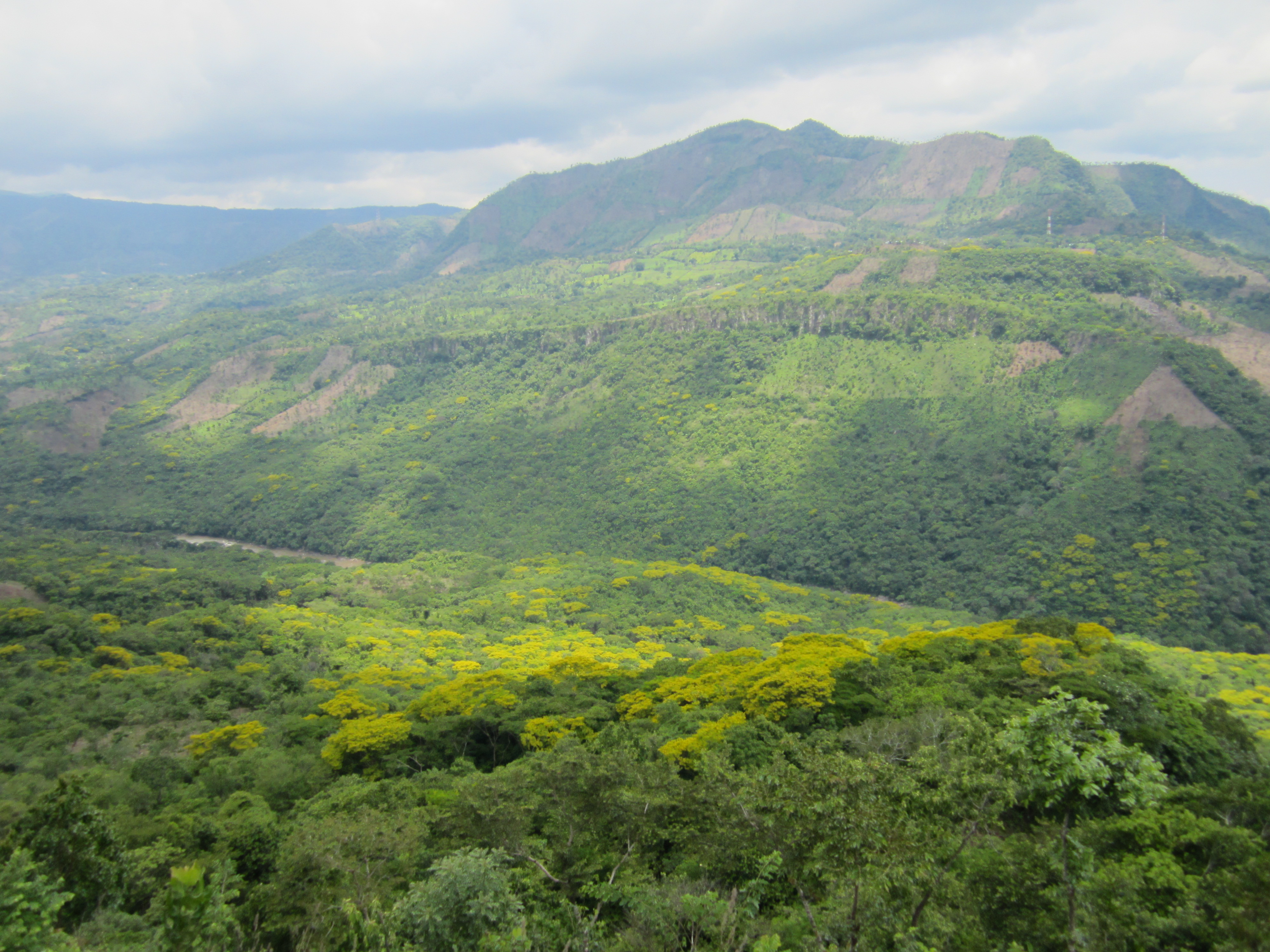
The north of Morazán, in the mountainous north-east of El Salvador is hands down the most beautiful place in the world. Yet it has one of the highest rates of migration in the country of young people seeking opportunity elsewhere. Many are in the USA, most with no legal status to be there.

Why, you would ask, would anyone in their right mind leave the most beautiful place in the world and leave family and children behind to live in the shadows in a foreign land where they are not fully welcome.

Leaving politics aside, where all positions may be justified, let us take a look at cause and effect. The north of Morazán was a free fire zone during the Salvadoran civil war, causing 100% displacement of the civilian population and complete destruction of productive infrastructure. As a volunteer during the 80s in the Colomoncagua refugee camp, across the border in Honduras, I watched the daily bombing runs of Dragonfly jets over Morazán, part of the one million dollars a day in USA military aid to El Salvador. This period marked the beginning of the migration problem, which continues today given the failure of post-war reconstruction in providing economic opportunity.

Regarding President Trump’s remark that the USA should only accept the best, I would argue that we need them here. Our brightest and best went to war in the late 70s and most were killed or maimed. They continue to leave today in search of a means to care for their families. We need to create conditions that allow the brightest and best to stay here and build Morazán into its full potential.

Morazán was not destroyed in one day. It took a decade of pounding and a lot of resources to do it. It will take some time, resources and determination to reach our goal of prosperity.

Amún Shéa is focused on assisting the creation of that reality in which  the brightest and best may prosper and thrive here at home and migration is no longer the only option. It is no magic formula and offers no quick political solution. It is an arduous task, one step at a time, one student at a time, often seemingly against the current.

Public policy is important, but if you would like to join us on the groundwork, building change from this remote territory, we would more than welcome you.

Thank you
Ron Brenneman


Building the Great Wall

There is certainly much ado regarding the construction of a wall on the border of the United States with Mexico. Known primarily as the Great Wall or Trump’s Wall, the objective is to stop undocumented movement through the southern border.

As with most politically motivated projects, this proposal has created tremendous emotional reactions, both pro and con. In an emotionally charged debate such as this, everyone on both sides of the issue is absolutely convinced they are right. The emotions of this debate are fostered by frustrated illusions on the one hand and fear of unpleasant changes of lifestyle on the other. There is little effort put forth by either side to inject a bit of objectivity into an analysis of the situation. It is within this continuing disorder that a parasitic industry of traffickers, lawyers, jailers, and unscrupulous employers rake in tremendous profits. Many special interests are involved, some representing very powerful financial pursuits and a very few working for a solution.

If the answer to the problem of controlling illegal migration is to be reduced to simply putting an obstacle in the way, that is to build a wall, it is doomed to failure from the start. Actually it would likely result in strengthening the same parasitic industry of human trafficking by provoking an increase in the fare paid for transportation as they become more creative in their methods.

If we are able to overcome the emotional part of the discussion, perhaps we can come to the same conclusion as the American poet Robert Frost, when he wrote, “Good fences make good neighbors.” That is to say we need some order in the backyard and a clear definition of the boundaries in order to avoid a constant dispute with the neighbor. Remember that a good fence serves in both directions. In looking at El Salvador and the USA, it is clear that a case may be made for mutual accusation of invasion and abuse in recent history. It is also very clear that neither party has been represented by its most favorable spokespersons in this exchange. Fear is not a good advisor to either party. In order to move forward, we must quiet emotions, identify appropriate counterparts and start dealing with this in an objective manner.

In most cases, the decision to set off on the journey to the USA is made with the perception that it is the only option to obtain a decent livelihood. It is not a decision taken lightly. Loved ones are left behind, knowing that some will never be seen again, and children are left with grandparents. The sale of land or debt incurred provides the veritable fortune demanded by the trafficking industry. This is reality for, and is the decision made daily by, dozens of men and women in villages and hamlets throughout El Salvador. We often ask how it is possible that they are willing to give up so much and to risk life itself under such adverse conditions when it is compared to the option of investing a modest amount in their own country. The answer is very simple. The confidence factor. There is little confidence that conditions in the country can actually provide a secure enough opportunity to motivate such an investment.

Following the illusion of the “American Dream” requires a high level of courage and sacrifice. It also demands resignation! This combination forges a determination that will not be interrupted by concrete walls or razor wire. To put this in perspective, most are already paying 20 times the cost of an air ticket, and in addition, are willing to risk their very essence and being on a route fraught with inconceivable dangers. Can any wall actually contain this level of determination?

The only wall feasible for containing the migratory flow from El Salvador to the United States is one that makes it more attractive to stay here than to leave. It must replace the “American Dream” with the “Salvadoran Sueño”. It must be a wall that displaces the perception of migration as the only real economic option. That is a wall built of opportunity, in El Salvador.

The foundation of this wall must be an integrated educational program that prepares the young with a proactive attitude and sense of responsibility, real life skills and opportunities for achievement. This implies a true technical-professional preparation and scientific focus in the development of a new enterprises and technologies. The wall itself must incorporate innovation, investment and open access to all technical information and productive processes. The top of this barrier must be a public policy that motivates initiative and protects local and individual economic activity from outside intervention.

So, let’s come together and build this Great Wall. Let’s create the Salvadoran Sueño that keeps our talent here through a solid program of training and opportunity and keeps your opportunists on your side of the fence.

The practical issue that comes to mind of course, is the cost. Who is going to pay for all of this? A very good question and one which deserves serious discussion. A good question to start with is, who is paying now for the disorder? The information on security and protection costs is readily available for review and is staggeringly high. As an example, in 2015 the daily cost for holding a minor in custody for illegal border entry into the USA was $252. That amount would pay a full scholarship for 45 students at Amún Shéa, a private innovative problem-based learning program in Morazan, El Salvador, which is an area of extremely high migration. Does a 45 to one ratio sound like a good investment?

Mr. Trump, you are a businessman and fully understand the difference between an investment and wasted expenditure. Let’s make a deal and work together on building a wall of education and opportunity that works for both of us. If we accept that good fences (walls) make good neighbors, then great gates may be built as well, wide open and welcoming, making us even better neighbors!

Finding the starting point

img_5791Opportunities for learning have never been more extensive and accessible as they are today. The digital era opens the opportunity for anyone to learn any field, whether academic, technical or artistic.

Everything anyone desires to learn is literally at the distance of their fingertips and often under the guidance of world class experts. The major difficulty is actually choosing an appropriate package for oneself from among the many resources offered. Indeed, the offer is so overwhelming that it exceeds our ability to actually conceive it. Clearly, it is necessary to find a pathway, a starting point from which to navigate.

Some areas  of discussion on education and methodology will be phased out if we really enter into and seize the opportunities of the digital world. The controversial discussion regarding the role of the teacher and the conflict between the focus on content and processes, will tend to dissipate before this magnitude and diversity of learning opportunities.

How is it then that we have not taken full advantage of what the digital age offers? And how can we find that starting point?

From my observation of the educational process, while working in the Amún Shéa School in Morazán, I would argue that the current process of teaching and learning in general is governed by imitation. Many teachers do not teach from their own knowledge of the subjects, but reproduce the style and method of teachers they studied under during their own educational process. This lack of comprehension skills is replicated in students, cycle after cycle. It then radiates out into all areas of society where the norm becomes a game to provide the correct answer, albeit without much real knowledge of the subject.

This same phenomenon can be  observed daily, even outside of school. In my activities in tourism, as owner of the Hotel Perkin Lenca, on a daily basis I see the difficulty of understanding of my employees, suppliers and even the personnel of governmental agencies that visit us.

We have wasted effort and resources on motivational courses, technical training and the development of methodological manuals that in the end produce little progress in the participants. We have been commenting for some time now on the need to teach by example, because the difficulty in transferring new techniques and procedures, via both written and oral, is so evident. It turns out that this does not solve the problem either as it only provides another model to imitate.

Changes in knowledge and processes have reached an unprecedented rate. There is no longer time to imitate. Any copy, very soon becomes obsolete . It may sound extreme, but the accumulation of knowledge and processes is no longer valid. Where then does this leave our educational systems?

Regardless of age or position in society, the future will depend on individual capacity of comprehension, not only for success, but to maintain a minimum level of well-being.

The starting point then, is comprehension. Educational  institutions will maintain their relevance to the extent that they focus on promoting comprehension at three levels: oral, written and social. The concepts of oral and written comprehension are well known and basic. Social comprehension refers to empathy, the understanding of the human condition in others.

Those who are equipped with comprehension have all knowledge at their disposal. No barrier exists that can stop them.