Tag Archives: status quo

If wishes were fishes…

IMG_0235

If wishes were fishes.. Or what I wish were the talking points in the immigration debate.

If building a solution is actually to be part of the current debate on immigration, we should be looking at long term strategies and actions that would diminish the pressure to migrate and lessen the quagmire that only serves to stoke the flames of political conflict.

As I posted in July 2014 in Politically Competent, “The “plight of the children” is in fact very real. But have we had a part in creating the crisis because we refuse to respond to any other stimulus?” It would seem to be clear that we have not progressed in this respect.

I do confess my hesitancy to enter in the fray on this issue at this time, given the emotional pitch it has reached. Nevertheless, and against all better judgement and council, I am compelled to speak to the immigration issue, once again, and from my particular perspective. By way of introduction, my point of view comes from living and working during the past 35 years in El Salvador, 22 of those years in northern Morázan, a major point of origin for illegal migration to the USA. I have friends and former employees who have taken the route north in search of opportunity and I know children who have gone through the cages on route to reunite with their parents.

We sorely need to start looking at alternatives to traditional illegal immigration. The current Guest Worker Program is a good place to start. Why are we not looking how to modify that program for mutual benefit? Everyone I know, without an exception, has gone to the USA with the idea of finding gainful employment for a few years and to return home. The current program is limited in scope and in duration. As the US economy improves and unemployment drops, the job market will tend to open up, with opportunity in construction, manufacturing and other services (I see the senior care field as a real opportunity). Could we not negotiate better conditions and then actually prepare trained technicians for specific industries? The objective of the Guest Worker Program is to allow for the entry of those needed for industry but to guarantee they will not being staying on indefinitely. To hold a job under those conditions and to be able to travel freely to see family at home would greatly reduce both illegal immigration status and the ensuing fracturing of families which motivates the sending of unaccompanied minors on the extremely dangerous journey north.

The other rather obvious pivotal point is looking at the conditions in the home country, in this case El Salvador, that provoke high levels of illegal migration. Lack of economic opportunity, gang violence and extorsion are cited as major factors in making the decision to go north. The recent announcement by Jeff Sessions, the US General Attorney, that domestic and gang violence would generally not be accepted as grounds for asylum cases has basically closed down the avenue that recently has been the most recent major motivation for migration. This returns the responsibility of those conditions squarely back on the Salvadoran government.

While decades of outside intervention in Central America have taken a heavy toll in lives, deposed sovereignty and institutionalized corruption, we must get past the victimization stage which has a stranglehold on the entire region. It could be argued that the “cold war” of the 80s actually lingers on, with different intensity, tactics and players. Self determination seems out of reach, even in the light of “development” programs. It would appear that the highest aspiration allowed of El Salvador is to become the artesian street vendor in the world market.

Within this context, actually I fear the immigration issue at the US southern border may be no more than a pawn in the larger game. We must recognize that this is playing out in a broader context of what is clearly an all out battle between globalism and nationalism. This is a natural occurrence; the pendulum of civilization swings in one direction and then the other. President Trump is a major, but not the only, manifestation of this world wide change in direction towards nationalism. The change is natural but not unopposed, as many institutions and governing bodies have been founded on globalist principles and thus are fighting for their very existence.

The other factor accompanying this phenomena is the change in criteria with reference to application of law. In general, the globalist tendency seems to lean towards a broader interpretation and application of criteria of law, while nationalism holds more to “rule of law”. We see this playing out in the public rhetoric, during the discussion regarding marijuana, the DOJ investigation and now with immigration.

One would hope that the “rule of law” concept cuts both ways in this changing global positioning, as the latest series of US interventions in Honduras (the 2009 coup and other election meddling) have directly contributed to the illegal immigration problem.

So, if wishes were fishes, we would be looking at dual responsibility between nations, with clear rules, getting past victimization into self determination, and working towards improving social economic conditions in El Salvador, as well as other Central American countries.

The choice must be made between making a stand for “how things have always been” or positioning ourselves to prosper under new global conditions. We must be proactive and be willing to negotiate. Above all, we must abandon the blame game which traps us into a never-ending downward spiral, even when we hold the conviction of truth.

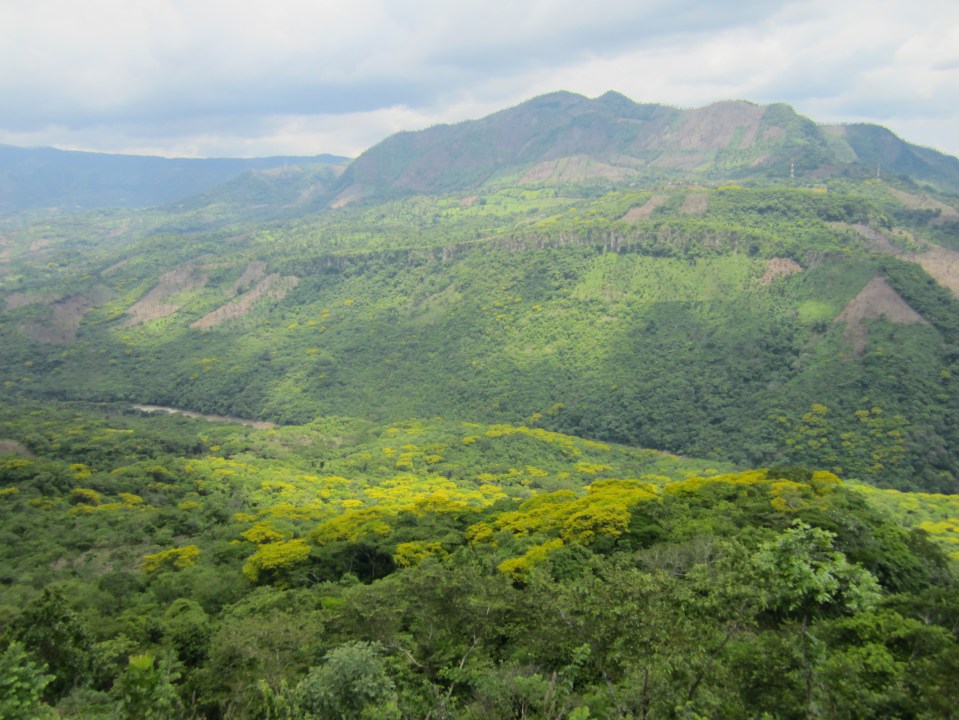
The border that has my attention is the Torola River. Families are broken on a daily basis as a parent leaves northern Morazán to find work opportunity elsewhere. Young people flee as their name shows up on an extermination list, perhaps by reason, perhaps not. Economic hardship occurs as people pay up to 15 times what you and I pay for a plane ticket to make the trip. Not all make it through alive. Most women pay extra with their bodies and dignity. Once there, they live in the shadows, without rights or legal status. Sorry, but that is the reality of how illegal immigration operates. That is no solution by any stretch of the imagination!

If wishes were fishes… we would be building solutions.

Ron Brenneman

 

The Great Sexual Orientation Dissonance

IMG_0179

by Ron Brenneman

Fully aware of the quagmire this discussion will lead to, I nevertheless launch myself headlong into the great sexual orientation debate. I do so, not because I have the solution or even a solution, but because I have an opinion and am availing myself of my inherent right to express it. Political correctness is disingenuous if it does not include space for sincere expression of opinion.

I must clarify, given my responsibilities in several organizations, that the opinion I express is my very own and by no means represents posture, position or stance by any institution I have had involvement with in the past, currently participate in or may form part of in the future. This is just me.

The specific issue of sexual orientation holds absolutely no interest for me; I just don´t care. I also do not care about your food preferences, your social background, your religion, your economic status or your academic titles. I hope this is clear. I just do not care and have very little interest in putting energy into these issues. To me, these issues are important only as components of personal identity. If you are comfortable with whom you are, great: if not, fix it. At the same time, my personal preferences, opinions and beliefs form part of my identity and unless I weld them in such a fashion as to harm another person in any manner, they shouldn´t be a great matter of concern to anyone else. A friendly debate on these issues may help to clarify one´s thinking as identity is built, but to grind a subject into the ground trying to homogenize everyone´s view into some kind of politically correctness is a pointless disruption.

The challenge here is to rise above the fray and take a good objective look around. There seems to be an effort in keeping us focused below the beltline, as it were. All aspects of personal identity are lodged in our lower self; in our lower chakras. While we are focused on our bellybuttons, an Armageddon-like scene is reality for communities of people throughout the world. Personal liberties have been severely curtailed even in “democratic” societies, a hostile takeover of governments seems to be underway and we passively accept being labeled “consumers” when truthfully the consumers are those who manage to “reap without sowing” and “producers” are consider unworthy of mention let alone credit for what they do.

Humanity is currently facing a major civilizational transition. Regardless of your view on evolution and creation, we are in the midst of events which will drastically modify the social and political structures currently known as religion, government, law and economy. This has begun; it is not some far removed possibility.

Our role is to be fully involved. This earth, the heavens and the coming age are our inheritance; yet we have been conned into misdirecting our precious energy into superficial, petty, struggles. It is high time to pull the focus up just a bit and to start dealing with reality. I would frankly ask my friends and colleagues who have come out, or are about to come out, “Why are you here? Is life about your bellybutton, or is it larger? Are you here just to make sure we understand who you are, or are you participating in the evolution of life?” Where in all the annals of history does a human create a difference on the basis of their sexual orientation? It´s immaterial; it doesn´t matter. Could we please start dealing with the continuation of life?

It is no accident that the recent focus of humanity has been from the waist down. Why is that? Fear of the power we hold in our hearts and in our heads? I propose, and hope with all my heart, and know as a fact (which is no contradiction), that the current generation of humanity has the capacity in their hearts and in their minds to recreate the world as it should be, to raise our sights beyond the beltline.

We hold the reins. What we focus upon becomes important. So, where is our focus?

Life protects itself in the end, even against us. And after all, each age of humanity reaches its deserved end…

Power, Influence and Authority

IMG_0601


Students taking ownership of their education is a lovely concept. Making it happen in real terms, is easier said than done. The mechanics involved in shifting power from one party to another are typically brushed aside as we speak glowingly of empowerment.

We are currently working through such a watershed moment, in our school cafeteria of all places, which exemplifies the fact that there are multiple adjustments and restructuring necessary for transferring ownership. It is a process more commonly known as a power struggle.

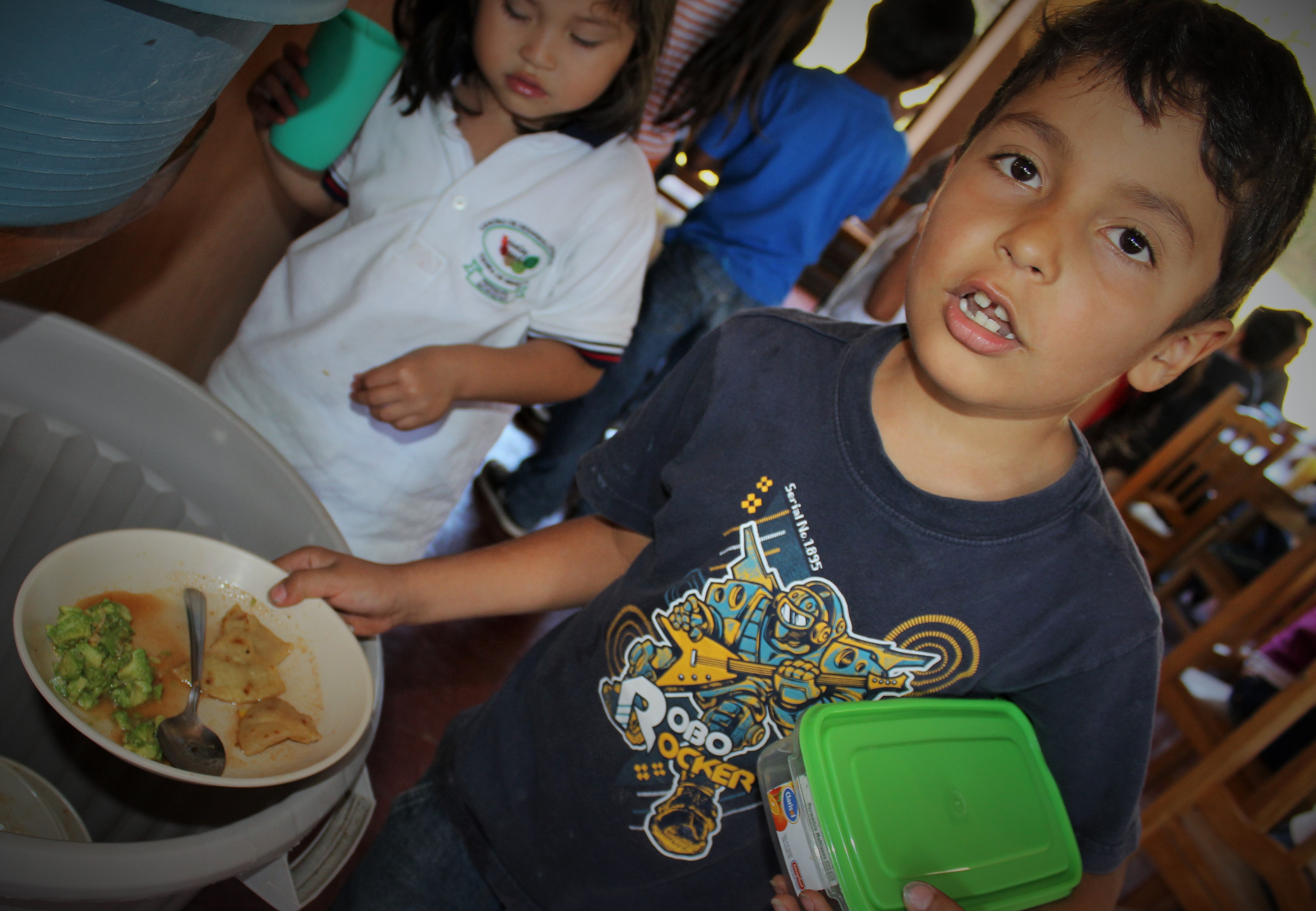
Twenty three of our students are participating in food preparation as part of their nutritional studies. This study involves organizing menus, calculating costs, determining supply logistics and much of the actual preparation of the selected menu. This takes place in the school cafeteria with food prepared for the student body and staff. This is not theoretical; it is real-time and real-world.

The kitchen staff and administration enjoyed the attention at first and supported the idea that the students should “learn how to cook.” Once the activity began to involve actual decision-making however, they felt encroached upon as this is their territory and their responsibility. The power struggle ensued.

The fact that the students are much better at some aspects of the organizing, calculating and logistics is a delicate matter; one which we will not bring up, as to not add fuel to the fire.

It is interesting that most will see this type of situation as it distraction from our task of education, rather than welcoming it as real and palatable classroom material. We have made the conscience decision to convert our administrative problems into valuable lessons for our students whenever possible. What is even more interesting is how the term, student, has broadened to include administrative and kitchen staff, along with our normal study group. We are all learning in this process.

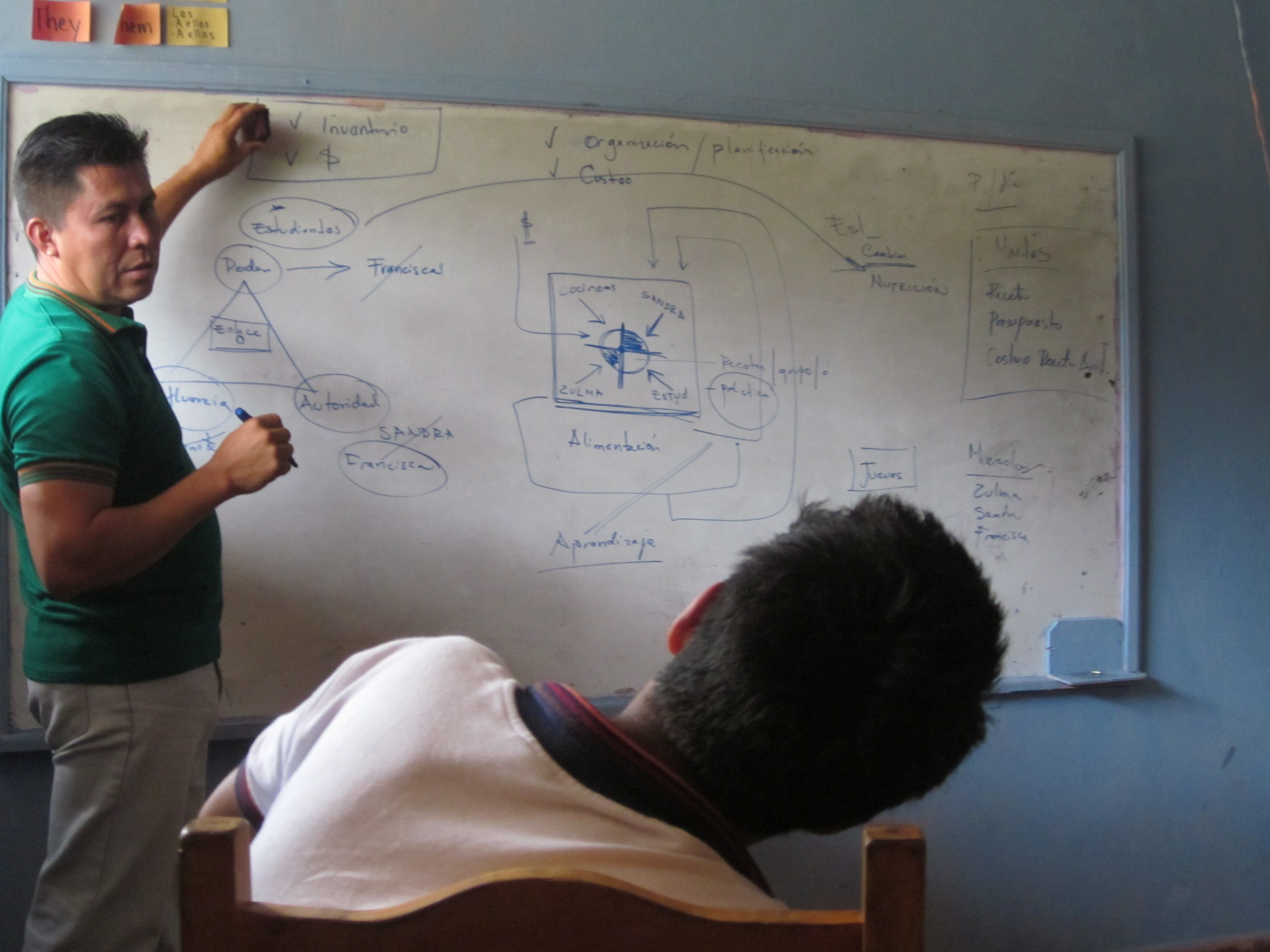
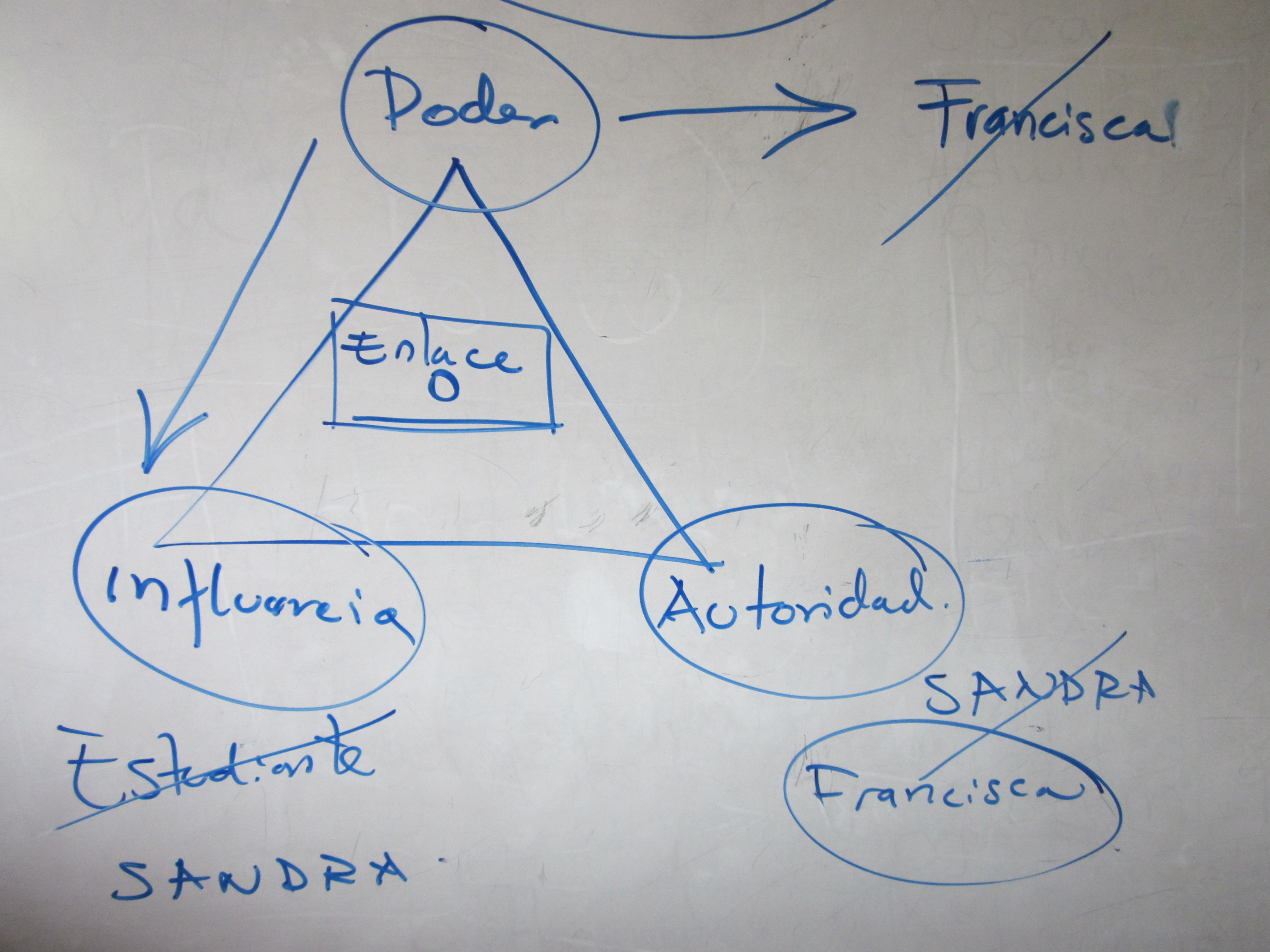
IMG_0770The route we are taking is to introduce the interplay between Power, Influence and Authority in such a way that each party can easily understand the dynamics taking place. Our goal is to arrive at a win-win conclusion for all.

This method allowed us to identify the role that each party falls into naturally. The Administrator took the role of Authority, through control of the purchases. The Cooks had Power, as they decide what to cook, how to cook it, what to combine it with and what portion to put on the plate. The students, through their expressed interest, were able to exert Influence, but not enter into decision-making.

We did find that a shift in roles was called for. It just doesn´t make good sense that the Authority in our nutrition program is the checkbook, represented by the Administrator. IMG_0776We decided that the best role for Administration was that of Influence. If we are seriously “educating,” then the students must have the Power, in so far as production costs versus nutritional benefit are concerned, and in the introduction of new menus and dietary practices. The cooks do have the ultimate Authority, given they know what is and what is not feasible and other tricks of the trade known as experience.

Arriving at this conclusion by no means actually concludes a situation as dynamic as this. There are many details to work through and sensibilities to deal with before we call it a success. At the same time, it opens a real Pandora´s box of similar circumstances that can now to be examined in a new light.

Regardless of the perspective or the method deemed more appropriate, perhaps with greater academic foundation, to speak of empowerment without actually shifting power is a ridiculous exercise in counter-productivity.

Education, Poverty and Status Quo

IMG_0201

Gaining distinction as the poorest area in the country, both in economic terms and academic achievement, is not an easy task. It takes years, even decades and many progressive steps to achieve it, and even more work to maintain it. It is manifested in attitudes, in conformity and a paradoxical combination of resentment and resignation. It is expressed in the status quo and far from motivating the search for alternatives out of poverty; it actually induces a strong resistance to change. In an uncertain, fearful world knowing your place and your role provides a sense of security, even when that place is last place. This is the current situation in northern Morazán, in north-east El Salvador.

The division of roles and full acceptance of them among all players is the determining factor in maintaining status quo. The automation of social processes results in the acceptance of always being the “beneficiary population” for entities of the Poverty Industry and a tacit understanding with regard to the distribution of the provided resources.

The intromission of elements, institutions or concepts foreign to the “understanding” is cause for great concern. Worse yet are those that focus on developing structural changes which could modify the perception or image of the “poor and dignified victims.”

In 2008 we started Amún Shéa, Center for Integrated Development, as an alternative educational system designed to address the socioeconomic needs of the area. As expected, the program immediately drew attention to itself, both from parents seeing it as a viable option for bettering their children’s future and by those who looked at it warily, fearing that it would disrupt the status quo. As one local council member expressed, “the fundraising capacity of this project, will absorb a disproportionate share of international cooperation designated for the area.”

New methodology which does not contain “the basics” of traditional education is automatically rejected, although it is generally accepted that the current educational system in Morazán is a failure. Even parents supportive of the program have difficulty measuring their child´s progress by traditional standards, until they learn new systems of evaluation. Experience shows that our program works, is effective and has tangible positive results. Assimilation within the community, nevertheless, is a process delayed by status quo.

The point is, for an educational program or any other program to be successful in creating real change; it must first overcome the inertia of status quo which permeates social strati, including those seemingly supportive of change and poverty eradication.