
Students taking ownership of their education is a lovely concept. Making it happen in real terms, is easier said than done. The mechanics involved in shifting power from one party to another are typically brushed aside as we speak glowingly of empowerment.
We are currently working through such a watershed moment, in our school cafeteria of all places, which exemplifies the fact that there are multiple adjustments and restructuring necessary for transferring ownership. It is a process more commonly known as a power struggle.
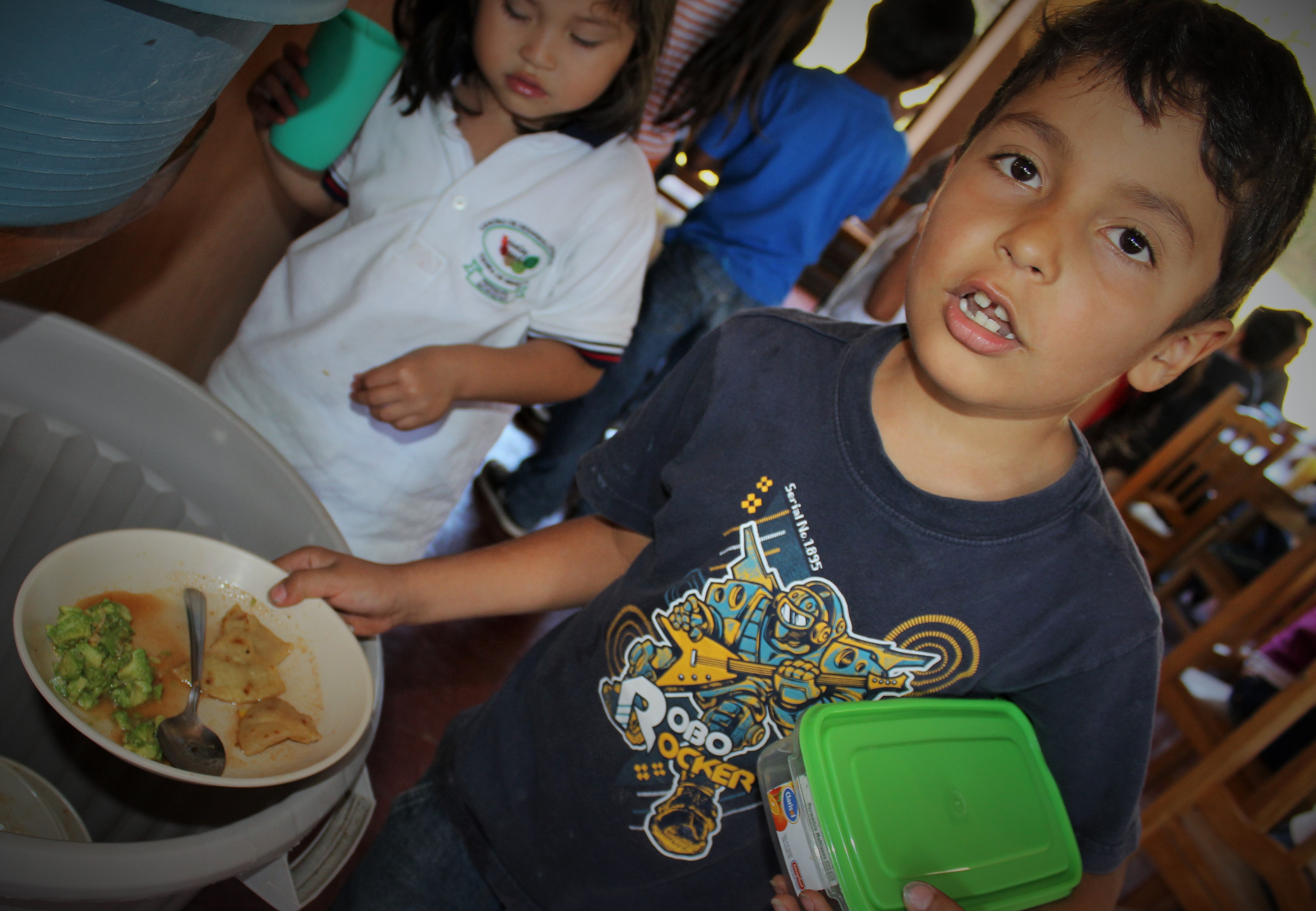
Twenty three of our students are participating in food preparation as part of their nutritional studies. This study involves organizing menus, calculating costs, determining supply logistics and much of the actual preparation of the selected menu. This takes place in the school cafeteria with food prepared for the student body and staff. This is not theoretical; it is real-time and real-world.
The kitchen staff and administration enjoyed the attention at first and supported the idea that the students should “learn how to cook.” Once the activity began to involve actual decision-making however, they felt encroached upon as this is their territory and their responsibility. The power struggle ensued.
The fact that the students are much better at some aspects of the organizing, calculating and logistics is a delicate matter; one which we will not bring up, as to not add fuel to the fire.
It is interesting that most will see this type of situation as it distraction from our task of education, rather than welcoming it as real and palatable classroom material. We have made the conscience decision to convert our administrative problems into valuable lessons for our students whenever possible. What is even more interesting is how the term, student, has broadened to include administrative and kitchen staff, along with our normal study group. We are all learning in this process.
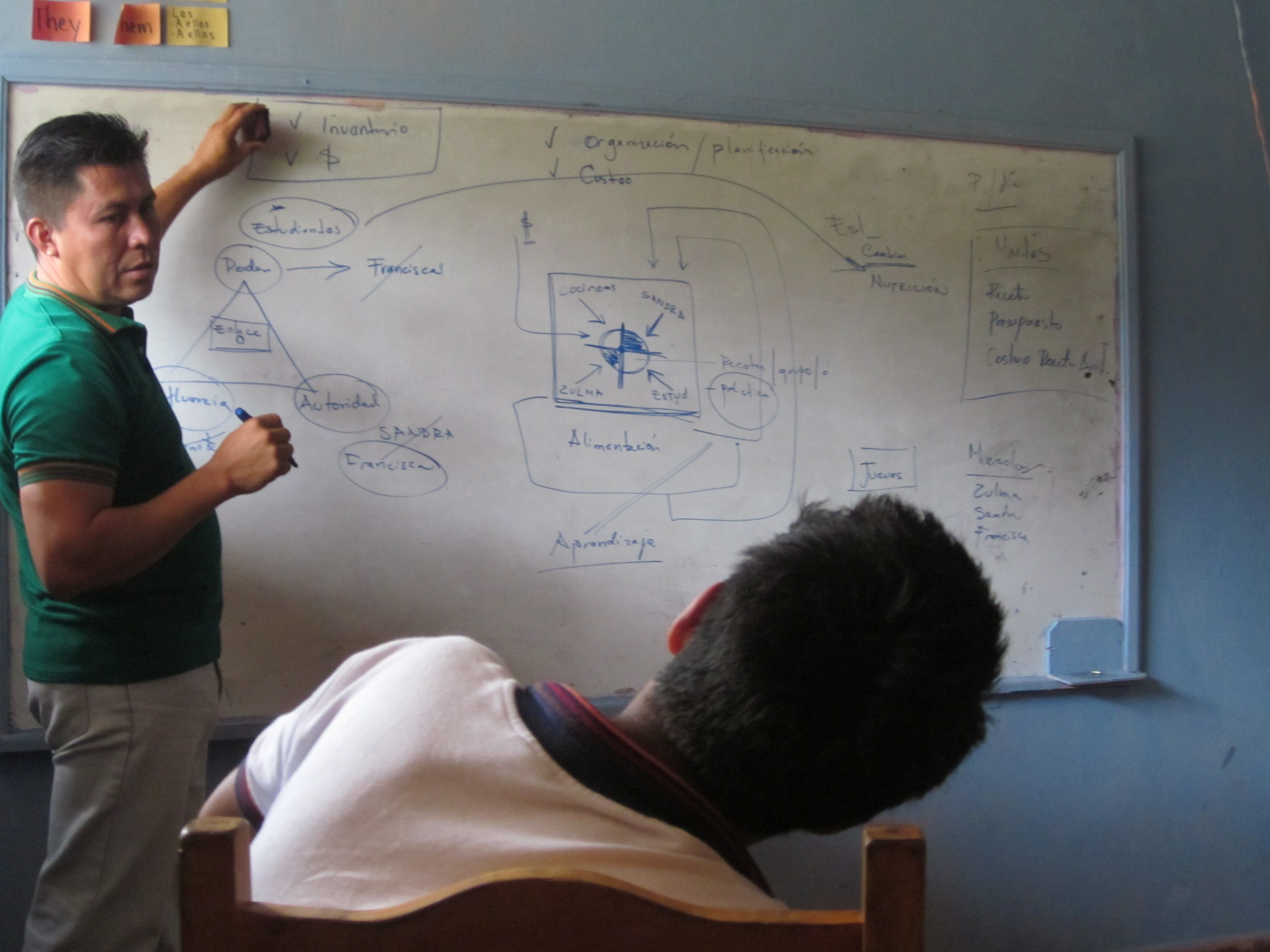
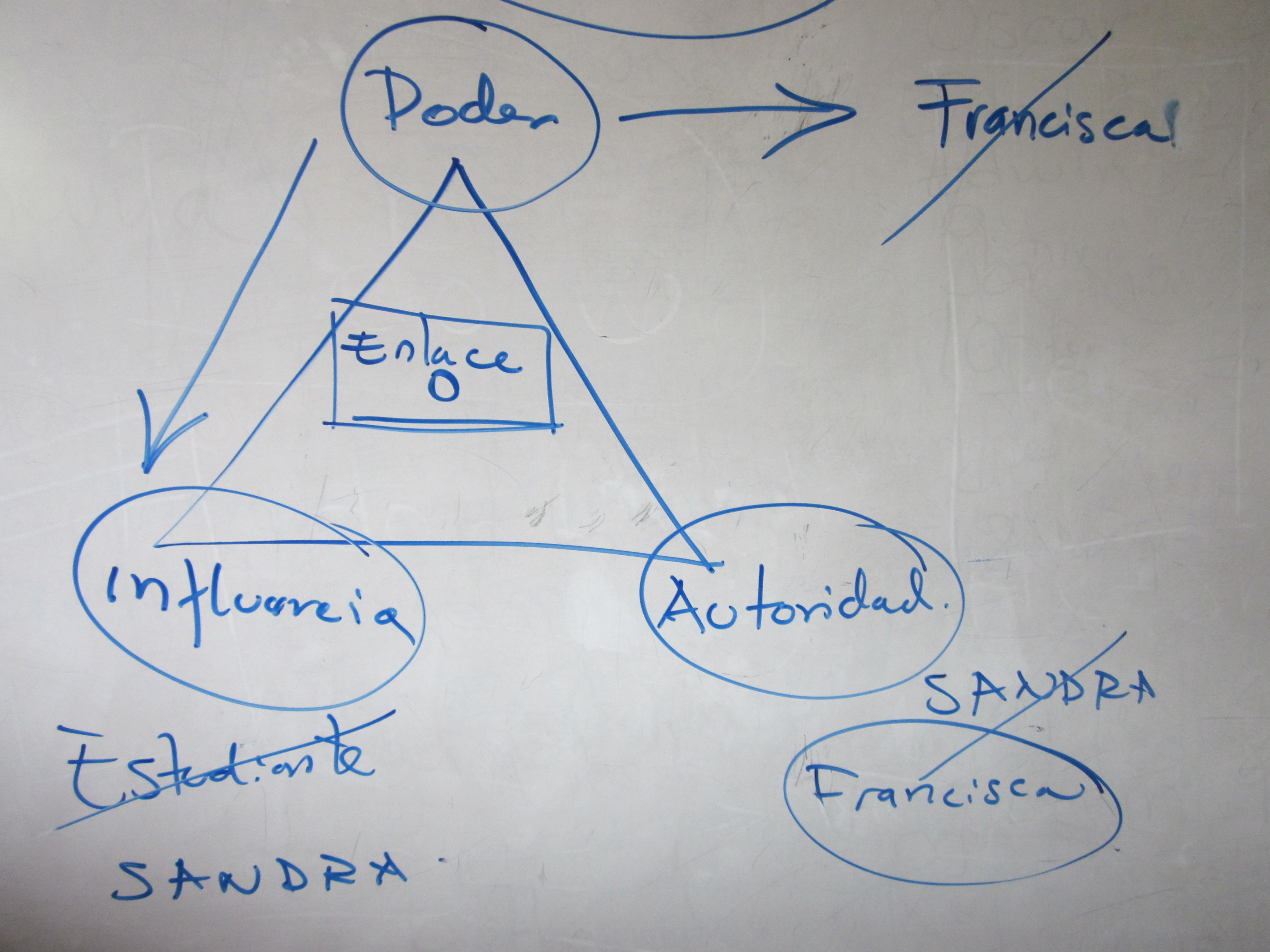
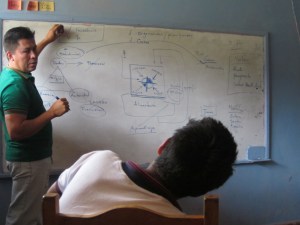 The route we are taking is to introduce the interplay between Power, Influence and Authority in such a way that each party can easily understand the dynamics taking place. Our goal is to arrive at a win-win conclusion for all.
This method allowed us to identify the role that each party falls into naturally. The Administrator took the role of Authority, through control of the purchases. The Cooks had Power, as they decide what to cook, how to cook it, what to combine it with and what portion to put on the plate. The students, through their expressed interest, were able to exert Influence, but not enter into decision-making.
We did find that a shift in roles was called for. It just doesn´t make good sense that the Authority in our nutrition program is the checkbook, represented by the Administrator. 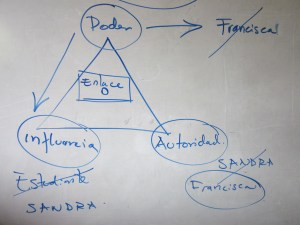 We decided that the best role for Administration was that of Influence. If we are seriously “educating,” then the students must have the Power, in so far as production costs versus nutritional benefit are concerned, and in the introduction of new menus and dietary practices. The cooks do have the ultimate Authority, given they know what is and what is not feasible and other tricks of the trade known as experience.
Arriving at this conclusion by no means actually concludes a situation as dynamic as this. There are many details to work through and sensibilities to deal with before we call it a success. At the same time, it opens a real Pandora´s box of similar circumstances that can now to be examined in a new light.
Regardless of the perspective or the method deemed more appropriate, perhaps with greater academic foundation, to speak of empowerment without actually shifting power is a ridiculous exercise in counter-productivity.
 21st Century Introspective