Monthly Archives: June 2018

Si los deseos fueran peces…

evening sky

Si los deseos fueron peces … o lo que desearía fueron los puntos de discusión en el debate sobre inmigración.

..traducido de If wishes were fishes para mis amigos y amigas, con mucho aprecio y respeto. Disculpan el espanglish, eh?

Si la construcción de una solución realmente fuera parte del debate actual sobre la inmigración, deberíamos estar considerando estrategias y acciones de largo plazo que disminuirían la presión para emigrar y atenuar el atolladero que solo sirve para avivar las llamas del conflicto político.

Como publiqué en julio de 2014 en Competencia Política, “La situación de los niños es, de hecho, muy real. Pero, ¿hemos tenido parte en la creación de la crisis porque nos negamos a responder a cualquier otro estímulo? “Parece estar claro que no hemos progresado en este aspecto.

Confieso mi vacilación para entrar en la riña sobre este tema en este momento, dado el tono emocional que ha alcanzado. Sin embargo, y en contra de todo buen juicio y consejo, me veo obligado a hablar sobre el tema de la inmigración, una vez más, y desde mi perspectiva particular. A modo de introducción, mi punto de vista proviene de vivir y trabajar durante los últimos 35 años en El Salvador, 22 de esos años en el norte de Morazán, un importante punto de origen para la migración ilegal a los Estados Unidos. Tengo amigos y ex empleados que han tomado esta ruta hacia el norte en busca de oportunidades y conozco niños que han pasado por las jaulas en la ruta para reunirse con sus padres.

Necesitamos urgentemente comenzar a buscar alternativas a la inmigración ilegal tradicional. El Programa de Guest Worker (Trabajadores Invitados) actual es un buen lugar para comenzar. ¿Por qué no estamos buscando cómo modificar ese programa para beneficio mutuo? Todos los que conozco, sin excepción, han ido a los EE UU con la idea de encontrar un empleo remunerado durante algunos años y regresar a casa. El programa actual está limitado en alcance y duración. A medida que mejore la economía de los EE UU y disminuya el desempleo, el mercado de trabajo tenderá a abrirse, con oportunidades en la construcción, manufactura y otros servicios (considero que el campo de atención para personas mayores es una oportunidad real). ¿No podríamos negociar mejores condiciones y luego preparar a técnicos capacitados para industrias específicas? El objetivo del Programa de Guest Worker es permitir la entrada de aquellos necesarios para la industria, pero con garantía que no se mantendrán indefinidamente. Tener un trabajo en esas condiciones y poder viajar libremente para ver a la familia en casa reduciría en gran medida tanto el estatus de inmigración ilegal como la consecuente fractura de las familias, lo que motiva el envío de menores no acompañados en el extremadamente peligroso viaje hacia el norte.

El otro punto central bastante obvio es revisar las condiciones en el país de origen, en este caso El Salvador, que provocan altos niveles de migración ilegal. La falta de oportunidad económica, la violencia de las pandillas y la extorsión se citan como factores principales para tomar la decisión de ir al norte. El reciente anuncio de Jeff Sessions, el Fiscal General de los Estados Unidos, de que la violencia doméstica y de pandillas generalmente no sería aceptada como fundamento para los casos de asilo básicamente ha cerrado la vía que ha sido la principal motivación más reciente para la migración. Esto devuelve la responsabilidad de esas condiciones directamente al gobierno salvadoreño.

Si bien las décadas de intervención externa en América Central han cobrado un alto precio en vidas, soberanía depuesta y corrupción institucionalizada, debemos superar la etapa de victimización que tiene un dominio absoluto en toda la región. Se podría argumentar que la “guerra fría” de los 80 realmente persiste, con diferente intensidad, tácticas y jugadores. La autodeterminación parece estar fuera de alcance, incluso a la luz de los programas de “desarrollo”. Parecería que la mayor aspiración permitida a El Salvador es convertirse en el vendedor callejero de artesanía en el mercado mundial.

Dentro de este contexto, realmente temo que el problema de la inmigración en la frontera sur de EE UU no sea más que un peón en el juego más grande. Debemos reconocer que esto se desarrolla en un contexto más amplio de lo que claramente es una guerra total entre el globalismo y el nacionalismo. Esto es una ocurrencia natural; el péndulo de la civilización oscila en una dirección y luego en la otra. El presidente Trump es una manifestación importante, pero no la única, de este cambio mundial en la dirección hacia el nacionalismo. El cambio es natural, pero no sin oposición, ya que muchas instituciones y órganos rectores se han fundado en principios globalistas y, por lo tanto, luchan por su propia existencia.

El otro factor que acompaña a este fenómeno es el cambio en los criterios con referencia a la aplicación de la ley. En general, la tendencia globalista parece inclinarse hacia una interpretación y aplicación más amplia y flexible de los criterios de la ley, mientras que el nacionalismo se apega más al “imperio de la ley”. Vemos esto jugando en la retórica pública estadounidense, durante la discusión sobre la marihuana, la investigación interno de Departamento de Justicia y ahora con el tema de la inmigración.

Uno esperaría que el concepto de “imperio de la ley” se corta en ambos sentidos en este cambio de posicionamiento global, ya que la última serie de intervenciones estadounidenses en Honduras (el golpe de 2009 y otras intromisiones electorales) ha contribuido directamente al problema de la inmigración ilegal.

Entonces, si los deseos fueran peces, estaríamos examinando la responsabilidad compartida entre las naciones, con reglas claras, pasando de la victimización a la autodeterminación, y trabajando para mejorar las condiciones socioeconómicas en El Salvador, así como en otros países centroamericanos.

Hay que elegir entre defender “cómo han sido las cosas siempre” o posicionarnos para prosperar bajo nuevas condiciones globales. Debemos ser proactivos y estar dispuestos a negociar. Sobre todo, debemos abandonar el juego de asignar culpa que nos atrapa en una espiral descendente sin fin, incluso cuando tenemos toda la convicción de la verdad.

La frontera que más me llama la atención es el río Torola. Las familias se rompen a diario cuando un padre o madre deja el norte de Morazán para buscar oportunidades de trabajo en otro lugar. Los jóvenes huyen cuando su nombre aparece en una lista de exterminio, tal vez con razón, tal vez no. Las dificultades económicas ocurren cuando las personas pagan un sobreprecio de hasta 15 veces más de lo que usted y yo pagamos por un boleto de avión para hacer el viaje. No todos logran sobrevivir el viaje. La mayoría de las mujeres pagan extra con sus cuerpos y su dignidad. Una vez allá, viven en las sombras, sin derechos ni estatus legal. Lo siento, pero esa es la realidad de cómo opera la inmigración ilegal. ¡Esa no es la solución por más que se retuerza a la imaginación!

Si los deseos fueran peces … estaríamos construyendo soluciones.

Ron Brenneman

If wishes were fishes…

IMG_0235

If wishes were fishes.. Or what I wish were the talking points in the immigration debate.

If building a solution is actually to be part of the current debate on immigration, we should be looking at long term strategies and actions that would diminish the pressure to migrate and lessen the quagmire that only serves to stoke the flames of political conflict.

As I posted in July 2014 in Politically Competent, “The “plight of the children” is in fact very real. But have we had a part in creating the crisis because we refuse to respond to any other stimulus?” It would seem to be clear that we have not progressed in this respect.

I do confess my hesitancy to enter in the fray on this issue at this time, given the emotional pitch it has reached. Nevertheless, and against all better judgement and council, I am compelled to speak to the immigration issue, once again, and from my particular perspective. By way of introduction, my point of view comes from living and working during the past 35 years in El Salvador, 22 of those years in northern Morázan, a major point of origin for illegal migration to the USA. I have friends and former employees who have taken the route north in search of opportunity and I know children who have gone through the cages on route to reunite with their parents.

We sorely need to start looking at alternatives to traditional illegal immigration. The current Guest Worker Program is a good place to start. Why are we not looking how to modify that program for mutual benefit? Everyone I know, without an exception, has gone to the USA with the idea of finding gainful employment for a few years and to return home. The current program is limited in scope and in duration. As the US economy improves and unemployment drops, the job market will tend to open up, with opportunity in construction, manufacturing and other services (I see the senior care field as a real opportunity). Could we not negotiate better conditions and then actually prepare trained technicians for specific industries? The objective of the Guest Worker Program is to allow for the entry of those needed for industry but to guarantee they will not being staying on indefinitely. To hold a job under those conditions and to be able to travel freely to see family at home would greatly reduce both illegal immigration status and the ensuing fracturing of families which motivates the sending of unaccompanied minors on the extremely dangerous journey north.

The other rather obvious pivotal point is looking at the conditions in the home country, in this case El Salvador, that provoke high levels of illegal migration. Lack of economic opportunity, gang violence and extorsion are cited as major factors in making the decision to go north. The recent announcement by Jeff Sessions, the US General Attorney, that domestic and gang violence would generally not be accepted as grounds for asylum cases has basically closed down the avenue that recently has been the most recent major motivation for migration. This returns the responsibility of those conditions squarely back on the Salvadoran government.

While decades of outside intervention in Central America have taken a heavy toll in lives, deposed sovereignty and institutionalized corruption, we must get past the victimization stage which has a stranglehold on the entire region. It could be argued that the “cold war” of the 80s actually lingers on, with different intensity, tactics and players. Self determination seems out of reach, even in the light of “development” programs. It would appear that the highest aspiration allowed of El Salvador is to become the artesian street vendor in the world market.

Within this context, actually I fear the immigration issue at the US southern border may be no more than a pawn in the larger game. We must recognize that this is playing out in a broader context of what is clearly an all out battle between globalism and nationalism. This is a natural occurrence; the pendulum of civilization swings in one direction and then the other. President Trump is a major, but not the only, manifestation of this world wide change in direction towards nationalism. The change is natural but not unopposed, as many institutions and governing bodies have been founded on globalist principles and thus are fighting for their very existence.

The other factor accompanying this phenomena is the change in criteria with reference to application of law. In general, the globalist tendency seems to lean towards a broader interpretation and application of criteria of law, while nationalism holds more to “rule of law”. We see this playing out in the public rhetoric, during the discussion regarding marijuana, the DOJ investigation and now with immigration.

One would hope that the “rule of law” concept cuts both ways in this changing global positioning, as the latest series of US interventions in Honduras (the 2009 coup and other election meddling) have directly contributed to the illegal immigration problem.

So, if wishes were fishes, we would be looking at dual responsibility between nations, with clear rules, getting past victimization into self determination, and working towards improving social economic conditions in El Salvador, as well as other Central American countries.

The choice must be made between making a stand for “how things have always been” or positioning ourselves to prosper under new global conditions. We must be proactive and be willing to negotiate. Above all, we must abandon the blame game which traps us into a never-ending downward spiral, even when we hold the conviction of truth.

The border that has my attention is the Torola River. Families are broken on a daily basis as a parent leaves northern Morazán to find work opportunity elsewhere. Young people flee as their name shows up on an extermination list, perhaps by reason, perhaps not. Economic hardship occurs as people pay up to 15 times what you and I pay for a plane ticket to make the trip. Not all make it through alive. Most women pay extra with their bodies and dignity. Once there, they live in the shadows, without rights or legal status. Sorry, but that is the reality of how illegal immigration operates. That is no solution by any stretch of the imagination!

If wishes were fishes… we would be building solutions.

Ron Brenneman


Relevant education

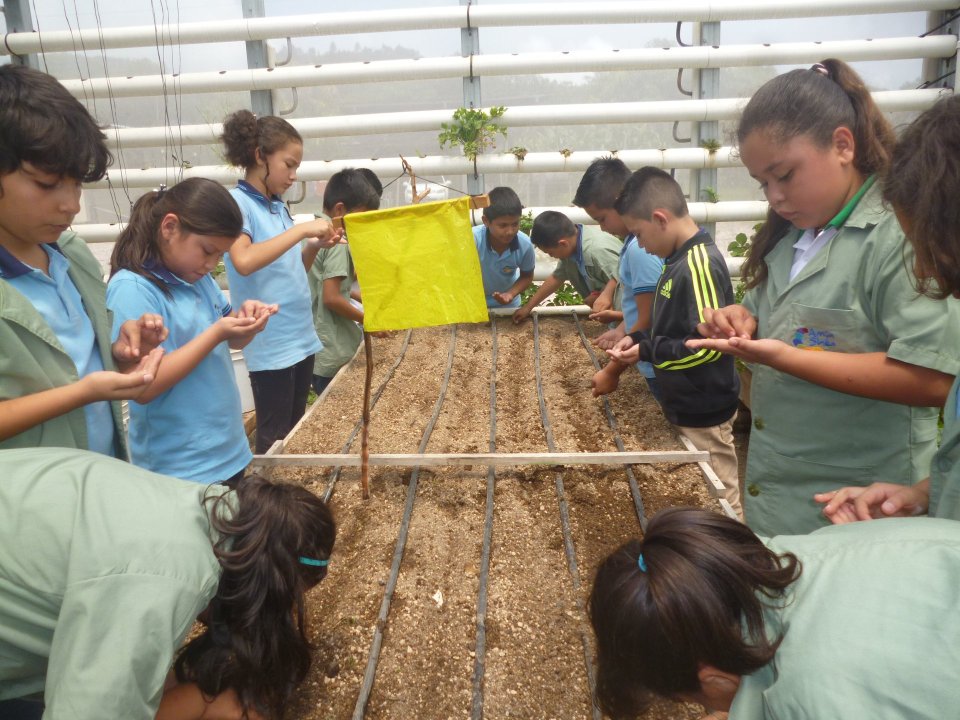
Planting

traslated from Educación pertinente

Relevant education. Exactly what do we mean by relevant education? Whenever a new phrase is used to describe some new process, there is a danger of falling into the assumption that we all handle the same interpretation, moreso when it becomes a fashionable term.

So that we are on the same page on the subject, we should define it. For us, the Perkin Educational Opportunities Foundation, relevant education is defined by the concepts of Adaptation, Transformation and Insertion.

Adaptation refers to situational awareness, of being conscience of our position in the economic, social and cultural processes of our environment and the relationship and connection or influence with the broader environment, including global trends. Then, once aware, to equip ourselves in the best manner to face and even thrive in those conditions.

Transformation involves starting with what we have at hand, what we know, with our experiences and practices, and then based on those, and with the needs and opportunities of our environment, to build new practices and processes to improve our surroundings. We can not confuse transformation with transplantation. The transplant of methodology and practices implies maintaining dependence on external forces. Transformation develops from strengthening our own roots.

Insertion into the labor market and full participation in the transformational processes are required in order for an educational program to qualify as relevant. Access to real employment and self-employment options and access to specialization training for this purpose are the only evidence of the relevance of an educational program.

Education is relevant to the extent that the student is equipped, not only with academic and technical skills, but with the skills of adaptation, the power of transformation and with full integration into the socio-economic and cultural development of their environment.

-Ron Brenneman

Educación pertinente

IMG_20180607_141209

Exactamente qué queremos decir con eso de educación pertinente? Siempre cuando una frase nueva se utiliza para describir algún proceso nuevo, podemos caer en la suposición que todos manejamos la misma interpretación, más cuando se convierte en un término de moda.

Para que estemos en la misma página sobre el tema, mejor lo definimos. Para nosotros, la Fundación Perquín para el Fomento de Oportunidades Educativas, la educación pertinente se define con los conceptos de Adaptación, Transformación e Inserción.

Adaptación se refiere a la conciencia situacional, de ubicarnos en los procesos económicos, sociales y culturales de nuestro entorno y su relación y conexión o influencia del entorno más amplio, incluyendo las tendencias a nivel global. Eso, para luego equiparnos de la mejor forma para enfrentar y hasta prosperar en dichas condiciones.

Transformación implica iniciar con lo que tenemos a la mano, lo que conocemos, la experiencia y la práctica nuestra, y luego en base a ello, y a partir de las necesidades y oportunidades de nuestro entorno, ir construyendo nuevas prácticas y procesos para mejorar éste entorno más cercano. No podemos confundir transformación por trasplantación. El trasplante de metodología y prácticas implica mantener dependencia de fuerzas externas. La transformación sale desarrollándose de las raíces propias nuestras.

La Inserción laboral y participación plena en los procesos de transformación son requeridos para poder calificar de pertinente a la educación propuesta o programada. Acceso a opciones reales de empleo y autoempleo y acceso a formación en especializaciones para tal fin son las únicas pruebas de la pertinencia de un programa educativo.

La educación es pertinente en la medida que el estudiante es equipado, no solo de capacidades académicas y técnicas, sino con las competencias de adaptación, el poder de transformación y con la plena inserción en el desarrollo socioeconómico y cultural de su entorno.

-Ron Brenneman